
You check your building’s violation status on a random Tuesday. Three different city databases show three different results. One says you’re clear. Another flags an open ECB violation from 2019. The third won’t load at all. Which one do you trust?
Tracking NYC building violations shouldn’t feel like solving a puzzle with missing pieces. But most property managers waste hours manually cross-referencing DOB, HPD, ECB, and FDNY records across clunky government portals. And here’s the kicker: by the time you find a violation, you’ve already missed the hearing date.
Speed matters, but accuracy matters more. A single missed violation can snowball into thousands in fines, delayed permits, or worse, like a stop-work order that halts your entire project. You need tools that pull violations fast, display them clearly, and actually update when statuses change.
We tested dozens of platforms. Most were slow. Some were inaccurate. A few were both. Let’s break these tools down.
How These Tools Pull Violation Data (And Why It Matters)
We put each tool through a stress test. We tracked properties with active DOB violations, pending ECB hearings, and HPD repair orders. Then we measured how fast each platform surfaced new violations and how accurately they reflected current statuses. Here’s what we found.
D.O.B. Guard
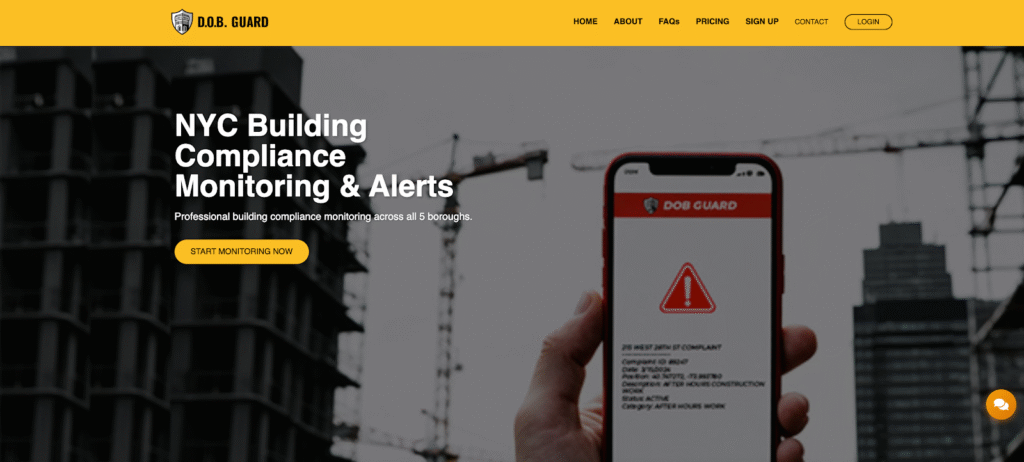
D.O.B. Guard built its reputation on one thing: monitoring violations across NYC’s most critical agencies without making you hunt for updates. The platform pulls data from 12+ NYC datasets, including DOB, HPD, ECB, FDNY, and AEP. If a violation hits your property, you’ll know about it before it becomes a compliance headache.
The dashboard is clean. No clutter. No confusing menus. You see active violations, upcoming hearings, and status changes all in one view. For properties with multiple open cases, this kind of clarity saves hours of cross-referencing.
How D.O.B. Guard Tracks Violations?
D.O.B. Guard monitors your properties 24/7 and sends alerts the moment a new violation appears. You’re not refreshing city portals. You’re not manually checking for updates. The platform does it for you.
Here’s how it works:
- Multi-channel notifications: Get alerts via email, SMS, and voice calls so you never miss a critical update
- Intelligent Risk Scoring: The platform analyzes each violation and assigns a risk score so you know what needs attention first
- Dashboard access with full history: View every violation, past and present, with a complete timeline of status changes
- HPD litigation and AEP alerts: Track ongoing legal actions and enforcement proceedings tied to your properties
The risk scoring feature stands out. Not all violations carry the same weight. A Class 1 DOB violation demands immediate action. An ECB fine with a flexible payment plan can wait. D.O.B. Guard ranks violations by urgency so you’re not treating every issue like a five-alarm fire.
Pricing That Scales With Your Portfolio
D.O.B. Guard offers three tiers. Each one is built around portfolio size, not arbitrary feature limits.
- Starter Plan ($14.99/month or $144/year), which covers up to 2 properties. You’ll get basic monitoring, dashboard access, and text alerts. Good for small landlords or property managers testing the waters.
- Pro Plan ($49.99/month or $480/year), which monitors up to 10 properties. Includes multi-channel notifications (email, SMS, voice), calendar sync for hearings, and access to DOB NOW permit tracking. This is the sweet spot for active property managers handling multiple buildings.
- Enterprise Plan ($249.99/month or $2,399/year). Built for portfolios with 75+ properties. Comes with unlimited scalability, onboarding assistance, API access, and dedicated success management. If you’re managing a large portfolio, this tier handles volume without slowing down.
All plans include historical data access and monitoring across 12+ NYC datasets. No setup fees. No hidden costs.
What Makes D.O.B. Guard Stand Out?
Speed matters here. D.O.B. Guard delivers alerts within hours of a violation appearing in city databases. Most free tools update daily at best. That lag can cost you hearing dates, late fees, or worse. The platform also centralizes compliance tracking. You’re not bouncing between DOB BIS, HPD’s portal, and ECB’s hearing calendar. Everything lives in one place, updated automatically, with a clear audit trail.
For property managers juggling multiple buildings, the calendar sync feature keeps hearings on your radar. Miss an ECB hearing, and you’ll pay default fines. D.O.B. Guard pushes deadlines straight to your Google or Outlook calendar so nothing slips through.
PropertyShark
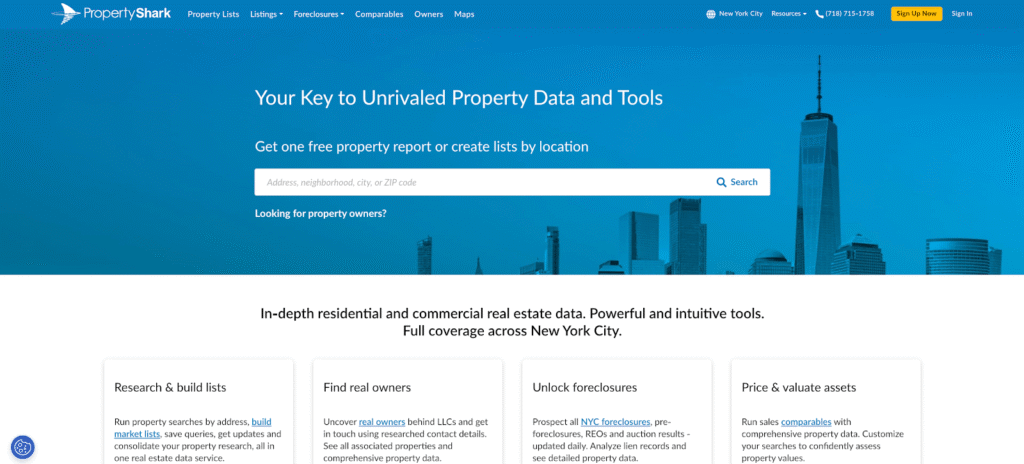
PropertyShark positions itself as a comprehensive property research platform, and violations are part of a much larger toolkit. You’re not getting a violations-only tracker. You’re getting access to ownership records, sales history, mortgage data, zoning details, and FAR calculations bundled with violation monitoring.
The platform pulls violation data from city databases, but its real strength is breadth. If you need to research a property’s entire history before making an acquisition decision, PropertyShark delivers that context alongside active violations.
How PropertyShark Tracks Violations?
PropertyShark aggregates property data from public records and city databases. Violations appear as part of a property’s profile, which also includes ownership info, tax assessments, liens, and permits.
Here’s what you get:
- Violations listed by agency: See DOB, HPD, ECB, and other violations broken down by source
- Historical violation records: Track past violations and resolutions to identify patterns
- Zoning and permit data: Access zoning classifications, building permits, and FAR details in the same view
- Foreclosure and pre-foreclosure tracking: Monitor distressed properties with active legal proceedings
- Downloadable property reports: Export detailed reports for due diligence or portfolio reviews
The violation tracking works, but it’s not the main event. PropertyShark is built for property research first, compliance monitoring second. If you’re analyzing investment opportunities or conducting due diligence, the added context makes violations easier to evaluate.
Pricing Based on Research Volume
PropertyShark uses a tiered subscription model based on how many property reports you need each month.
- Pro Plan ($50/month or $59.95/month billed monthly), which includes 175 property reports per month. You’ll get value estimates, ownership info, sales data, and access to violations and liens. Built for agents, appraisers, or small property managers who need regular property research.
- Elite Plan ($66/month or $79.95/month billed monthly). Bumps you to 200 property reports per month. Adds foreclosure tracking, pre-foreclosure alerts, and auction details. If you’re targeting distressed properties or monitoring legal actions, this tier covers it.
- Platinum Plan ($141/month or $169.95/month billed monthly). It includes 250 property reports per month. Adds real owner info behind LLCs, verified phone numbers, and list exports. Built for investors or portfolio managers who need ownership details for outreach or acquisition strategies.
All plans are billed annually at a discounted rate. Monthly billing costs more. No free tier, but you can test the platform with a limited trial.
What Makes PropertyShark Stand Out?
PropertyShark shines when you need context around violations, not tracking them. If a property has an open DOB violation, you can pull up its ownership history, tax assessments, and zoning restrictions in the same view. That’s useful during due diligence or when evaluating a distressed asset.
The downloadable reports make it easy to share findings with investors, lenders, or legal teams. You’re not screenshotting dashboards or copying data into spreadsheets. The platform exports everything in a clean, professional format.
The downside? PropertyShark doesn’t send proactive alerts for new violations. You have to manually check each property. If you’re managing a portfolio and need instant notifications when violations appear, this tool will slow you down.
Super
Super is a property management platform that happens to include violation tracking. It’s not a violations-first tool. It’s an AI-powered phone system with property management features layered on top.
The platform uses AI to handle tenant calls, maintenance requests, and general inquiries. Violation tracking sits alongside rent collection, lease management, and vendor coordination. If you’re already using Super for property management, the violation features are there. If you’re only looking for violation tracking, Super is overkill.
How Super Tracks Violations?
Super doesn’t position violation tracking as a standalone feature. It’s part of a broader property management suite. You’ll find violations listed in your property dashboard, but the platform doesn’t offer the granular tracking or real-time alerts you’d get from a dedicated tool like D.O.B. Guard.
Here’s what’s included:
- Basic violation monitoring: View active violations tied to your properties
- Integrated document storage: Upload and organize violation notices, hearing documentation, and correspondence
- AI-powered tenant communication: Automate responses to tenant inquiries about repairs or violations
- Maintenance request routing: Assign violation-related repairs to vendors directly from the platform
The AI phone system is the main attraction. Super’s AI agent answers tenant calls, routes maintenance requests, and handles basic inquiries. For property managers drowning in tenant calls, this cuts down on time spent answering the same questions repeatedly.
But for violation tracking? It’s functional, not comprehensive. You won’t get the depth of monitoring, risk scoring, or multi-channel alerts that dedicated violation platforms provide.
Pricing Built Around Communication Volume
Super’s pricing revolves around AI phone capacity, not property count.
- Rollover Plan ($250/month): Includes a customizable AI agent, dedicated phone line, basic FAQ training, and emergency escalation. You’ll get your first 800 voicemail minutes packaged by the minute, with unused minutes rolling over. Built for small portfolios or single-property managers.
- 24/7 Plan ($415/month): Adds 24/7 AI receptionist coverage for all channels (phone, SMS, email). Comes with AI message intake, concierge onboarding, and dedicated support. Designed for active property managers who need constant availability without hiring a full-time receptionist.
- Custom Plan (Contact for pricing): Tailored for large portfolios or multi-office operations. Includes multiple AI agents, omnichannel routing, and custom integrations. Priced by volume and complexity.
All plans include basic property management tools, but violation tracking doesn’t scale with portfolio size the way it does on dedicated platforms.
What Makes Super Stand Out?
Super’s AI phone system is its killer feature. If you’re managing properties and spending hours fielding tenant calls, the AI agent handles repetitive inquiries and frees up your time. Tenants can report maintenance issues, ask about lease terms, or check on repair status without calling you directly.
The violation tracking features are serviceable, but they’re clearly secondary. Super doesn’t send instant alerts when new violations appear. It doesn’t rank violations by urgency. It doesn’t sync hearing dates to your calendar.
If you’re already using Super for property management and want a centralized place to track violations alongside tenant communication, it works. If you’re looking for a tool built specifically to monitor and manage NYC violations, you’ll need something more focused.
Building Brothers

Building Brothers operates as a full-service violations resolution firm that combines legal expertise with hands-on construction coordination. The company doesn’t position itself as a tracking platform. It’s a compliance partner that manages violations from discovery through resolution.
You won’t find a self-service dashboard here. Building Brothers works directly with property owners, landlords, and managers to resolve DOB, HPD, ECB, FDNY, and other agency violations. The team includes licensed professionals who handle permit applications, coordinate with inspectors, and represent clients at hearings.
The approach is personal. You work with a dedicated team that assesses your violations, outlines a resolution strategy, and executes it. For property owners who prefer to hand violations off entirely, this model makes sense.
How Building Brothers Handles Violations Across NYC Agencies?
Building Brothers takes a consultative approach. After you reach out, the team reviews your property’s violation history, identifies open cases, and builds a resolution plan. They handle the paperwork, file permits, coordinate inspections, and appear at hearings on your behalf.
Here’s what the process looks like:
- Violation assessment and strategy: The team reviews all open violations and creates a prioritized action plan
- Permit filing and expediting: Licensed professionals file necessary permits and follow up with city agencies to prevent delays
- Inspector coordination: Building Brothers schedules and manages inspections to close out violations
- Hearing representation: The team represents you at ECB and OATH hearings to reduce or dismiss fines
- Construction oversight: For violations requiring physical work, Building Brothers coordinates contractors and ensures compliance
This model works well for complex violations that require construction, legal representation, or multi-agency coordination. If you’re dealing with a Class 1 DOB violation that needs immediate structural repairs, Building Brothers can manage the entire process.
The downside? You’re not getting proactive monitoring. Building Brothers steps in after violations appear. You’ll still need a way to catch violations early before they pile up.
Building Brothers doesn’t publish pricing online. The team provides custom quotes based on violation type, complexity, and the level of service required.
What Makes Building Brothers Stand Out?
Building Brothers excels at resolution, not monitoring. If you already know about a violation and need expert help clearing it, this is the team to call. They handle the bureaucracy, paperwork, and follow-up so you don’t have to.
The firm’s relationships with city agencies and inspectors can speed up the resolution process. Permits that might take months for an individual property owner can move faster when a known firm is managing the case.
But here’s the gap. Building Brothers won’t alert you when new violations appear. You’re responsible for tracking your properties and catching violations early. If you miss a violation for weeks or months, fines escalate, and resolution becomes more expensive.
ViolationWatch
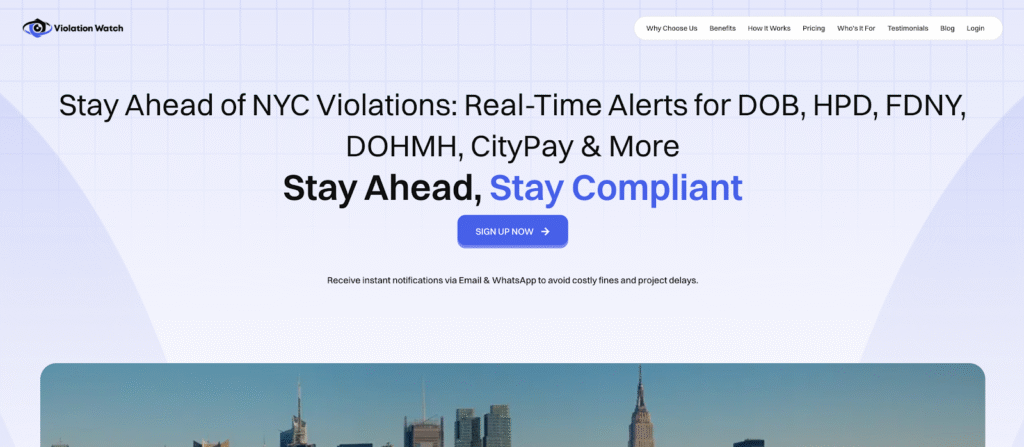
ViolationWatch was built to solve one specific problem: catching NYC building violations early and managing them before they spiral into expensive compliance nightmares. The platform monitors 10+ agencies, including the NYC department, housing preservation, and the environmental control board, and alerts you the moment a new issue hits your property address.
You’re not waiting days for a manual update. You’re not refreshing city portals. The platform tracks code violations automatically and pushes instant notifications so you can act before costly fines pile up or risks escalate into immediately hazardous violations tied to fire safety or broader safety hazards.
ViolationWatch supports smarter decision-making around property transactions by aligning with NYC compliance, local law, and evolving zoning regulations that influence long-term property values and operational efficiency. It also strengthens alignment with environmental protection goals and helps you maintain accurate property records.
How ViolationWatch Tracks and Manages Violations?
ViolationWatch monitors your properties continuously, offering a website free trial that starts working the moment you add addresses. The system delivers updates that outpace traditional tools, providing faster responses to changes revealed through agency inspection reports.
When a new violation appears in any city database, you get an alert within minutes via email, SMS, or WhatsApp. You’re not chasing updates. The platform brings them to you.
Here’s how it works:
- Add your properties: Enter addresses and begin monitoring with a unique violation number assigned to each record
- Continuous monitoring: Track activity tied to the environmental control board and other agencies
- Instant alerts: Get notified via email, SMS, or WhatsApp the moment a violation appears
- Centralized dashboard: Access unified data that keeps teams stay compliant
- Action before escalation: Resolve problems before penalties escalate to administrative trials
The platform improves operational efficiency by enabling users to convert raw data into actionable insights that support compliance with city safety standards and protect against enforcement risk driven by shifting policies.
The dashboard organizes violations by status (open, closed, monitored locations, and NYC 311 complaints). You see exactly what needs attention and what’s already resolved. No hunting through agency portals. No manual cross-referencing.
Multi-Channel Notifications That Actually Work
ViolationWatch sends alerts through the channels you’re already using. Email. SMS. WhatsApp. You choose how you want to be notified, and the platform delivers updates instantly for every building address monitored across New York City, including properties in Staten Island.
Here’s why this matters:
- Email alerts: Get detailed summaries tied to records from the department of buildings, with clear context on the most common types of violations
- SMS notifications: Receive quick texts for urgent issues like interrupted hot water that could trigger an emergency response and cost thousands if ignored
- WhatsApp updates: Stay informed on the go with mobile notifications routed through an intuitive dashboard that replaces outdated spreadsheets and manual follow-ups
You can route alerts to multiple team members through a simple dashboard that supports coordinated response and cleaner reporting for compliance audits. Property managers get full details, maintenance teams act fast, and finance teams track penalties all without forwarding emails or juggling disconnected systems.
Pricing That Scales With Your Needs
ViolationWatch offers two pricing tiers, both designed around portfolio size and monitoring needs.
- Free Trial ($0/month): Start with a free trial to test the platform. No credit card required. Add your properties, track violations, and see how the monitoring works before committing to a paid plan.
- Per Address Plan ($9.99 per address/month): Pay only for the properties you monitor. Add as many addresses as you need, and each one gets continuous monitoring across all NYC agencies. Includes instant alerts, dashboard access, and full violation history.
The per-address pricing makes costs predictable. Managing 5 properties? You’ll pay $49.95/month. Managing 50? Scale up as needed without tier limits or hidden fees.
This pricing structure beats tiered plans that lock you into property limits. You’re not paying for features you don’t need. You’re paying for monitoring that actually works.
Why Early Detection Prevents Expensive Repairs
Here’s what happens when you catch violations early:
- Lower fines: ECB violations start with smaller penalties. Wait weeks or months, and fines can double or triple
- Faster resolution: Early detection gives you time to file permits, schedule inspections, and correct issues before hearings
- Avoid stop-work orders: Class 1 DOB violations can halt construction projects. Catching them immediately lets you address the problem before work stops
- Prevent cascading violations: One unresolved violation can trigger additional violations from other agencies. Fix the root issue early, and you avoid the domino effect
ViolationWatch gives you the early warning system you need to stay ahead of compliance problems. You’re not reacting to violations after they’ve snowballed into expensive crises. You’re catching them at the start and resolving them before fines escalate.
Free NYC Building Violations Lookup Tool
ViolationWatch also offers a free violations lookup tool that lets you search any NYC property instantly. Enter an address and see active violations, historical records, and compliance status across all major agencies.
Use it for:
- Due diligence: Check a property’s violation history before buying or leasing
- Portfolio screening: Quickly audit multiple properties for open violations
- Tenant inquiries: Provide transparency to tenants or prospective buyers about building compliance
The lookup tool is free, fast, and requires no signup. It’s a simple way to see what violations exist on any NYC property before you commit to monitoring or management.
What Makes ViolationWatch the Best Choice In New York City?
ViolationWatch beats the competition on every metric that matters for NYC property managers.
- Speed: Instant alerts mean you catch violations within minutes, not days.
- Accuracy: Data from 10+ NYC agencies in one dashboard eliminates conflicting information.
- Affordability: Per-address pricing means you only pay for what you monitor, with no tier limits.
- Simplicity: The dashboard is clean, intuitive, and designed for busy property managers who don’t have time to wrestle with clunky interfaces.
- Proactive monitoring: You’re not waiting for violations to pile up. You’re catching them early and taking action before fines escalate.
For property managers who want to stay ahead of NYC violations without juggling multiple tools or hiring full-time compliance staff, ViolationWatch is the obvious choice. The platform does one thing exceptionally well: it tracks violations fast, alerts you instantly, and gives you the information you need to resolve issues before they become expensive problems.
Track Violations Fast or Pay the Price
You’ve seen how each platform handles NYC violation tracking. Some updates daily. Others require manual checks. A few don’t monitor at all.
Speed separates tools that save you money from tools that cost you money. Catching a DOB violation on day one gives you time to respond, file permits, and schedule inspections. Catching it on day seven? Fines have already started piling up.
Here’s what matters when you’re choosing a violation tracking tool:
- D.O.B. Guard delivers daily updates and risk scoring across 12+ NYC datasets, but alerts can lag by 24 hours when violations hit during off-peak times
- PropertyShark excels at property research and due diligence, but lacks proactive monitoring and won’t notify you when new violations appear
- Super bundles violation tracking with AI phone systems, but it’s built for tenant communication first and compliance monitoring second
- Building Brothers resolves violations expertly once you’ve found them, but offers no monitoring system to catch violations before they escalate
ViolationWatch catches violations within minutes of appearing in city databases and sends instant alerts via email, SMS, or WhatsApp. You’re not waiting for batch updates. You’re not refreshing portals manually. You’re getting notified the moment a violation hits your property, so you can act before fines multiply.
The platform monitors several NYC agencies in one unified dashboard, tracks status changes automatically, and costs $9.99 per address per month with no tier limits. Start with the free violations lookup tool to see what violations exist on your properties right now, or sign up to start monitoring continuously.
Stop letting violations catch you off guard. ViolationWatch is located at 433 Broadway #220, New York, or call +1 347-201-2336 to get your properties monitored today.