
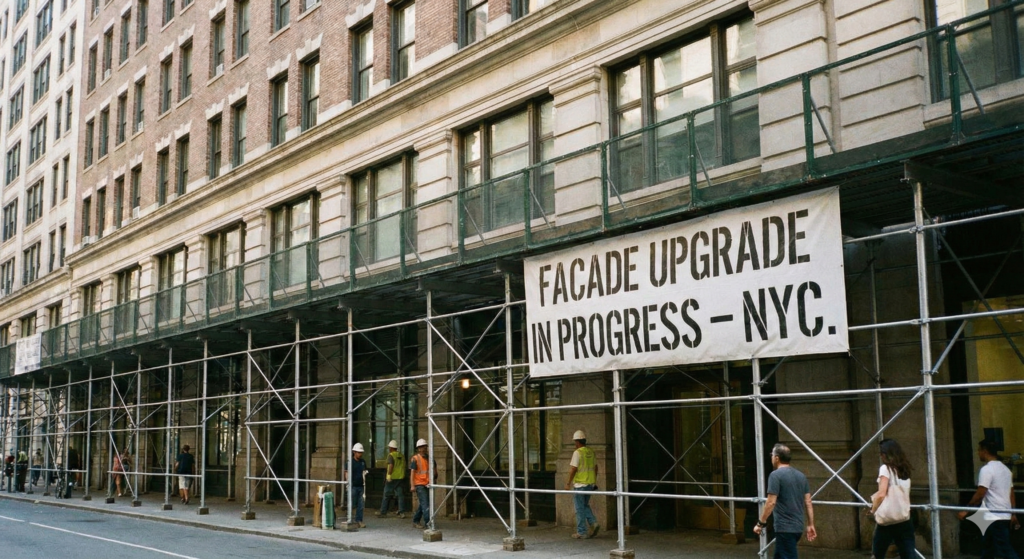
If it feels like every other block in New York is wrapped in sidewalk sheds and scaffolding, it’s not your imagination. NYC’s facades are under intense scrutiny, and that pressure is only going to increase.
New rules, tougher enforcement, climate mandates, and rising construction costs are all converging at once. For owners, boards, and property managers, the era of “we’ll deal with it next cycle“ on facade work is over. For tenants and neighbors, the city’s streetscape is going to look, and function, very differently.
In this guide, we break down what’s changing in NYC’s facade rules, why it’s happening now, and what all of us should realistically expect over the next few years.
Why NYC Facades Are Under The Microscope Right Now
New York City has always regulated exterior walls, but the stakes rose dramatically after a series of highly publicized facade failures, most notably the 2019 incident in Midtown that killed a pedestrian. In response, the NYC Department of Buildings (DOB) intensified inspections and enforcement under the long‑standing Facade Inspection & Safety Program (FISP), often referred to as Local Law 11.
Several forces are now converging:
- Aging building stock. Many masonry and curtain wall facades from the mid‑20th century are at or past their original design life. Years of deferred maintenance are catching up.
- More aggressive enforcement. The DOB has been issuing higher penalties for unsafe conditions and for failing to file facade reports on time. Public complaints and incident reports are feeding faster inspections.
- Data transparency. Tenants, buyers, and journalists can now easily check building violations with tools like the city’s DOB NOW system and independent resources such as this open facade violation lookup tool.
- Climate policy. New York’s climate mandates, especially Local Law 97, are pushing owners to think of facades not just as safety issues, but as a core part of building energy performance.
Put simply: facades are no longer a quiet, once‑every‑five‑years obligation. They’re becoming a continuous compliance, safety, and sustainability priority, very visibly so.
What Is Changing In NYC’s Facade Rules
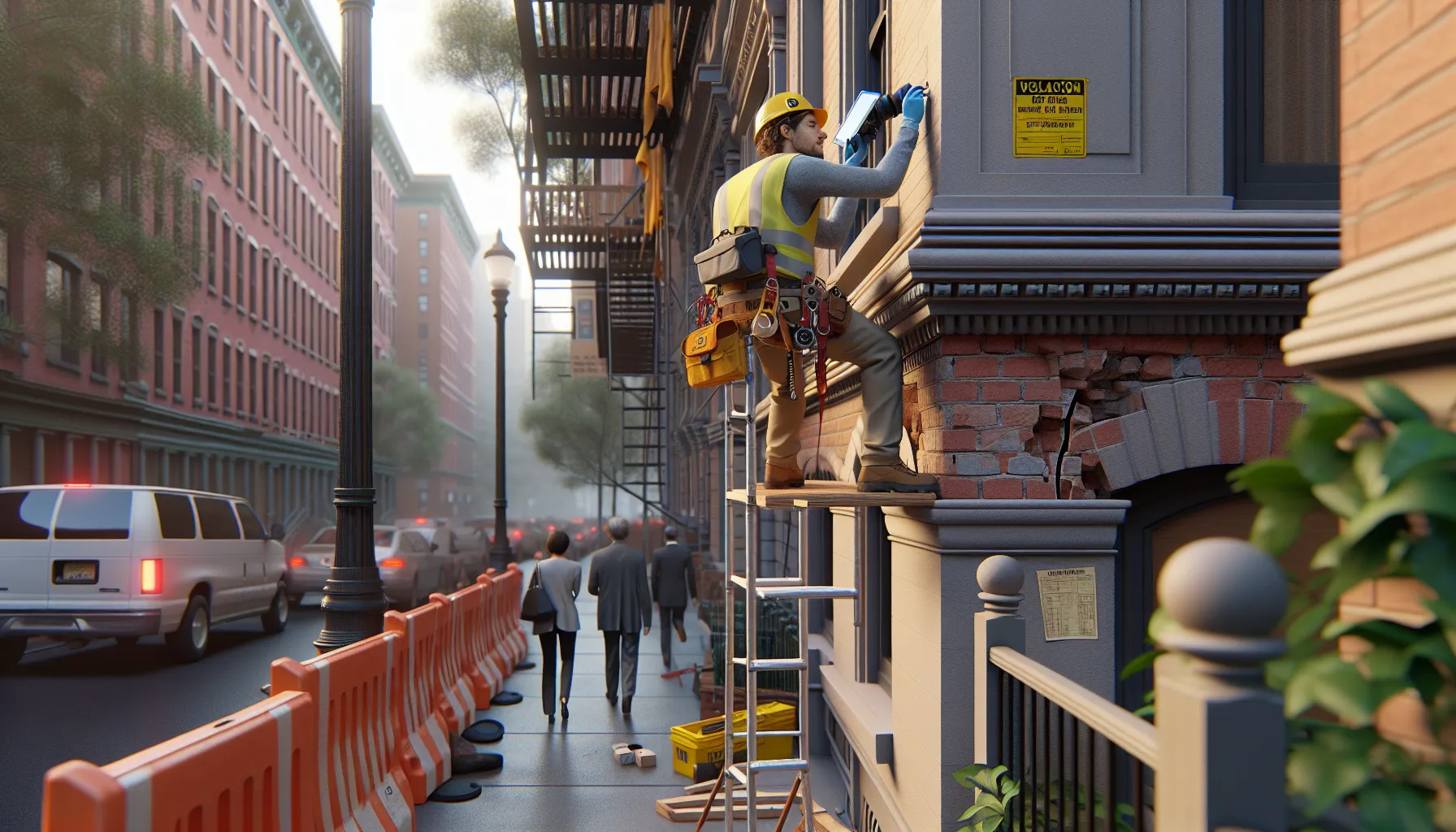
While the exact language of upcoming rule tweaks will continue to evolve, the patterns are already clear. The city is tightening how often facades are examined, what must be documented, and how quickly hazards need to be addressed.
Stricter Inspection And Reporting Requirements
We should expect:
- More detailed inspection protocols. Qualified Exterior Wall Inspectors (QEWIs) are already required to perform “close‑up” examinations, but the DOB has been signaling interest in more prescriptive minimums: required drop locations, photo documentation, and standardized defect descriptions.
- Less room for vague classifications. The familiar “Safe with a Repair and Maintenance Program” (SWARMP) category has sometimes been treated as a gray area. The trend is toward tightening what can be labeled SWARMP versus outright “Unsafe,” compressing repair timelines.
- Shorter deadlines to secure hazards. Once unsafe conditions are identified, owners may have even less time to install protection and file corrective plans.
- Data that’s easier to search and compare. More detailed electronic reporting means facade conditions become part of a building’s public profile, something buyers, lenders, and tenants will absolutely pay attention to.
As transparency grows, we’re seeing more people use independent dashboards like this NYC facade violations tracker to spot patterns in enforcement and risk, building by building.
New Standards For Materials, Repairs, And Maintenance
The city is also nudging facades toward higher performance and durability:
- Stronger expectations for repair quality. Patch‑and‑paint approaches are increasingly frowned upon where structural or systemic issues exist. We’re seeing more pushing toward full replacements of failing lintels, shelf angles, or cladding systems instead of piecemeal repairs.
- Closer review of anchorage and attachments. Anything projecting from the facade, signage, balconies, decorative elements, air conditioners, faces stricter review, especially when older hardware or unknown anchors are involved.
- Compatibility and long‑term performance. The emphasis is shifting from “Will this fix hold for the next cycle?” to “Will this repair behave predictably with the existing wall over decades?”
Owners who don’t stay ahead of this will find themselves on the wrong side of violation histories that anyone can see via public databases or tools like the open facade violation lookup, which aggregates exterior safety issues across the city.
How Sustainability And Climate Resilience Factor In
The next wave of facade policy isn’t only about loose bricks. It’s about how the building envelope performs in a hotter, wetter, windier city.
Local Law 97, part of NYC’s broader Climate Mobilization Act, sets emissions caps that many buildings can’t meet without upgrading their exteriors. At the same time, climate science, summarized in the IPCC’s latest synthesis report, points to more extreme storms, heat, and flooding.
Facades sit right at that intersection.
Tighter Energy Performance Expectations For Building Envelopes
We’re already seeing pressure in a few areas:
- Insulation and thermal performance. Poorly insulated walls, spandrels, and window systems drive energy use and emissions. Retrofits, overcladding, new curtain wall systems, insulated masonry backup, are becoming part of compliance strategies.
- Air leakage and condensation control. Air‑leaky facades mean drafts, moisture problems, and mold, which in turn mean complaints and potential liability.
- Glazing choices. Single‑glazed or old double‑glazed windows are under increasing scrutiny. High‑performance glass and framing systems are becoming less of an upgrade and more of an expectation.
DOB rule updates and technical bulletins are gradually aligning facade repair standards with energy codes, so envelope performance can’t be treated as an afterthought anymore.
Wind, Weather, And Flood Resilience For Exterior Walls
On the resilience side, facades are being evaluated through a more severe climate lens:
- Wind events. Cladding, anchors, and parapets will be checked against updated wind‑load standards. Lightweight or aging systems that were marginally compliant decades ago may now be flagged.
- Driving rain and freeze–thaw. Water infiltration leads to hidden corrosion, spalls, and eventually failures. We’re seeing more insistence on proper flashings, weeps, and drainage planes in both repairs and new work.
- Flood‑exposed facades. In coastal and low‑lying neighborhoods mapped in FEMA flood zones, exterior materials and detailing at lower floors must cope with periodic inundation.
This resilience layer means that “passing” a facade inspection won’t just be about today’s cracks, it will also be about future climate stresses on that wall system.
What Building Owners, Boards, And Managers Need To Do Next
If we own or manage property in NYC, waiting for the next facade cycle letter from our engineer isn’t a strategy. The buildings that fare best under tougher rules are the ones that start planning years ahead.
Budgeting, Timelines, And Prioritizing High‑Risk Facades
A practical roadmap usually includes:
- Portfolio‑wide risk scan. Before diving into one marquee project, we should list all buildings, when their last FISP cycles were completed, known leak or spall histories, and any open violations. Tools like this independent NYC facade violations tracker make it easier to see where DOB has already raised red flags.
- Early condition assessments. Commission preliminary visual surveys 18–24 months ahead of filing deadlines. That lead time lets us budget, bid work, and stage scaffolding more intelligently.
- Multi‑cycle planning. On marginal buildings, we may need to accept that one cycle won’t solve everything. A realistic 10–15‑year envelope plan, phasing elevations or systems, often costs less than a reactive patchwork of emergencies.
- Dedicated facade reserves. Co‑ops and condos in particular should be building line‑item reserves for exterior work. Surprise multi‑million‑dollar projects are less painful when owners have seen them coming.
Before committing to big capital work, it’s also smart to check our building’s public record via DOB or an open violation lookup tool so we understand how inspectors have viewed our facade in the past.
Coordinating With Architects, Engineers, And Contractors
Facade work lives or dies by the project team. We’ve seen a few consistent best practices:
- Lead with the design and engineering team. Bring facade consultants and architects in first, not after a contractor has priced a vague scope. Clear drawings and specs reduce change orders and disputes.
- Align safety, code, and climate goals. Ask explicitly: “How can this repair also advance Local Law 97 compliance or long‑term resilience?” That question can turn a mandatory repair into a strategic upgrade.
- Schedule with tenants in mind. Noise, dust, and blocked light are inevitable, but communication and clear timelines make them tolerable. Regular updates and honest expectations go further than polished memos.
- Verify, don’t assume, closure of violations. When work is done, confirm that filings are approved and violations are actually closed out in city systems, and reflected correctly on third‑party trackers like Violation Watch NYC.
Done well, a facade program becomes part of a building’s long‑term value story rather than a recurring emergency line item.
What Tenants And Neighborhoods Can Expect To See
From the sidewalk, these regulatory shifts will be impossible to miss.
- More scaffolding, but smarter use of it. We’ll likely see longer‑duration sidewalk sheds in some areas, but also more combined scopes: doing facade repairs, window replacements, and roof work under one setup instead of three separate mobilizations.
- Visible upgrades to windows and exteriors. Tenants may notice new high‑performance windows, insulated spandrels, or reclad street‑level facades. These changes can translate into fewer drafts, better temperature control, and less street noise.
- Temporary disruptions. Drilling, netting over windows, and limited light are part of exterior work. But clearer rules and tighter timelines should reduce open‑ended construction limbo.
- Greater public awareness of risky buildings. Reporters, advocates, and neighbors are making more use of public DOB data and independent resources like the open facade violation lookup to monitor problem properties.
Over time, neighborhoods with high concentrations of older masonry buildings, Upper Manhattan, parts of Brooklyn and the Bronx, may go through extended waves of visible facade work as owners race to catch up.
How These Changes Could Shape The Future Look Of NYC
NYC’s skyline has always evolved, but facade policy is about to give that evolution a distinct push.
We’re likely to see a few broad trends:
- From patchwork to full overclads. As repair standards tighten, it becomes less cost‑effective to keep chasing isolated cracks. Many mid‑century buildings will opt for full reclads or overclads with modern rain‑screen systems.
- More high‑performance glass and metal. Deeply tinted or single‑glazed windows are on their way out. Expect more neutral, high‑performance glazing and thermally broken framing systems.
- Brighter, cleaner street walls. Modern materials and detailing resist staining and efflorescence better than older systems. Over time, that should mean fewer streaked facades and more consistent appearances at the pedestrian level.
- Visible climate adaptations. Flood‑resilient ground floors, removable storefront panels in flood zones, and wind‑tuned parapets and rooftop elements will become part of the visual language of the city.
In short, safety rules, emissions caps, and climate resilience standards are going to shape what “typical” New York buildings look like as much as aesthetics and market taste do. And because public data, from the DOB and sites like Violation Watch NYC, makes compliance visible, owners will have reputational reasons to keep up.
A building’s facade will be read not just as an architectural statement, but as a signal of how seriously its owners take safety, sustainability, and long‑term stewardship.
Conclusion
NYC’s facade rules are tightening in ways that go far beyond another cycle of Local Law 11 filings. We’re entering a period where exterior walls must simultaneously satisfy safety inspectors, climate mandates, lenders, and increasingly informed tenants.
For owners and boards, the smartest move now is to treat facade strategy the way we’d treat a roof replacement or major mechanical upgrade: with multi‑year planning, serious reserves, and a clear understanding of our buildings’ public compliance profiles through the DOB and tools like this open facade violation lookup.
For the rest of us, we should expect a city with more visible construction in the short term, and safer, tighter, more resilient buildings in the long term. The sheds, nets, and cranes are the messy middle of that transition.
The big picture is simple: facades are no longer background scenery. They’re front and center in how New York prepares for the next few decades of safety, climate, and urban life. The sooner we plan around that reality, the better our buildings, and our streets, will be.
Key Takeaways
- NYC facade rules are tightening, turning facade work from a once‑per‑cycle obligation into a continuous priority for safety, compliance, and sustainability.
- Owners should expect more detailed inspections, stricter classifications of unsafe conditions, shorter repair deadlines, and highly visible violation histories through public DOB data and facade lookup tools.
- Climate mandates like Local Law 97 are making NYC facades central to energy performance, pushing upgrades in insulation, glazing, air‑sealing, and long‑term climate resilience.
- Smart owners and boards will plan multi‑year facade strategies, build dedicated reserves, and coordinate early with architects and engineers to align safety, code, and climate goals.
- Tenants and neighborhoods will see more scaffolding and exterior work in the near term, but also safer, quieter, more energy‑efficient buildings and a visibly updated streetscape over time.
Frequently Asked Questions About NYC Facade Changes
What is driving the new changes in NYC facade rules?
NYC facade rules are tightening because of aging buildings, several high‑profile facade failures, and pressure from climate policies like Local Law 97. The Department of Buildings is responding with more detailed inspections, tougher enforcement, higher penalties, and greater public transparency around facade conditions and violations.
How do Local Law 11 (FISP) and Local Law 97 work together on NYC facades?
Local Law 11, or FISP, focuses on facade safety through periodic inspections and repairs. Local Law 97 targets building emissions, pushing upgrades to insulation, windows, and wall systems. Together they make NYC facades central to both life‑safety compliance and long‑term energy performance and climate resilience.
What should NYC building owners do now to prepare for stricter facade regulations?
Owners should perform portfolio‑wide risk scans, commission early facade condition assessments 18–24 months before filing deadlines, and create 10–15‑year envelope plans. Building dedicated facade reserves and coordinating early with architects, engineers, and contractors helps control costs and avoid emergency, violation‑driven projects.
How will stricter NYC facade enforcement impact tenants and neighborhoods?
Tenants and neighbors can expect more scaffolding and sidewalk sheds, but often used more efficiently to combine facade, window, and roof work. There will be noise and temporary light loss, yet clearer rules and shorter repair timelines should reduce open‑ended disruptions and ultimately yield safer, tighter, quieter buildings.
How often are NYC facade inspections required, and which buildings must comply?
Under FISP (Local Law 11), most buildings in NYC taller than six stories must have their facades inspected and a report filed every five years by a Qualified Exterior Wall Inspector. Smaller buildings are generally exempt, though they still must maintain exterior walls in a safe condition under the Building Code.
What happens if a building fails a NYC facade inspection or ignores violations?
If inspectors classify a facade as Unsafe, owners must quickly install protections like sidewalk sheds and submit repair plans on strict deadlines. Failure to file, correct hazards, or close violations can lead to escalating fines, DOB enforcement actions, difficulty refinancing, and reputational damage as issues are visible in public databases.