
Rent-stabilized units are the backbone of New York City’s housing stock, but they can also be the most challenging to manage. Tenants stay longer, know their rights, and have formal channels to file HPD complaints, DOB violations–related issues, and “decrease in services” claims with state agencies.
If we treat these buildings like any other rental, complaints pile up, tensions rise, and suddenly we’re spending more time responding to agencies than actually fixing problems.
In this guide, we walk through how we can systematically reduce tenant complaints in rent-stabilized units, by understanding the legal landscape, tightening communication, shifting to preventive maintenance, and managing risk around NYC building violations and rent regulation rules.
Understanding The Unique Dynamics Of Rent-Stabilized Housing
How Rent Stabilization Affects Expectations And Behavior
Rent stabilization fundamentally changes the relationship between owner and tenant. Rents are regulated, renewals are heavily protected, and tenants often live in the same unit for decades.
That has two big consequences:
- Expectations rise over time. Long-term tenants remember how the building was run under prior owners, whether repairs used to be faster, and how staff treated them. Any perceived decline in service can feel like a rights issue, not just an inconvenience.
- Tenants know the system. Many are familiar with filing complaints with the state’s Homes and Community Renewal (HCR) agency, especially “decrease in services” or rent overcharge cases. They may also call 311, which can lead to HPD violations or DOB inspections if conditions involve building systems.
In other words, we’re not just dealing with customer service. We’re operating inside a regulated environment where service lapses can become formal legal claims.
Balancing Tenant Protections With Operational Realities
We can’t change the framework of rent stabilization, but we can decide how we operate within it.
On one side, tenants have:
- Strong protections against eviction
- Controlled rent increases
- Access to DHCR/HCR for service and overcharge complaints
- City enforcement via HPD and the Department of Buildings (DOB)
On the other side, we’re juggling:
- Aging infrastructure and rising repair costs
- Tight margins due to regulated rents
- Complex NYC property compliance requirements
Reducing complaints means accepting the protections as a given and designing operations that work with them, not around them. That typically looks like better planning, clearer policies, and more disciplined documentation.
Differentiating Legitimate Complaints From Habitual Grievances
Most tenants complain when something is genuinely wrong: no heat, recurring leaks, pests, unsafe conditions, or disrespectful treatment.
But in long-term, rent-stabilized buildings, we may also encounter a small number of residents who complain constantly, about everything. If we treat those cases the same way we treat serious habitability issues, we burn out staff and miss real risk.
We’ve found it useful to ask, for every complaint:
- Is this a legal rights issue or a quality-of-life preference?
- Is there a building code, housing maintenance code, or lease clause implicated?
- Is this a pattern from the same tenant, or a new issue?
We still respond respectfully to all complaints, but we prioritize those tied to safety, code compliance, or services that could lead to HPD complaints, DOB violations, or DHCR “decrease in services” findings. That prioritization alone can dramatically reduce escalation and enforcement exposure.
Common Sources Of Complaints In Rent-Stabilized Units
Maintenance And Repair Issues
Routine repairs are the single largest driver of complaints. In rent-stabilized units, even small issues, dripping faucets, slow drains, sticking windows, can become contentious if they’re repeated or ignored.
We see common patterns:
- Recurring leaks that were patched but not properly diagnosed
- Old windows and radiators that never fully close or regulate
- Worn flooring, broken tiles, or failing caulk that invite mold or pests
The legal risk comes when tenants argue there’s a reduction in required services, especially if conditions are long-standing or poorly documented.
Heating, Hot Water, And Essential Services
Heat and hot water complaints are more than inconveniences, they’re potential violations. New York City’s Housing Maintenance Code sets specific heat and hot water standards, enforced primarily by NYC HPD.
If we don’t restore service quickly or document good-faith efforts, tenants may:
- Call 311, triggering HPD inspections and violations
- File formal decrease-in-services complaints with HCR
- Withhold rent or organize other tenants
Essential services also include electricity, gas, and basic safety systems like self-closing doors and smoke/CO detectors. Any pattern of outages or broken equipment is a recipe for escalating complaints.
Building Cleanliness, Safety, And Pest Control
Conditions in common areas are a constant source of friction:
- Dirty hallways or stairwells
- Overflowing trash or recycling
- Evidence of rodents or roaches
- Broken front doors or intercoms
These issues can very quickly translate into HPD violations and undermine trust among long-term tenants. Tenants often interpret poor cleanliness or recurring pests as a sign that ownership is neglecting regulated housing.
Noise, Lifestyle Conflicts, And Harassment Claims
Noise complaints are uniquely tricky. One tenant’s “normal living sounds” is another’s “unbearable disturbance.”
With rent-stabilized tenants, noise disputes can morph into:
- Allegations that the owner is ignoring their rights
- Claims that staff responses are retaliatory or harassing
- Group disputes pulling multiple households into conflict
We need systems to distinguish between regular lifestyle noise and behavior that actually violates house rules, the lease, or the warranty of habitability.
Renovations, Access, And Privacy Concerns
Renovation work and in-unit access create a lot of complaints when not managed carefully. Long-term tenants may be suspicious that:
- Construction is a tactic to pressure them out
- Access requests are excessive or poorly timed
- Work is being done in a way that damages their belongings or privacy
Legally, we’re allowed reasonable access for repairs and inspections, but we must provide proper notice and minimize disruption. Poor planning here doesn’t just create complaints, it can trigger harassment allegations or regulatory scrutiny, especially in rent-stabilized buildings.
Building A Proactive Communication Strategy
Establishing Clear Communication Channels
Many complaints escalate not because of the original issue, but because tenants feel ignored or disrespected.
We reduce that risk by standardizing communication:
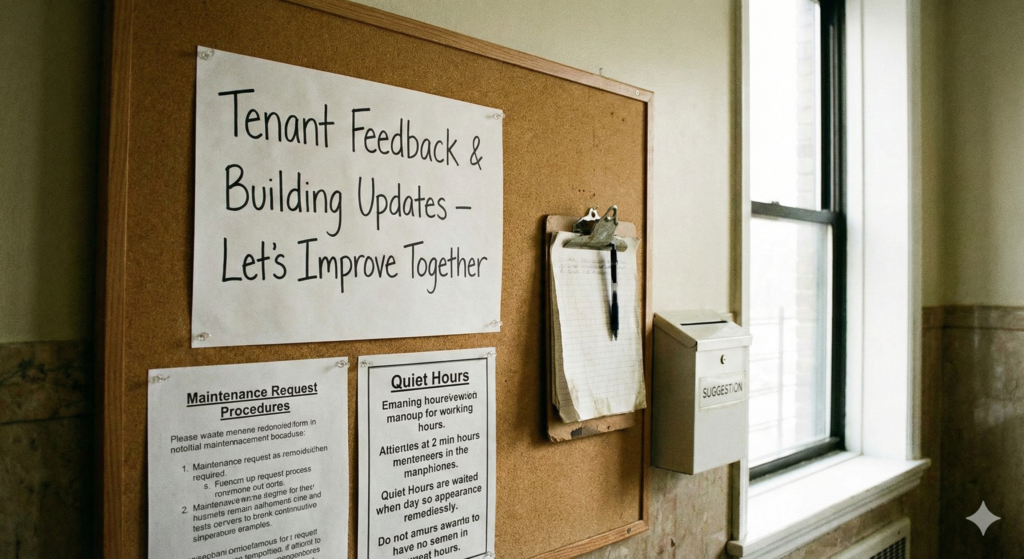
- Multiple channels: a phone number, email, and, ideally, an online portal
- Clear hours and expectations: when calls are answered, how quickly emails are returned
- Emergency vs. routine: posting what qualifies as an emergency (e.g., no heat, active leaks, gas smell) and how to reach us after hours
If we use software to log and track work orders, we make it easy to see whether a tenant’s problem is being handled and to avoid dropped balls, key in rent-stabilized contexts where histories are long.
Setting Expectations From Lease Signing Through Move-In
Reducing complaints starts before move-in. At lease signing and during orientation, we should:
- Explain how to submit maintenance and noise complaints
- Share expected timeframes for routine vs. urgent repairs
- Clarify what services are and are not included (e.g., painting cycles, appliance replacement policies)
- Provide house rules in plain language
When long-term tenants know what to expect, and we stick to it, they’re less likely to feel blindsided or mistreated.
Using Technology To Track And Respond To Complaints
A simple spreadsheet isn’t enough for a portfolio of rent-stabilized units. We need a system that can:
- Log every complaint and work order with timestamps
- Assign tasks to supers or vendors
- Track status and completion notes
- Generate histories by unit, line, or building
That history is invaluable if a tenant files HPD complaints, challenges services at DHCR/HCR, or alleges harassment. It also lets us see patterns, like a line of apartments with recurring leaks that may signal a failing riser.
When And How To Escalate Communication
Some issues can be resolved with a quick call. Others require more structure.
We’ve found a simple escalation ladder effective:
- Verbal discussion to understand the issue and agree on next steps.
- Written confirmation (email or letter) summarizing what we’ll do and when.
- Formal notices if a tenant is refusing access, violating house rules, or if the issue implicates safety.
- Agency or legal involvement if there are serious conditions, repeated access denials, or allegations we can’t resolve informally.
Documenting each step isn’t just defensive: it reassures reasonable tenants that we’re taking their concerns seriously and following a process.
Creating Clear, Fair Policies For Rent-Stabilized Tenancies
House Rules That Are Enforceable And Transparent
Ambiguous rules invite conflict. In rent-stabilized buildings, we should assume every rule might one day be read by a judge, HCR, or HPD inspector.
Strong house rules are:
- Written in plain English, not legal jargon
- Specific about quiet hours, smoking, storage in hallways, trash disposal, and use of common spaces
- Provided to tenants at lease signing and posted in common areas
- Consistently enforced across the building
If we can’t explain a rule simply, we probably can’t enforce it fairly.
Handling Lease Renewals, Increases, And Required Notices
Late or incorrect renewals are a top trigger for distrust in rent-stabilized units. We need a tight calendar for:
- Sending renewal offers within the mandatory window
- Applying Rent Guidelines Board increases correctly
- Issuing required riders and notices
Mistakes here don’t just create angry phone calls. They can lead to rent overcharge claims and formal proceedings with NYS Homes and Community Renewal.
Guest, Sublet, And Occupancy Policies
Informal roommates, extended guests, and unapproved sublets create tension among neighbors and raise compliance questions.
Our policies should:
- Distinguish between short-term guests and long-term occupancy
- Reference applicable rent-stabilization and Real Property Law standards
- Explain how to request permission for sublets or permanent roommate changes
When policies are clear and written down, we reduce arguments about who’s “really allowed” to live in the unit.
Fair Application Of Rules To Avoid Claims Of Targeting
In a rent-stabilized setting, inconsistent enforcement can be interpreted as harassment or discrimination.
We protect ourselves by:
- Applying rules the same way to market-rate and stabilized tenants
- Logging violations and warnings in a central system
- Avoiding informal “side deals” that can’t be replicated for everyone
Fair treatment doesn’t mean every outcome is identical, but it does mean we can explain why decisions differ without relying on subjective impressions.
Maintenance And Repairs: Moving From Reactive To Preventive
Creating A Preventive Maintenance Schedule
If we only react when something breaks, complaints are inevitable, especially in older, rent-stabilized buildings.
We should build a preventive maintenance plan that includes:
- Seasonal checks of boilers, roofs, and exterior walls
- Annual inspections of plumbing stacks, shutoff valves, and common risers
- Regular testing of smoke/CO detectors and self-closing doors
- Scheduled common-area painting and lighting upgrades
Preventive work costs money up front, but it dramatically cuts emergency calls, HPD complaints, and DOB inspections triggered by chronic issues.
Prioritizing Critical Systems In Older Buildings
In many stabilized properties, the biggest risks come from aging systems:
- Steam heating with unbalanced distribution
- Old wiring close to capacity
- Galvanized pipes prone to corrosion and leaks
We can’t overhaul everything at once, but we can prioritize work with the highest impact on complaints and violations: heat, hot water, electrical safety, and egress.
Using tools like the NYC building violations databases helps us see where regulators have already focused attention. For free lookups, use our NYC violation lookup tool.
Coordinating Access In Occupied, Rent-Stabilized Units
Access is often where otherwise simple repairs turn into full-blown conflicts.
To reduce complaints:
- Provide written notice with reasonable lead time and clear time windows
- Offer alternative dates if a tenant has legitimate conflicts
- Emphasize why the work is necessary (e.g., building-wide safety, preventing leaks)
- Train workers to respect personal property and privacy
If a tenant repeatedly denies access, we document every attempt, dates, methods, and responses. That record is crucial if they later file a decrease-in-services claim.
Communicating Timelines And Follow-Through
Tenants are far more patient when they know what’s happening.
For any repair beyond a quick same-day fix, we try to:
- Give an estimated start and completion date
- Explain if a part must be ordered or a specialist scheduled
- Provide updates when timelines slip
A short email, “We’re still waiting on the vendor: next available date is Tuesday”, can prevent an HPD call or heated argument in the hallway.
Handling Noise, Nuisance, And Neighbor Conflicts
Setting Reasonable Noise Standards
We can’t promise silence, but we can define what’s reasonable.
House rules should:
- Establish quiet hours (for example, 10 p.m.–7 a.m.)
- Address musical instruments, speakers, and subwoofers
- Clarify expectations for renovations (hours for drilling, hammering, etc.)
We ground these standards in local norms and lease language, so they’re defensible if conflicts escalate.
Early Intervention In Neighbor Disputes
By the time tenants are emailing long chains of accusations, the conflict is already entrenched.
We step in early by:
- Taking each complaint seriously and listening to both sides
- Looking for objective data when possible (elevator cameras, staff observations)
- Reminding both parties of house rules and the need for mutual respect
Often, a calm conversation where we set expectations on both sides can prevent months of future complaints.
Mediation, Written Warnings, And Documentation
When informal efforts fail, we move to more formal tools:
- Mediation, sometimes with a third party, sometimes with a building manager as facilitator
- Written warnings that reference specific lease clauses or house rules
- Incident logs that record dates, times, and nature of disturbances
This documentation helps us respond proportionately and protects us if one tenant later claims we ignored their safety concerns or took sides unfairly.
Dealing With Harassment And Safety-Related Complaints
Allegations of harassment, discrimination, or threats require immediate, careful attention.
Our protocol should include:
- Promptly interviewing the reporting tenant and any witnesses
- Involving security, HR, or legal counsel when appropriate
- Taking interim steps (e.g., changing locks, adjusting staff assignments) where safety is at issue
We also need to know when a matter crosses into criminal territory and advise tenants to contact police. At the same time, we document everything in case the issue surfaces later in DHCR proceedings or in housing court.
Documentation, Compliance, And Legal Risk Reduction
Documenting Complaints And Your Responses
If it isn’t written down, it didn’t happen.
For each complaint, especially in rent-stabilized units, we aim to record:
- Date, time, and method of receipt (call, email, portal, in person)
- Nature of the issue and unit number
- Steps taken (inspection, repair visits, notices sent)
- Final resolution and date completed
This record becomes our evidence when responding to HPD, DOB, or DHCR, and it also helps us spot trends like repeat issues in a particular line.
Staying Compliant With Local Rent-Stabilization Rules
NYC property compliance in rent-stabilized buildings goes beyond basic codes. We must stay current on:
- Rent Guidelines Board increases
- Renewal timing rules
- Required riders and notices
- HCR procedures for service and overcharge complaints
The NYC Department of Buildings and HPD websites, along with HCR guidance, are baseline resources. When in doubt, especially in high-dollar or high-visibility cases, we consult counsel rather than improvise.
Using Written Policies And Notices To Protect Both Sides
Written policies are not just for our protection: they also give tenants clarity and predictability.
We lean on written:
- Access notices
- Construction schedules
- House rules and updates
- Explanations of how to file complaints internally
When tenants can see a clear process, they’re more likely to use it before heading straight to 311 or a lawyer.
When To Involve Legal Counsel Or Housing Agencies
Not every complaint needs a lawyer. But certain red flags suggest we should loop in counsel early:
- Allegations of systemic harassment or discrimination
- Large potential rent overcharge exposure
- Complex succession or occupancy disputes in stabilized units
- Patterns of HPD or DOB violations that could lead to litigation
We also sometimes work directly with agencies, meeting HPD or DOB inspectors on site, providing documentation, and demonstrating our remediation plan. Showing proactive cooperation often leads to more reasonable outcomes.
To stay ahead of enforcement, we use services like ViolationWatch to monitor open issues and trends across our portfolio, so we’re not surprised by old violations resurfacing.
Training Staff And Vendors To Work Effectively With Long-Term Tenants
Training Frontline Staff In De-Escalation And Customer Service
Supers, porters, and front-desk staff are the face of our operation. How they speak to tenants often matters as much as how quickly we fix things.
We train frontline staff to:
- Listen without interrupting
- Avoid arguing in hallways or lobbies
- Use neutral, non-accusatory language
- Explain next steps and timelines
A respectful five-minute conversation can prevent a 20-minute angry call to 311.
Coordinating With Supers, Porters, And Repair Contractors
Internal coordination is just as important as tenant-facing communication.
We carry out simple practices:
- Daily or weekly check-ins with supers on open work orders
- Shared logs or apps where staff can update status and upload photos
When staff know the history of a unit or tenant, they’re less likely to repeat failed approaches and more likely to build trust.
Aligning Third-Party Vendors With Your Complaint Protocols
Outside contractors can either calm situations or inflame them.
We make expectations explicit:
- Respect for long-term tenants and their belongings
- Compliance with access notice requirements
- No side conversations about rent levels, buyouts, or “what the owner should really be doing”
Vendors should also be required to report back any serious conditions they find in units, signs of leaks, unsafe wiring, or pests, so we can address them proactively before they show up as formal complaints or violations.
To keep everyone aligned, we integrate vendors into our overall complaint and work-order system rather than treating them as off-the-books problem solvers.
Measuring Satisfaction And Continuously Improving Operations
Tracking Complaint Patterns And Repeat Issues
Data doesn’t have to be fancy to be useful. We regularly review:
- Number of complaints per month, per building
- Types of complaints (heat, repairs, noise, pests, staff conduct)
- Units or lines with repeated issues
If one line has multiple leak complaints over a year, that’s not a tenant problem, it’s an infrastructure issue. Identifying these patterns turns individual frustrations into actionable capital-planning data.
Using Surveys And Informal Feedback To Spot Problems Early
Formal surveys can work, but in many rent-stabilized buildings, informal check-ins can be just as powerful.
We encourage supers and managers to ask:
- “How’s everything in the apartment?”
- “Any repairs you’ve been putting off?”
- “Is there anything we could be doing better?”
Short, focused surveys once or twice a year, distributed by mail or email, can also reveal issues early, especially among quieter tenants who rarely complain until something is very wrong.
Setting Internal Response Time Targets And KPIs
We can’t improve what we don’t measure. We set targets such as:
- Acknowledging all non-emergency complaints within 24 hours
- Completing routine repairs within 7–10 days
- Closing high-priority health and safety issues within 24–72 hours
We then track performance against those targets and adjust staffing, vendor relationships, or processes accordingly.
Adapting Policies As Laws And Market Conditions Change
Rent-stabilization laws, local ordinances, and enforcement priorities shift over time. So do tenant expectations.
We periodically review:
- Changes in rent regulation and housing codes
- New DOB or HPD initiatives
- Market trends reported by major publications like The Real Deal or The New York Times Real Estate section
When we revise policies, we communicate changes clearly to tenants, explain why they’re happening, and give reasonable lead time before they take effect.
On the compliance front, monitoring open violations and complaint trends is essential. Get instant alerts whenever your building receives a new violation, sign up for real-time monitoring using our building violation alerts tool.
Conclusion
Reducing tenant complaints in rent-stabilized units isn’t about silencing tenants. It’s about running buildings in a way that respects strong legal protections, long-term relationships, and the realities of aging housing stock.
When we:
- Understand how rent stabilization shapes expectations
- Address the most common complaint drivers, repairs, heat, pests, noise, and access, with structure instead of improvisation
- Build clear communication channels, fair policies, and strong documentation
- Train staff and vendors to treat long-term tenants with consistency and respect
- Use data and tools to stay ahead of NYC building violations and enforcement
…we see complaints become more manageable, relationships less adversarial, and operations more predictable.
Staying ahead of regulatory risk is part of that picture. For free lookups of existing issues, use our NYC violation lookup tool. And if we want to know the moment a new violation hits, we can register for building violation alerts so we’re acting before problems snowball.
Eventually, fewer complaints aren’t just good for us, they’re good for tenants. A well-run, compliant rent-stabilized building delivers what the law intended: stable, habitable homes in a city where both sides know where they stand.
Key Takeaways
- To reduce tenant complaints in rent-stabilized units, treat them as highly regulated environments where clear policies, documentation, and compliance with rent-stabilization laws are non-negotiable.
- Prioritize issues tied to safety, heat and hot water, pests, and building code requirements, distinguishing true legal-rights problems from recurring quality-of-life grievances.
- Build a proactive communication system—multiple contact channels, defined response times, and a tracked work-order platform—so tenants feel heard and issues are resolved before they escalate to HPD, DOB, or HCR.
- Shift from reactive to preventive maintenance with scheduled inspections of boilers, plumbing, electrical systems, and life-safety equipment, especially in older rent-stabilized buildings.
- Train staff and vendors in de-escalation, respect for long-term tenants, and proper access procedures, and back them up with written rules, notices, and consistent enforcement to avoid harassment or discrimination claims.
- Continuously monitor complaint patterns, open NYC building violations, and changing regulations, using tools and KPIs to refine operations so tenant complaints in rent-stabilized units steadily decline over time.
Frequently Asked Questions
How can I systematically reduce tenant complaints in rent-stabilized units?
To reduce tenant complaints in rent-stabilized units, focus on four pillars: proactive communication, preventive maintenance, clear and consistently enforced house rules, and strong documentation. Prioritize heat, hot water, leaks, pests, and safety issues, track all work orders, and respond quickly before problems escalate to HPD, DOB, or HCR.
What are the most common sources of tenant complaints in rent-stabilized housing?
Common complaint drivers include slow or repeated repairs, heat and hot water issues, building cleanliness and pests, broken doors or intercoms, noise and neighbor conflicts, and poorly managed construction or access. In rent-stabilized housing, these issues often become formal “decrease in services” or housing code complaints if not handled promptly and transparently.
How should I handle tenants who file frequent or habitual complaints?
Treat every complaint respectfully, but triage them. Prioritize issues tied to safety, building code, housing maintenance code, or required services. Track patterns by tenant and unit, document each response, and use clear house rules to distinguish true habitability problems from personal preferences without ignoring either.
What is the best way to communicate about repairs to avoid HPD or DOB complaints?
Create clear channels (phone, email, portal) and response expectations, e.g., 24-hour acknowledgment for non-emergencies. Give written access notices, explain timelines, and send updates if schedules slip. Logging every work order and communication helps reassure reasonable tenants and provides evidence if complaints reach HPD, DOB, or HCR.
How often should I perform preventive maintenance in older rent-stabilized buildings?
At minimum, plan seasonal checks for boilers, roofs, and exterior walls; annual inspections of plumbing risers, valves, and key electrical components; and regular testing of smoke/CO detectors and self-closing doors. High-complaint systems like heat, hot water, and leaks may warrant more frequent inspections based on building age and history.
Which tools or systems help track tenant complaints and NYC building violations?
Use a property management or work-order system that logs complaints, timestamps, photos, and completion notes by unit and building. For compliance, regularly check NYC HPD and DOB violation databases or use monitoring tools and alerts. Centralized data makes patterns visible and supports your position in any enforcement or DHCR proceeding.