
Local Law 97 is no longer a distant policy debate, it’s an immediate operational and financial reality for most large buildings in New York City. If we own, manage, or advise on property here, we’re now in the carbon management business whether we like it or not.
In this guide, we’ll break down what Local Law 97 actually requires, who it applies to, what the timelines and penalties look like, and most importantly, how we can build a realistic, cost-effective plan to comply. Our goal is to translate the law’s technical language into clear next steps so we can protect asset value, avoid fines, and future‑proof our buildings.
What Is Local Law 97 And Why It Matters
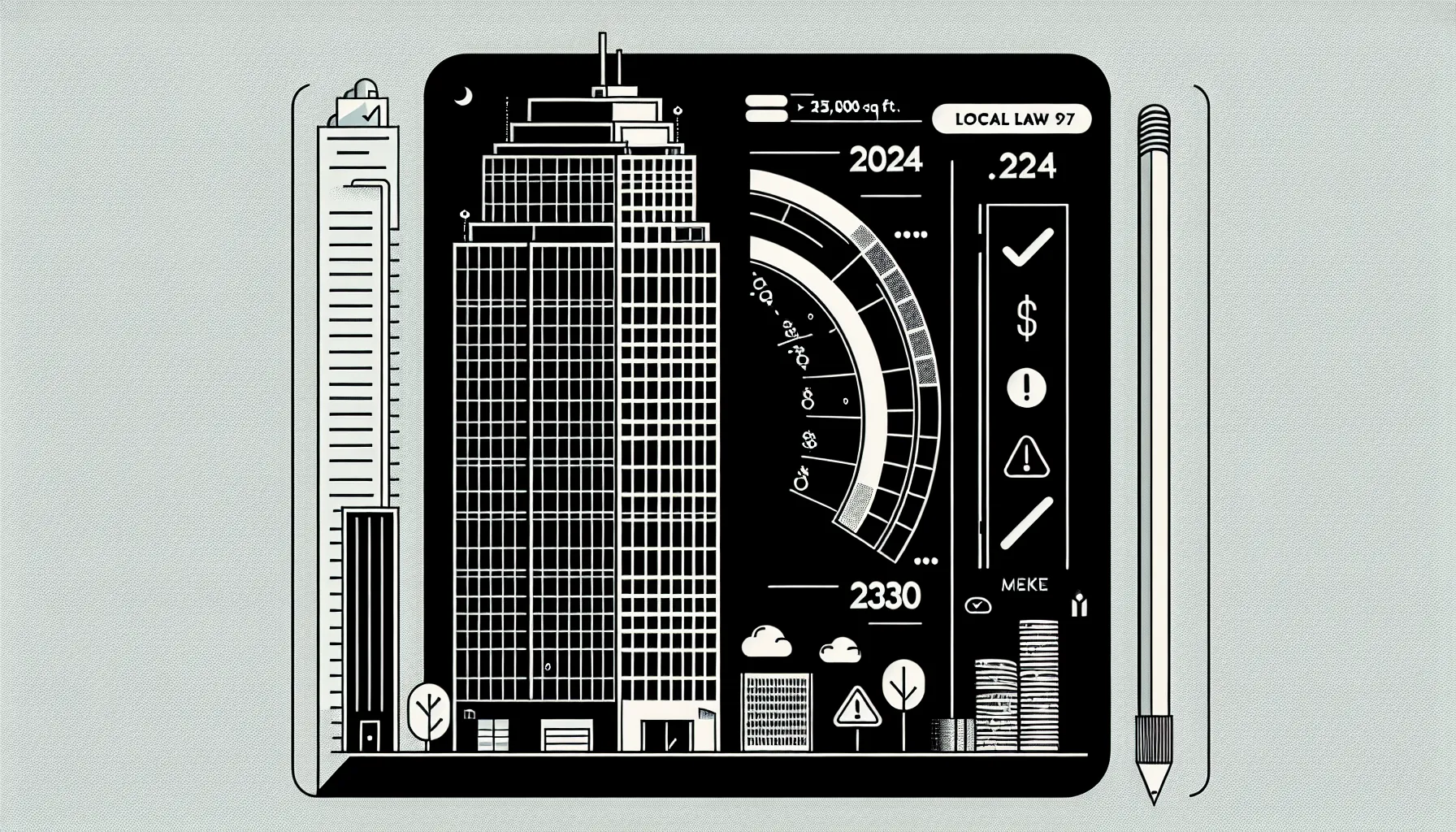
Local Law 97 (LL97) is New York City’s building emissions law, passed in 2019 as part of the Climate Mobilization Act. It sets legally binding limits on greenhouse gas emissions for most buildings over 25,000 square feet, starting in 2024 and tightening significantly in 2030.
At its core, LL97 is about driving deep energy efficiency and electrification. Instead of just asking us to report energy use (like benchmarking under Local Law 84), it caps the amount of carbon emissions a building can produce per year based on its use type.
Why this matters to us as owners and managers:
- Real financial exposure: Fines can easily reach six figures per year for non-compliant properties, and in 2030+ they can climb much higher.
- Asset value and marketability: Tenants, buyers, and lenders are already asking, “Is this building LL97-compliant?” or at least “What’s the risk?”
- Capital planning pressure: The law effectively sets a schedule for when we must modernize systems, improve envelopes, and move away from fossil fuel heating.
We can either treat LL97 as a pure compliance burden or use it as a framework to modernize our assets, reduce operating costs, and stay competitive. The difference comes down to how early and how strategically we plan.
Which Buildings Must Comply With Local Law 97
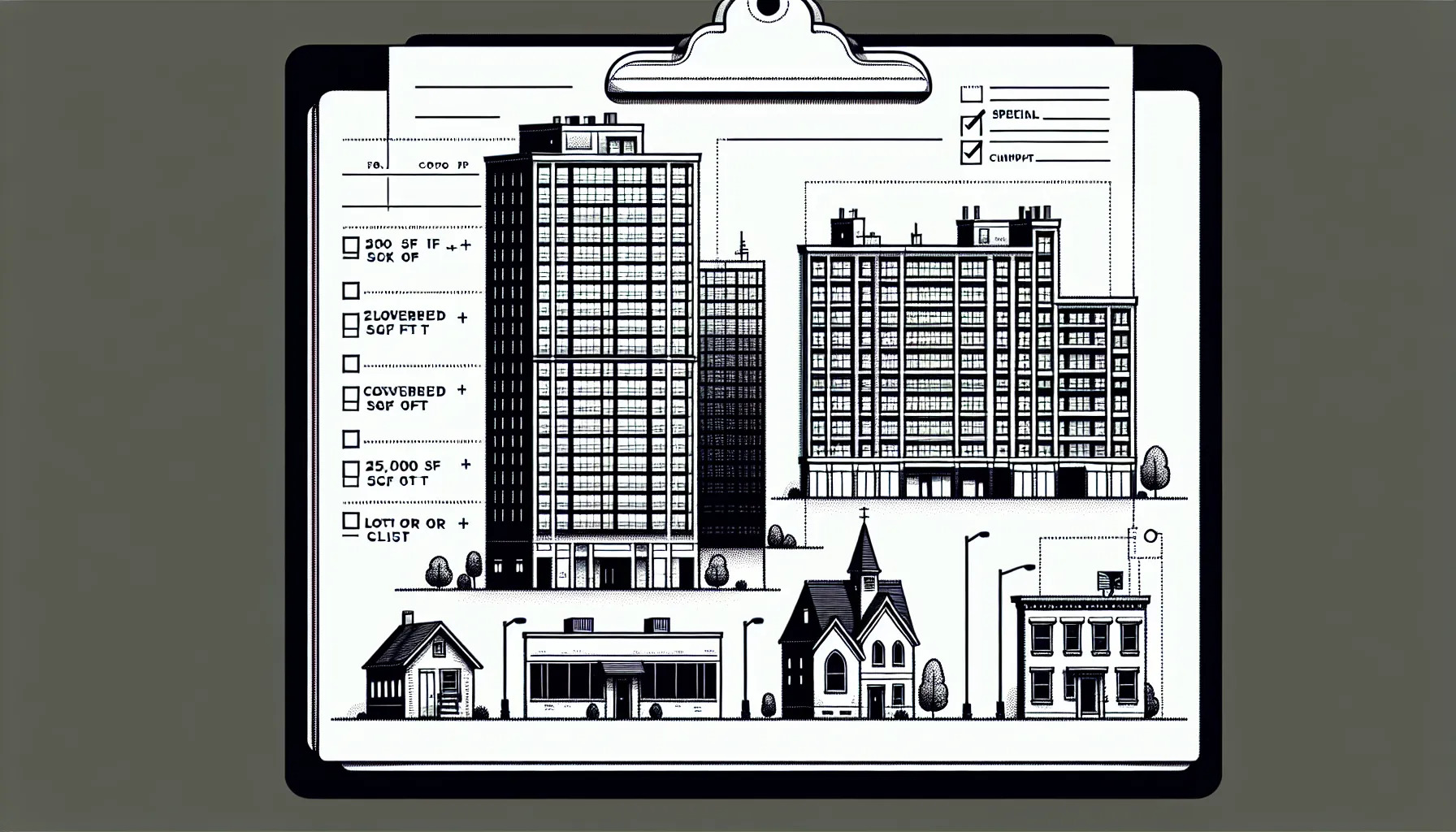
LL97 doesn’t apply to every structure in the city, but it does cover most large multifamily, office, institutional, and commercial buildings.
Covered Building Size And Occupancy Thresholds
In general, our building is covered if it meets any of these criteria:
- It’s 25,000 square feet or larger, or
- It’s part of a tax lot with multiple buildings that together total 50,000 square feet or more, or
- It’s part of a condominium association with combined floor area of 50,000 square feet or more.
Most building uses are included: residential, office, hotel, retail, school, and mixed-use properties. The emissions limits are based on how the building is classified in NYC’s property use types.
If we’re unsure, the first step is to check the City’s Covered Buildings List, which is published annually and also used for benchmarking compliance.
Exemptions And Special Building Categories
Some buildings are exempt from standard LL97 caps but still have reporting or alternative requirements. These include:
- Houses of worship
- Certain industrial facilities
- Buildings with more than 35% supportive or affordable housing, which may have alternative pathways
- City-owned buildings, which follow separate rules
Plus, certain rent-regulated and NYCHA buildings have modified requirements or different timelines.
Even when a building falls into a special category, the long-term expectation is still emissions reduction. So we should treat any exemption as breathing room, not as a reason to ignore planning.
Key Emissions Limits, Deadlines, And Compliance Periods
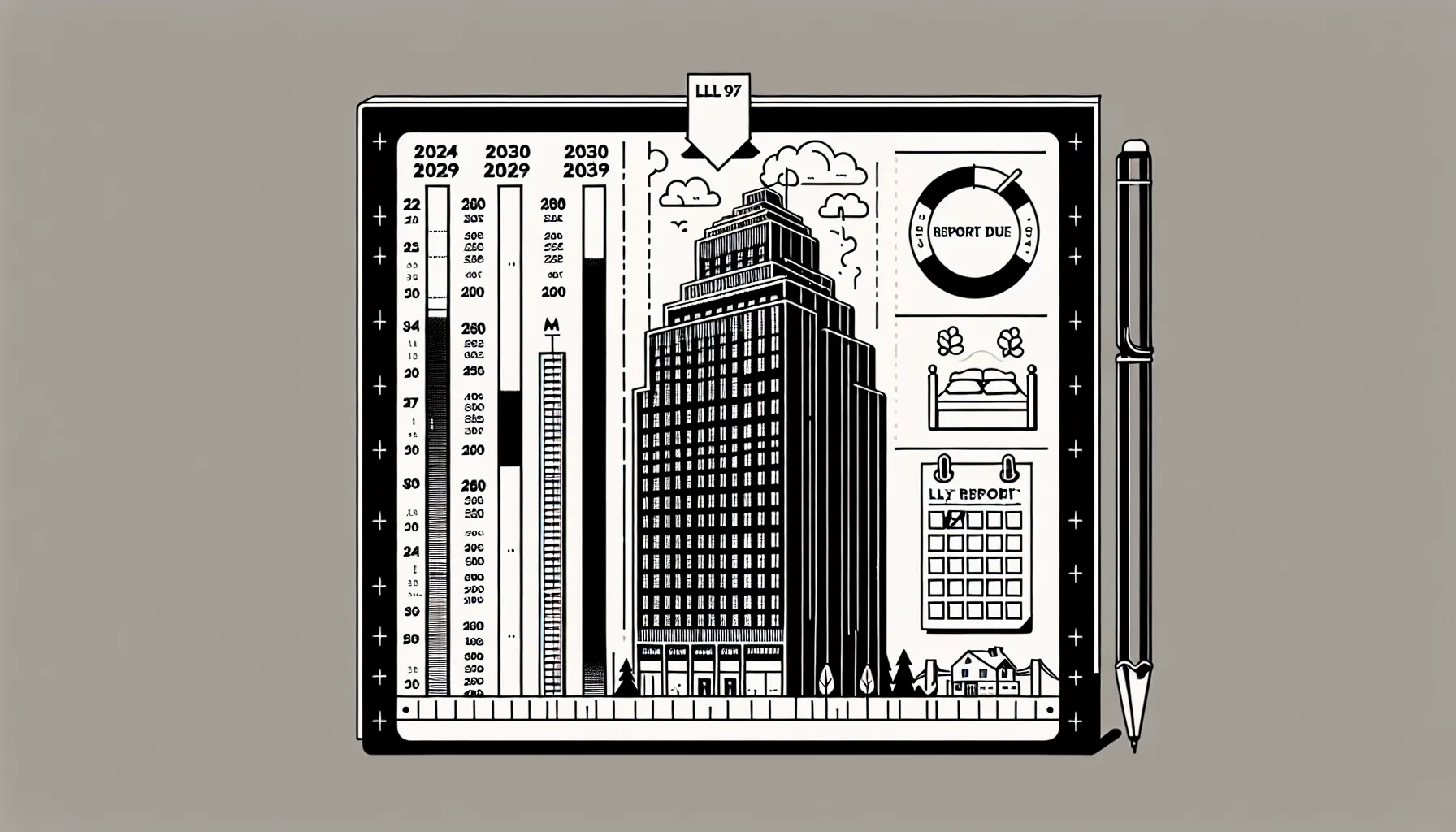
To manage LL97 risk, we need a clear view of when the caps apply and how strict they are.
Current And Future Emissions Caps
The law divides compliance into periods, each with its own emissions limits measured in metric tons of CO₂ equivalent (tCO₂e) per square foot, by occupancy type.
- First compliance period: 2024–2029
- Caps are relatively lenient and mainly target the worst‑performing buildings (roughly the top 20% of emitters).
- Second compliance period: 2030–2034
- Caps tighten dramatically, affecting a much larger share of buildings.
- Additional periods beyond 2035 are expected to continue ratcheting down limits in line with the city’s goal of 80% emissions reduction by 2050 (relative to 2005 levels).
Our building’s specific cap depends on its use mix. An office building has a different limit than a residential or hotel building. Mixed‑use properties calculate a weighted cap based on area by use.
Reporting Requirements And Key Submission Dates
LL97 compliance is demonstrated through annual reporting, based on the prior calendar year’s performance.
Key dates to know:
- May 1, 2025: First LL97 emissions report due, covering calendar year 2024.
- Each year by May 1 thereafter: LL97 report is due for the previous year.
Reports must be prepared and sealed by a Registered Design Professional (typically a professional engineer or registered architect) using energy and emissions data from the building’s systems and utility bills.
If we’re already filing Local Law 84 benchmarking, we have a head start: many of the same data streams feed both requirements, though LL97 uses additional factors for emissions calculations.
How Local Law 97 Emissions Are Calculated
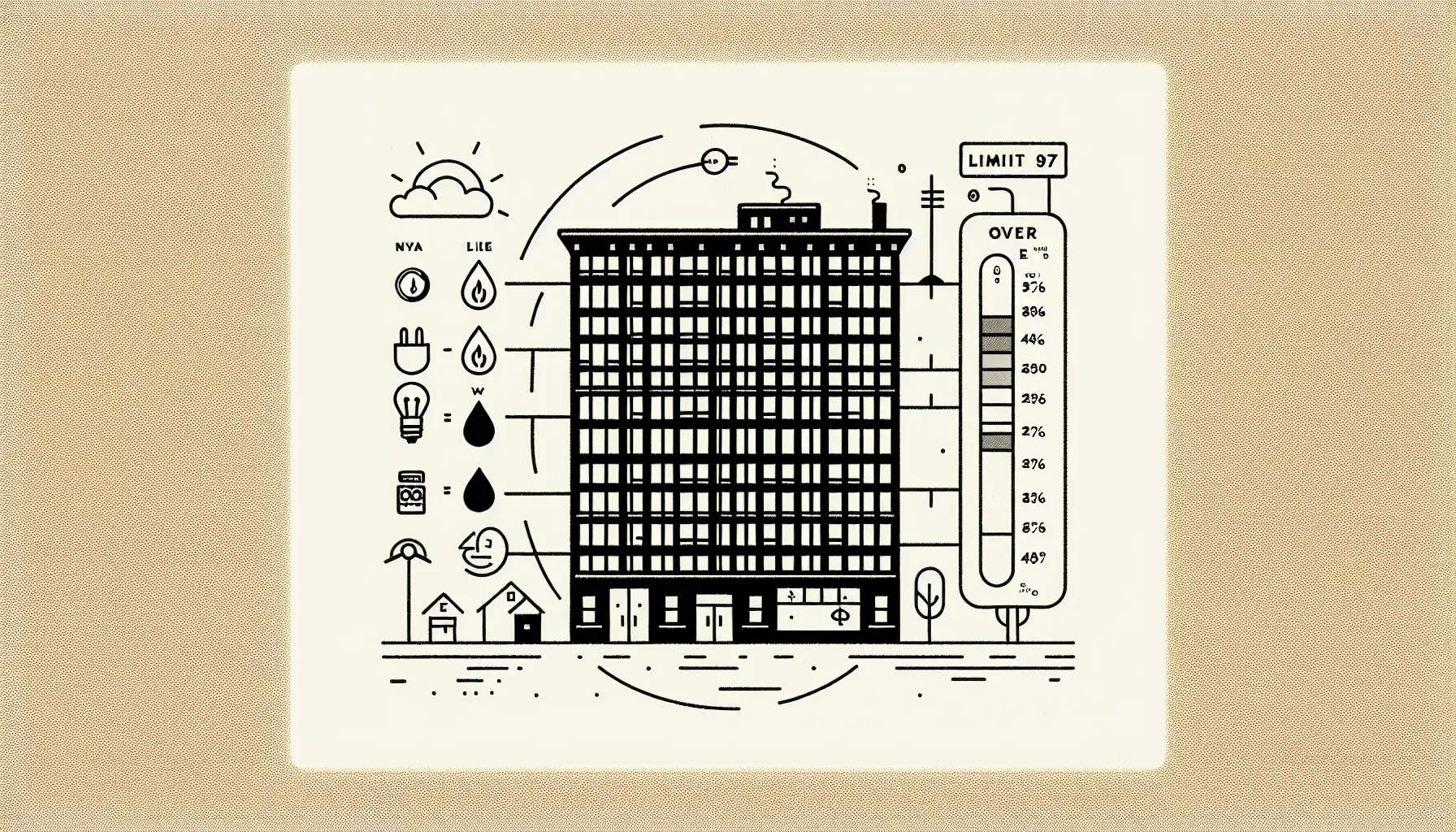
Understanding how our building’s emissions score is derived is crucial. It’s the only way to know if the modelled fines in the future are real or avoidable.
How Energy Use Becomes Reported Emissions
LL97 doesn’t simply look at energy cost or consumption. It converts actual energy use into greenhouse gas emissions using fuel‑specific factors set by the law.
In broad strokes, the process works like this:
- We gather annual energy use by type: electricity, natural gas, district steam, fuel oil, etc.
- Each energy type is multiplied by a carbon intensity factor (tCO₂e per kWh, therm, gallon, or pound of steam).
- The results are summed to get the building’s total annual emissions in metric tons of CO₂e.
- We divide that total by the building’s gross floor area to compare against the applicable emissions limit per square foot.
Electricity’s emissions factor will change over time as the NYC grid gets cleaner. That means electrification becomes more beneficial in later years, even if the immediate emissions advantage looks modest.
Using Benchmarking Data And The Covered Buildings List
Our LL84/benchmarking data is the backbone of LL97 calculations. To use it effectively:
- Confirm the building is on the Covered Buildings List, and that its square footage and primary use types are correct.
- Ensure ENERGY STAR Portfolio Manager entries (or equivalent) are accurate: meter coverage, fuel types, and usage data must be clean.
- Cross-check utility bills and submeters where applicable: small data errors can push us over the cap on paper.
An early “shadow” LL97 calculation, using our recent energy data and the published emissions factors, is one of the smartest first steps we can take. It tells us where we stand relative to 2024 and 2030 caps and how urgent remediation is.
Penalties, Adjustments, And Alternative Compliance Paths
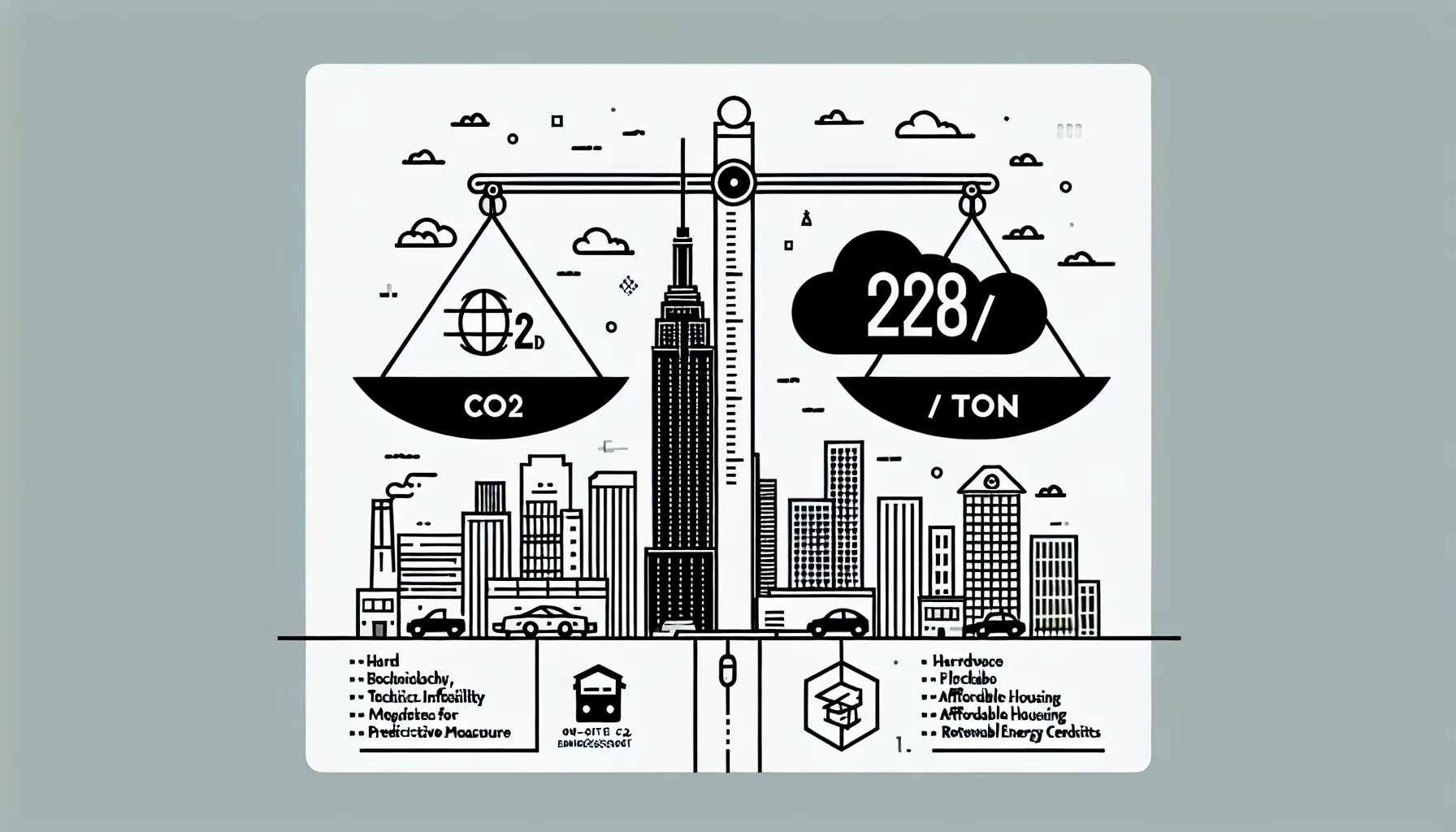
LL97 has real teeth. But it also includes adjustment and alternative compliance options for buildings facing unusual circumstances.
Standard Fines And How Penalties Are Calculated
The core penalty under Local Law 97 is:
- $268 per metric ton of CO₂e that our building’s annual emissions exceed its allowed limit.
For example, if our cap is 1,000 tCO₂e and we emit 1,400 tCO₂e, we’re 400 tons over. The potential fine is 400 × $268 = $107,200 per year.
There are additional fines for:
- Failure to submit a report
- Submission of false statements
- Failure to provide required documentation
Those fines are smaller in many cases but are entirely avoidable with basic administrative diligence.
Qualifying For Adjustments Or Alternative Compliance
The law recognizes that some buildings face unique constraints. There are provisions for:
- Hardship adjustments for buildings that can demonstrate financial distress.
- Technical infeasibility cases, where specific measures simply can’t be implemented.
- Certain affordable housing and rent-regulated buildings, which can follow modified rules.
There are also alternative compliance paths, such as:
- Using prescriptive measures for certain building types instead of hit‑the‑number caps in the near term.
- Applying documented renewable energy credits (RECs) tied to NYC grid to offset a portion of electric emissions (subject to strict limits and rules).
We should treat these paths as safety valves, not as our primary strategy. The city has made it clear that the long-term expectation is actual on‑site emissions reduction, not indefinite workarounds.
Step-By-Step Plan To Prepare Your Building For LL97
We can’t fix LL97 risk in one budget cycle, but we can chart a clear, phased path. Here’s a practical framework many owners and managers are using.
Low-Cost And No-Cost Efficiency Measures
We start with the easy wins that reduce emissions now while we plan bigger upgrades:
- Optimize controls: Recalibrate building automation systems, tighten schedules, and eliminate simultaneous heating and cooling.
- Tune up existing equipment: Clean coils, balance hydronic systems, and verify sensor accuracy.
- Improve O&M practices: Regular filter changes, boiler maintenance, and steam trap surveys.
- Address basic envelope issues: Seal obvious air leaks, repair vestibules and door closers.
- Engage occupants: Clear communication about thermostats, plug loads, and after-hours usage.
These measures often cut 5–15% of energy use with minimal capital outlay.
Major Retrofits And Electrification Strategies
Next, we plan the deeper measures that align equipment life cycles with LL97 deadlines:
- High-efficiency boilers and chillers (where replacement with like-for-like is still rational for the short term).
- Heat pump systems for domestic hot water and space heating, especially when major replacement is already due.
- Lighting upgrades to LEDs and smart controls in lagging areas (garages, stairwells, back-of-house).
- Advanced controls and submetering to better manage large tenants and high-load areas.
- Envelope improvements (windows, insulation, air sealing) where cost-effective or tied to other facade work.
We don’t need to electrify everything overnight, but we do need a plan that avoids stranding new fossil fuel equipment just as 2030 caps arrive.
Creating A Long-Term Decarbonization Roadmap
The most resilient owners we work with treat LL97 as a capital planning framework, not just another law. A solid roadmap usually includes:
- A baseline LL97 analysis showing 2024 and 2030 gaps.
- A multi‑phase upgrade plan matched to equipment end of life and tenant turnover.
- A financial model comparing fines vs. project costs, incentives, and operating savings.
- A grid-forward strategy that anticipates cleaner electricity and potential future requirements.
This roadmap becomes our guiding document for boards, investors, and lenders, and a way to justify proactive investments rather than reactive fines.
Financing, Incentives, And Support Resources
One of the biggest questions we face is: how do we pay for all this? The good news is that a growing set of incentives and financing tools are aimed directly at LL97 compliance.
Available Public And Utility Incentive Programs
We should start by exploring:
- NYSERDA programs for energy studies, retro-commissioning, heat pump pilots, and deep retrofits.
- Con Edison and National Grid incentives for efficient equipment, controls, and electrification measures.
- Federal tax credits and deductions (such as those enhanced by recent federal legislation) for certain efficiency and clean energy investments.
These programs change frequently, so it’s worth checking current offerings before finalizing project scopes. Layering incentives can significantly reduce net project costs.
Plus, Property Assessed Clean Energy (PACE) financing is available in NYC, allowing us to fund qualified energy improvements through a property tax assessment with long-term repayment.
Working With Energy Consultants And Design Professionals
Most buildings won’t navigate LL97 alone. Experienced partners can help us:
- Conduct LL97 impact assessments and identify the most cost-effective measures.
- Model different retrofit scenarios against future emissions caps and utility price assumptions.
- Coordinate with architects and engineers to design systems that meet both comfort needs and emissions limits.
- Prepare documentation for incentive applications and LL97 reporting.
The key is to choose professionals who understand both the technical and regulatory sides of Local Law 97, not just general energy efficiency.
Common Mistakes To Avoid And Best Practices For Compliance
Local Law 97 is complex, but many headaches come from the same avoidable missteps.
Common mistakes we see:
- Waiting until fines hit: Treating 2024 as a “test year” rather than a real compliance deadline.
- Ignoring data quality: Sloppy benchmarking and metering lead to inaccurate emissions calculations, sometimes overstating risk, sometimes underreporting.
- One-off projects with no roadmap: Replacing boilers or chillers in isolation without a long-term decarbonization plan.
- Assuming exemptions will last forever: Relying on special status instead of steadily improving performance.
Documentation, Recordkeeping, And Owner–Tenant Coordination
Best practices that consistently pay off include:
- Centralized documentation: Keep utility bills, commissioning reports, as-built drawings, and equipment specs organized and accessible.
- Clear tenant communication: Many emissions drivers (plug loads, supplemental HVAC, after-hours use) sit with tenants. LL97 compliance needs to be baked into leases and building rules.
- Regular performance reviews: At least annually, we should review energy use, LL97 status, and progress against our roadmap.
- Board and investor updates: For co-ops, condos, and institutional owners, periodic LL97 briefings prevent surprises and build support for capital projects.
When we treat LL97 as an ongoing management discipline rather than a one-time hurdle, compliance becomes much more manageable.
Conclusion
Local Law 97 is reshaping how we plan, finance, and operate buildings in New York City. It’s not simply an environmental policy: it’s a new baseline for asset management.
If we understand which buildings are covered, how emissions are calculated, what the timelines look like, and what tools are available, we can move from fearing fines to managing a strategic transition. The earlier we start, with data cleanup, quick operational wins, and a long-term decarbonization roadmap, the more options we keep on the table.
The bottom line: LL97 isn’t going away, and future caps will only get stricter. But with clear information, the right partners, and a phased plan, we can turn compliance into an opportunity to modernize our buildings, lower operating costs, and keep our properties resilient in a carbon-constrained future.
Local Law 97 FAQs
What is Local Law 97 and which buildings does it apply to?
Local Law 97 is New York City’s building emissions law that sets annual greenhouse gas limits for most buildings 25,000 square feet and larger, or properties/condos with combined floor area of 50,000 square feet or more. It mainly covers multifamily, office, hotel, institutional, and mixed‑use buildings, starting in 2024.
How are Local Law 97 emissions calculated for my building?
Under Local Law 97, annual energy use (electricity, gas, steam, fuel oil, etc.) is converted to greenhouse gas emissions using fuel‑specific carbon factors. The total emissions in metric tons of CO₂e are divided by the building’s gross floor area and compared to a use‑type‑specific emissions limit per square foot.
What are the penalties for not complying with Local Law 97?
If your building’s emissions exceed its LL97 cap, the core fine is $268 per metric ton of CO₂e over the limit, assessed annually. Additional penalties can apply for failing to file a report, submitting false information, or not providing required documentation, though these are generally smaller and avoidable with proper administration.
What are the key Local Law 97 deadlines I should know?
The first compliance period runs from 2024–2029, with relatively lenient caps targeting the worst emitters. The second period, 2030–2034, brings much stricter limits. The first emissions report is due May 1, 2025 for calendar year 2024, and annually by May 1 for each subsequent year’s performance.
What upgrades are most effective to prepare my building for LL97?
Owners typically start with low‑ and no‑cost measures like optimizing controls, tuning HVAC equipment, improving operations, sealing obvious envelope leaks, and engaging occupants. Over time, they plan bigger moves: heat pumps for space and water heating, high‑efficiency boilers/chillers, LED lighting with controls, submetering, and targeted envelope improvements aligned with equipment end‑of‑life.
Does Local Law 97 apply to smaller buildings and one‑ to four‑family homes?
Most one‑ to four‑family homes and smaller buildings under 25,000 square feet are not subject to LL97 emissions caps. However, they may be covered by other NYC energy codes and requirements. If a smaller building is on a tax lot or condo association that totals 50,000 square feet or more, LL97 can still apply.