
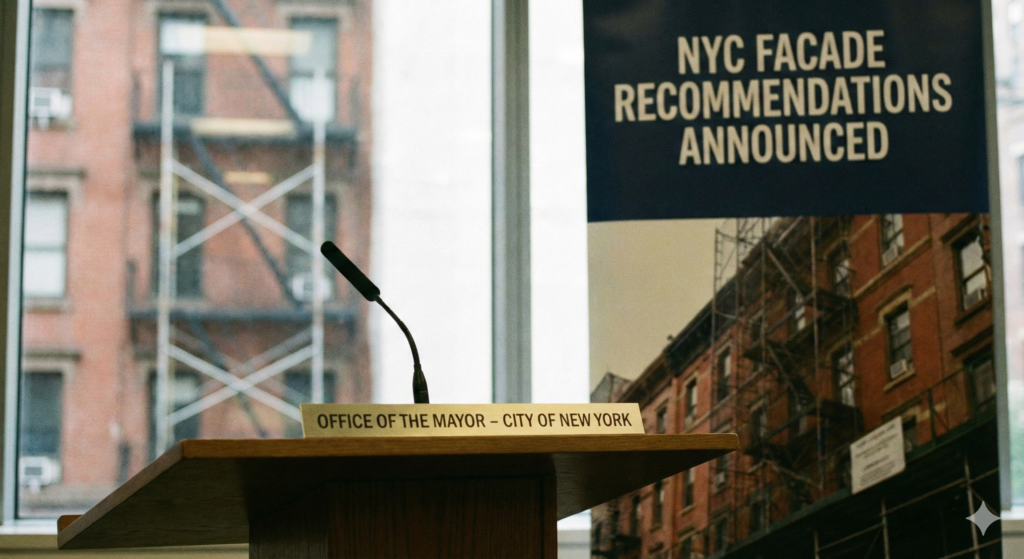
When a single piece of crumbling masonry can shut down a sidewalk or even claim a life, facade safety stops being a niche concern and becomes a citywide priority. With the NYC Mayor’s Office now announcing updated facade recommendations, we’re entering a new phase of how buildings are inspected, repaired, and monitored across the five boroughs.
In this text, we break down what’s driving these changes, what the new recommendations actually say, and what building owners, managers, and tenants should be doing right now to stay ahead of enforcement and risk.
Background: Why NYC Facade Safety Is Under Scrutiny
New York City’s skyline is aging. More than half of the city’s buildings were constructed before 1960, and that means older masonry, aging anchors, and decades of patchwork repairs. After several high‑profile incidents involving falling facade pieces, most notably the 2019 tragedy near Times Square, public pressure and legal scrutiny intensified.
The City’s primary regulatory framework here is Local Law 11/FISP (Façade Inspection & Safety Program), which requires periodic inspections of buildings over six stories. According to the NYC Department of Buildings’ own reporting, thousands of facades are classified as “Unsafe” or “SWARMP” (Safe With a Repair and Maintenance Program) in each inspection cycle, underscoring how widespread the risk really is (NYC DOB).
At the same time, enforcement actions and penalties have been on the rise. High civil penalties, emergency sidewalk sheds, and public frustration with long‑term scaffolding have all pushed facade safety into the policy spotlight. Investigations by outlets like The New York Times have highlighted how long some buildings sit in non‑compliance, leaving sheds up for years.
Against this backdrop, the NYC Mayor’s Office has moved to tighten expectations, clarify responsibilities, and better align enforcement with actual risk on the street level.
Overview Of The New Facade Recommendations
The Mayor’s Office recommendations are meant to work alongside the existing FISP rules, not replace them. In broad strokes, they focus on:
- Earlier detection of hazards through more frequent and better‑documented inspections.
- Risk‑based enforcement, concentrating on high‑traffic corridors, schools, and vulnerable pedestrian zones.
- Greater transparency, so the public can more easily see where unsafe conditions and facade violations exist.
- Shorter windows to correct unsafe conditions and remove unnecessary sidewalk sheds.
We’re seeing a push toward more comprehensive data sharing between the Department of Buildings, HPD, and related agencies. That makes tools like the public violation lookup at ViolationWatch.nyc and the DOB’s Building Information System more important than ever for tracking open facade issues.
In practice, these recommendations signal a culture shift: facades are no longer just a periodic compliance box to check, but an ongoing life‑safety priority that owners are expected to actively manage.
Key Changes For Building Owners And Managers
For owners and property managers, the new facade recommendations translate into several concrete expectations:
- More robust inspections and documentation
We’re expected to go beyond bare‑minimum FISP filings. That means clearer photo documentation, better mapping of defect locations, and closer tracking of repair timelines. Engineers and architects will likely standardize digital reports and share data directly with the City.
- Faster response to unsafe conditions
Where an unsafe condition is identified, the expectation is that we:
- Install protection (sheds, netting) immediately.
- Submit a remediation plan in weeks, not months.
- Complete repairs on a compressed schedule.
- Active monitoring between cycles
The days of “inspect once every few years and forget it” are over. We should be scheduling interim visual checks, especially after heavy storms, freeze–thaw cycles, or construction work that may stress the facade. This is in line with best practices recommended by groups like the International Concrete Repair Institute.
- Using public data as a management tool
Regularly checking addresses on the NYC violation lookup tool helps us see open facade‑related issues, ECB/OATH penalties, and historical complaints. That visibility is critical when we’re budgeting, planning capital projects, or preparing for refinancing and due diligence.
Owners who treat these recommendations as a strategic risk‑management framework, not just another compliance checklist, will be in a far better position as enforcement tightens.
Impact On Tenants, Pedestrians, And Neighborhoods
Tenants and neighbors often see only the most visible symptom of facade trouble: sidewalk sheds that seem to stay forever. The Mayor’s Office recommendations aim to change that dynamic.
For tenants, we should see:
- Faster remediation of visibly deteriorating brick and stone.
- Clearer communication from owners about inspection findings and repair timelines.
- Reduced exposure to falling debris and water intrusion, which can lead to mold and structural damage.
For pedestrians and local businesses, the goals are:
- Fewer long‑term sheds blocking storefronts and darkening sidewalks.
- Better maintained protection where it is required, in line with OSHA and city safety guidance.
- Improved lighting and security underneath necessary scaffolding.
At a neighborhood scale, more proactive facade work can support streetscape revitalization efforts, including outdoor dining, retail visibility, and tourism. When we pair good design with rigorous safety, we end up with blocks that feel both safer and more vibrant.
Public‑facing databases like ViolationWatch let residents and community boards see where chronic facade non‑compliance clusters, and that transparency can drive political and legal pressure to address neglected properties.
Compliance Timeline And Enforcement Expectations
The recommendations introduce tighter expectations around how quickly issues get addressed and how seriously non‑compliance is treated.
We can anticipate:
- Accelerated timelines for correcting unsafe facade classifications, with milestones for temporary protections, permit filings, and final sign‑off.
- Higher penalties for repeat offenders and owners who leave sheds up for years without meaningful repair progress, building on the City’s existing escalating fine structure (NYC Admin. Code §28-302).
- Closer coordination with OATH/ECB, ensuring that unpaid penalties and ignored violations can trigger liens or other collection actions.
- Targeted sweeps in corridors with heavy foot traffic, schools, and senior centers, reflecting a risk‑based enforcement lens.
Because timelines and enforcement priorities can evolve, we should be checking both the DOB facade page and our own buildings on the violation lookup regularly. Waiting for a formal notice or a 311 complaint is almost guaranteed to be too late, and more expensive.
What Property Stakeholders Should Do Now
With the NYC Mayor’s Office putting facade safety front and center, we can’t afford a wait‑and‑see approach. A practical game plan looks like this:
- Audit our current facade status
- Pull recent FISP reports, permits, and repair contracts.
- Run every building through the public NYC violation search to identify open items.
- Prioritize high‑risk properties
Focus on:
- Buildings over six stories with older brick or terracotta.
- Corners on busy avenues, near schools, or transit hubs.
- Properties with long‑standing sheds or prior unsafe ratings.
- Engage qualified professionals early
Partner with experienced QEWI (Qualified Exterior Wall Inspector) firms that understand both engineering best practices and NYC enforcement culture. Guidance from organizations like the American Society of Civil Engineers can help us frame long‑term maintenance strategies.
- Create a rolling facade capital plan
Instead of scrambling every cycle, we should:
- Map likely repair needs over 5–10 years.
- Align facade work with roof, window, and energy upgrades where possible.
- Reserve funds annually to avoid emergency‑only spending.
- Communicate with tenants and community stakeholders
Explain the inspection and repair process, expected disruptions, and long‑term benefits. When we’re transparent, it’s easier to maintain trust even when scaffolding or noise is unavoidable.
The owners and managers who treat these recommendations as an opportunity to modernize their facade programs will be the ones least disrupted by future rule changes.
Conclusion
Facade safety in New York City has always mattered, but the NYC Mayor’s Office recommendations make it clear that the tolerance for delay and neglect is shrinking. We’re moving toward a model where facades are continuously managed assets, not background scenery.
If we’re responsible for property in the city, whether as owners, managers, boards, or even engaged tenants, now is the time to:
- Know each building’s facade condition and violation history.
- Use public tools like ViolationWatch.nyc to stay informed.
- Budget for proactive inspections and capital repairs instead of reactive crises.
Handled well, these recommendations won’t just keep us in compliance: they’ll help create safer sidewalks, stronger buildings, and neighborhoods that actually look as solid as they’re required to be.
Key Takeaways
- The new NYC facade recommendations from the Mayor’s Office build on Local Law 11/FISP and shift facades from periodic compliance items to continuously managed life-safety assets.
- Owners and managers must conduct more robust inspections with detailed photo documentation, faster remediation plans, and ongoing monitoring between FISP cycles, especially after severe weather.
- Risk-based enforcement will focus on high-traffic areas, schools, and vulnerable pedestrian zones, with accelerated correction timelines and higher penalties for chronic non-compliance and long-standing sidewalk sheds.
- Public tools like ViolationWatch.nyc and the DOB’s Building Information System are now essential for tracking facade violations, penalties, and historic issues when budgeting or planning capital work.
- To stay ahead of NYC facade recommendations, stakeholders should audit current facade status, prioritize high-risk buildings, engage qualified inspectors early, and create a rolling 5–10 year facade capital plan.
- Improved facade safety and faster repairs are expected to reduce long-term scaffolding, enhance pedestrian safety, and support more vibrant, business-friendly streetscapes citywide.
Frequently Asked Questions about NYC Facade Recommendations
What are the new NYC Mayor’s Office facade recommendations?
The NYC Mayor’s Office facade recommendations are policy guidelines that work alongside Local Law 11/FISP. They emphasize earlier detection of hazards, risk‑based enforcement, greater public transparency, and shorter timelines to fix unsafe facades and remove long‑term sidewalk sheds across New York City’s five boroughs.
How do the NYC facade recommendations change requirements for building owners and managers?
Owners and managers are expected to go beyond minimum FISP filings. The NYC facade recommendations call for more robust photo documentation, clearer mapping of defects, faster remediation of unsafe conditions, interim checks between cycles, and regular use of public violation lookup tools to track open facade issues and penalties.
How do the new facade recommendations affect tenants and pedestrians in NYC?
Tenants should see faster repairs to deteriorating masonry, clearer communication about inspection findings, and less risk from falling debris or water intrusion. Pedestrians and local businesses may benefit from fewer long‑term sidewalk sheds, better‑maintained protections where needed, and improved lighting and security under required scaffolding.
What should property stakeholders do now to comply with NYC Mayor’s Office facade recommendations?
Stakeholders should audit each building’s facade status, review FISP reports and permits, and run addresses through NYC violation lookup tools. Next steps include prioritizing high‑risk properties, engaging an experienced QEWI, creating a 5–10 year facade capital plan, and communicating clearly with tenants and community groups about upcoming work.
How do these NYC facade recommendations relate to Local Law 11/FISP?
The recommendations do not replace Local Law 11/FISP; they build on it. FISP still governs mandatory inspections for buildings over six stories. The NYC Mayor’s Office facade recommendations add expectations around more frequent monitoring, better documentation, risk‑based enforcement, and tighter timelines for correcting unsafe classifications and removing unnecessary sidewalk sheds.
Do smaller buildings or new constructions need to worry about NYC facade safety rules?
Even if a building is under six stories and outside FISP, owners still have a legal duty to maintain a safe exterior under the NYC Administrative Code. Newer buildings can develop issues from poor detailing, water intrusion, or construction defects, so periodic visual checks and prompt repairs are smart risk‑management practices regardless of height or age.