

Most New York City owners don’t set out to ignore violations. We’re busy, juggling contractors, tenants, lenders, and a stream of city mail that all looks the same. A notice from HPD or DOB feels like one more thing that can “wait until next week.”
That’s where people get hurt, financially and sometimes literally.
In NYC, ignoring HPD (Department of Housing Preservation and Development) or DOB (Department of Buildings) violations doesn’t make them go away. It quietly turns manageable issues into daily fines, liens, blocked refinances, lost sales, and in worst‑case scenarios, vacate orders or even criminal exposure.
In this guide, we walk through what actually happens when HPD or DOB violations sit open, how they snowball, and what we should do the moment a violation lands in our mailbox or email. We’ll also look at practical tools and professionals that can help us stay ahead of NYC building violations instead of always playing catch‑up.
Understanding HPD And DOB Violations In New York City
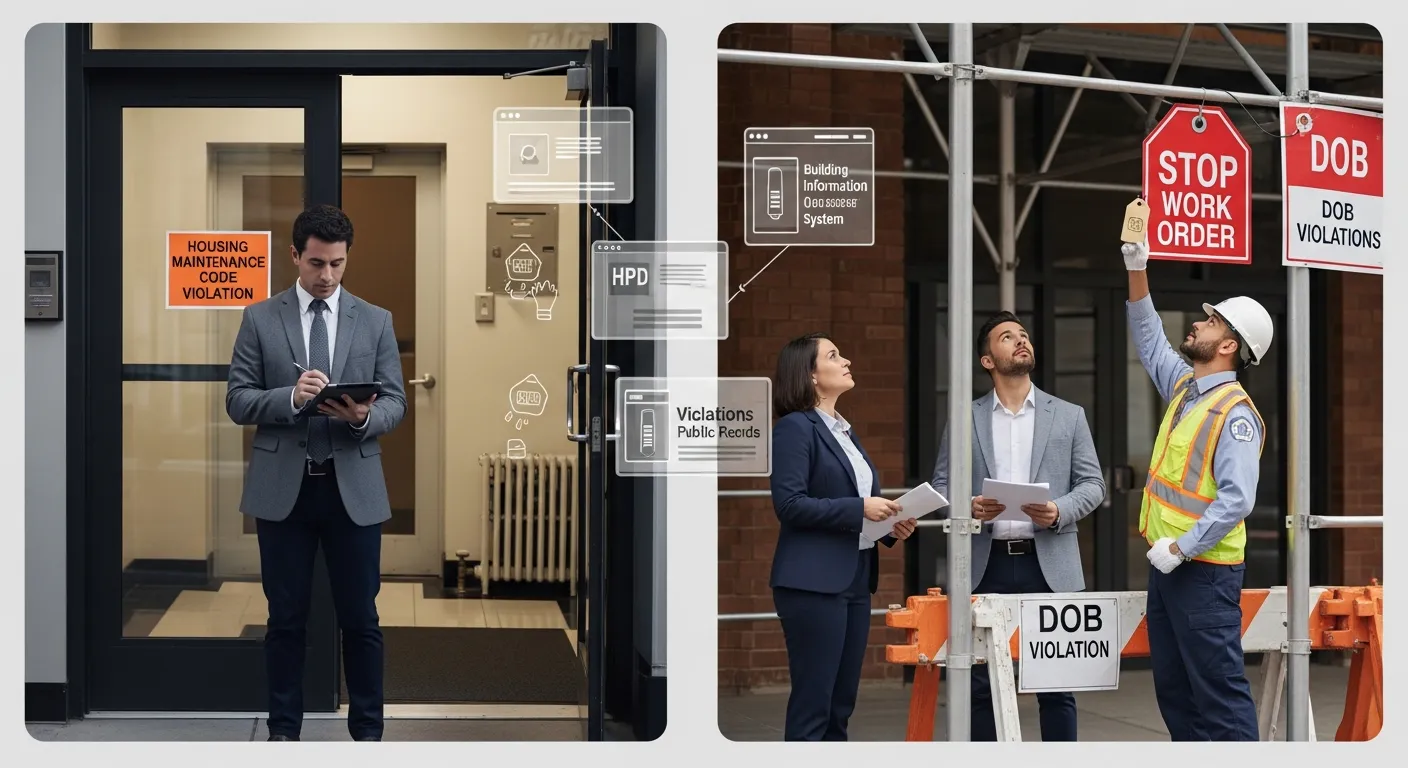
What HPD Does And When It Gets Involved
HPD is the city agency that enforces the NYC Housing Maintenance Code for residential buildings. Its focus is habitability and basic living conditions: heat and hot water, leaks, mold, pests, lead paint, window guards, self‑closing doors, and essential services.
In practice, HPD shows up in our lives when:
- Tenants call 311 about conditions like no heat, chronic leaks, or vermin.
- HPD runs proactive inspection programs in certain neighborhoods or for buildings with long violation histories.
- There are citywide initiatives around issues like lead, self‑closing doors, or fire safety.
When inspectors confirm a problem, they issue HPD violations with strict deadlines to fix and certify correction. Those violations become public record in HPD’s online database.
For more detail, HPD’s official guidance for owners is posted on the city’s website: https://www.nyc.gov/site/hpd/services-and-information/what-every-housing-owner-needs-to-know.page.
What DOB Does And When It Gets Involved
DOB is about the safety and legality of the building itself, construction, structure, use, and equipment. It regulates:
- Structural stability and egress
- Proper use and occupancy (no illegal SROs or cellar apartments)
- Work permits and adherence to approved plans
- Scaffolds, construction sites, façades, elevators, boilers, and more
DOB gets involved when:
- Someone files a complaint (for example, about illegal construction, sidewalk sheds, or unsafe conditions).
- Inspectors see unpermitted work or unsafe scaffolds.
- Routine programs require inspections (façade, elevators, gas piping, etc.).
DOB issues violations and Stop Work Orders: in severe cases, it can post Vacate Orders if a space or building is unsafe to occupy. Violations appear in DOB’s Building Information System (BIS) and DOB NOW.
Official DOB information on violations and enforcement is available at https://www.nyc.gov/site/buildings/safety/violations.page.
Types Of HPD Violations And How They Are Issued
Classes Of HPD Violations: A, B, And C
HPD violations are grouped by how dangerous the condition is:
- Class A – Non‑hazardous
Examples: minor leaks, peeling paint (without lead), small maintenance items.
Time to correct: generally 90 days.
- Class B – Hazardous
Examples: some mold conditions, certain door or window issues, more serious leaks.
Time to correct: generally 30 days.
- Class C – Immediately hazardous
This is the class that should keep us up at night. It includes:
- No heat or hot water
- Severe mold or moisture
- Lead‑based paint hazards
- Missing window guards where required
- Rodents and heavy infestations
- Broken self‑closing doors in fire‑rated paths of egress
Time to correct: ranges from 24 hours to 21 days, depending on the issue, and many require truly immediate action.
Ignoring Class C violations is one of the fastest ways to rack up crushing penalties and land in housing court.
Common HPD Violations In Rental Buildings
Across walk‑ups, small multi‑families, and larger rentals, we tend to see the same patterns:
- No or inadequate heat/hot water in winter
- Chronic leaks that lead to mold and damaged ceilings
- Pests (rats, mice, roaches, bedbugs)
- Broken self‑closing doors in stairwells or building entrances
- Missing or non‑functioning smoke and CO detectors
- Lead paint hazards in pre‑1960 buildings with young children
- Loose or defective window hardware and locks
These violations often stack. A leak becomes mold, which becomes ceiling damage, which eventually triggers Class B or Class C conditions across multiple units.
How And Why Tenants File Complaints With HPD
Most HPD actions start with a 311 call. A tenant reports something like:
- “We haven’t had heat for three days.”
- “There’s mold and a strong smell in the bedroom.”
- “The front door doesn’t close and anyone can walk in.”
HPD schedules an inspection. If the inspector confirms the problem, a violation is issued with a class, a correction deadline, and a requirement to certify correction once it’s fixed.
Even if we feel a complaint is exaggerated or unfair, once HPD sees a condition and writes it up, it’s now an enforcement matter with real financial and legal consequences.
Types Of DOB Violations And How They Are Issued
Major DOB Violations: ECB/OATH, Work Without A Permit, And Unsafe Conditions
DOB violations are typically classified under 1 RCNY §102‑01 as:
- Class 1 – Immediately hazardous
- Class 2 – Major violations
- Class 3 – Lesser violations
Many are issued as ECB/OATH summonses (formerly ECB), which require us to appear at the Office of Administrative Trials and Hearings.
Common major categories include:
- Work Without a Permit – doing structural, plumbing, or electrical work without proper DOB permits.
- Work Contrary to Approved Plans – deviating from what DOB signed off on.
- Failure to Maintain the Building – broken parapets, loose masonry, unsafe façades, deteriorated fire escapes.
- Unsafe conditions – blocked exits, illegal partitions that compromise egress, unstable structures, unsafe scaffolds.
Serious Class 1 violations can lead to Stop Work Orders or Vacate Orders and hefty daily penalties if we don’t move quickly.
Common DOB Violations For Small Property Owners
For smaller landlords and homeowners, a familiar set of infractions shows up again and again:
- Converting basements or cellars into illegal apartments or SROs
- Adding internal rooms that block required exits
- Putting up decks, extensions, or sheds without permits
- Missing, expired, or incorrect construction signage
- Failure to file mandatory reports (façade inspections, boiler, elevator, gas piping, depending on the building)
- Guardrails or window guards that don’t meet code
These aren’t just technicalities. They can complicate insurance claims and create serious liability if there’s an accident.
Inspections, Stop Work Orders, And Vacate Orders
DOB inspections can be triggered by:
- 311 complaints
- Site observations by DOB staff
- Random audits or citywide safety sweeps
If inspectors find immediate hazards, DOB can issue:
- A Stop Work Order (SWO) – halting all work until conditions are corrected and DOB clears the order.
- A Partial or Full Vacate Order – requiring occupants to leave a space or entire building if it’s unsafe.
Ignoring these orders is extremely risky. Work that continues under an SWO can draw new Class 1 violations and sharply higher penalties.
DOB explains these enforcement tools on its site: https://www.nyc.gov/site/buildings/safety/enforcement.page.
Immediate Consequences Of Ignoring An HPD Or DOB Violation
Deadlines To Correct Violations And Certify Correction
Every HPD and DOB violation comes with two clocks running:
- Time to physically correct the condition
– For HPD, that’s tied to the Class A/B/C deadlines.
– For DOB, the violation or applicable rule sets a compliance date.
- Time to file a certification of correction
– HPD requires us to certify online or by form that the condition is fixed.
– DOB typically uses a Certificate of Correction (such as AEU‑2), often requiring photos, affidavits, and proof of any permits or sign‑offs.
Missing either deadline can trigger additional penalties, even if the physical work is done but never documented.
Daily Civil Penalties And Compounded Fines
Once those initial correction periods expire, the financial meter starts ticking.
For HPD violations (especially after the 2023 penalty updates):
- Class A: $50–$150 plus $25 per day.
- Class B: $75–$500 plus $25–$125 per day.
- Class C (5+ units): $150–$1,200 initial plus $150–$1,200 per day.
Heat and hot water violations can run $350–$1,250 per day, more for repeat offenses.
For DOB violations under the NYC Administrative Code §28‑202.1:
- Class 1 (immediately hazardous): $2,500–$25,000 per violation, plus up to $1,000 per day until corrected.
- Class 2 (major): generally $1,000–$10,000.
- Class 3 (lesser): up to $500.
DOB can also charge $5,000 for failing to certify correction of certain immediately hazardous violations, and may refuse to accept a Certificate of Correction, or to rescind a Stop Work Order, until penalties are paid.
In other words, the longer NYC building violations sit open, the more expensive every day becomes.
Escalating Penalties And Legal Exposure Over Time
Administrative Hearings And Default Judgments
Most uncured DOB violations move to an OATH hearing. We receive a summons with a hearing date. If we:
- Appear and present evidence, we may win a dismissal, prove timely correction, or at least qualify for mitigated penalties.
- Ignore the hearing, we’re treated as a default. OATH can issue a default judgment at the maximum penalty plus additional default fees.
Once a judgment is entered, collecting becomes a matter of city enforcement rather than negotiation.
HPD matters can also end up in Housing Court, especially when there are repeated Class C conditions, uncorrected heat/hot water issues, or chronic HPD complaints.
Liens, Collections, And Impact On Your Credit
When fines and emergency repair charges remain unpaid, HPD and DOB can place liens against the property. Over time, those liens may be:
- Added to the property tax bill
- Subject to collection actions
- Factored into credit and risk assessments by lenders and insurers
A building with large, unresolved HPD or DOB debt looks risky to underwriters. Even if our personal credit score is strong, the property’s public record can cause delays, higher interest pricing, or outright denials.
This is where proactive monitoring helps. Using a service like ViolationWatch (https://violationwatch.nyc/) lets us see violation patterns and address problems before they escalate into liens and judgments.
How Ignored Violations Affect Property Sales, Refinancing, And Insurance
Open Violations And Title Searches During Sale Or Transfer
When we go to sell a building, or even a small 2‑family, buyers’ attorneys and title companies routinely search HPD and DOB records. They’re looking for:
- Open HPD violations, especially Class C
- Open DOB violations and active Stop Work or Vacate Orders
- Outstanding OATH/ECB judgments and property liens
Significant open violations rarely get waved through. Instead, we see:
- Demands to clear violations before closing
- Escrow holdbacks to cover outstanding work and penalties
- Price reductions when buyers factor in the cost and headache of cleanup
If we don’t even know what’s open, negotiations can stall. Tools like the NYC violation lookup tool (https://lookup.violationwatch.nyc/lookup) make it easier to run a quick check before we list a property or sign a contract.
Refinancing, Mortgage Approval, And Lender Requirements
Lenders treat HPD and DOB violations as red flags for collateral risk. In a refinance or acquisition loan, underwriters regularly require:
- Clearance of serious HPD Class C and DOB Class 1 violations
- Payment of outstanding OATH judgments
- Evidence that Stop Work or Vacate Orders have been lifted
If we can’t demonstrate resolution, closing can be delayed for months, or the lender can simply walk away.
This is where staying ahead of NYC property compliance pays off. If we keep violations under control, refis and line‑of‑credit requests move much faster and with fewer surprises.
Insurance Coverage, Premiums, And Potential Denials
Insurers comb through building histories as well. A pattern of ignored violations, especially related to fire safety, structure, or egress, signals higher risk.
Consequences can include:
- Higher premiums
- Exclusions for certain types of claims
- Non‑renewal or denial of coverage
If there’s a fire in a building with documented, unresolved self‑closing door or smoke detector violations, we should expect intense scrutiny of any claim.
To lower this risk, many owners now opt to get building violation alerts (https://violationwatch.nyc/register/) so they’re notified as soon as new issues are posted and can respond before insurance renewals come up.
Health, Safety, And Liability Risks Of Leaving Violations Open
Increased Injury Risk And Potential Personal Injury Lawsuits
HPD complaints and DOB violations are about more than fines. They’re often tied directly to health and safety:
- Lead hazards and mold can cause long‑term illness, particularly in children and older adults.
- Lack of heat in winter is more than uncomfortable: it can be life‑threatening for vulnerable tenants.
- Broken self‑closing doors can let fire and smoke spread rapidly.
- Structural or façade issues can lead to falling debris or collapses.
When something goes wrong, plaintiffs’ attorneys love violations. An open HPD or DOB violation is powerful evidence that:
- We had notice of the problem: and
- We failed to act in a timely way.
That combination makes negligence cases significantly harder and more expensive to defend.
Criminal Exposure In Extreme Or Repeated Cases
Most NYC building violations are civil matters. But repeated disregard for life‑safety violations or court orders can cross the line into criminal exposure or contempt.
Examples include:
- Ignoring court orders to restore heat or correct immediately hazardous HPD conditions
- Persistently operating an illegal, unsafe occupancy after Vacate Orders and DOB enforcement
- Continuing work under a Stop Work Order when there’s a risk to the public
In extreme cases, prosecutors and judges have not hesitated to pursue criminal charges where willful neglect contributed to serious injury or death.
Reputational Harm With Tenants And Neighbors
Reputation might sound soft compared with liens or fines, but in NYC it matters. Buildings known for open violations or repeated HPD complaints attract:
- More tenant‑landlord disputes
- Greater scrutiny from community boards and elected officials
- More frequent inspections and complaints
On the flip side, when we respond quickly to complaints, communicate with tenants, and keep violations under control, we build trust, and often reduce the volume and intensity of future complaints.
How To Respond Correctly When You Receive An HPD Or DOB Violation
Step-By-Step: What To Do The Day You Receive A Violation
When a new HPD or DOB notice arrives, our instinct might be to set it aside. We should do the opposite. A same‑day triage can save thousands.
- Read the violation closely. Note:
- The agency (HPD vs DOB)
- The class (A/B/C or Class 1/2/3)
- The correction deadline and any hearing date
- Whether there’s a Stop Work or Vacate Order attached
- Stabilize any immediate hazards. Restore heat, secure unsafe areas, shut down dangerous equipment, and provide temporary protections.
- Coordinate with tenants. We often need access to apartments to repair leaks, mold, or detectors. Early communication avoids no‑access situations that leave violations open.
- Check all open items for the building. Use HPD Online and DOB BIS/DOB NOW, or a consolidated service like the NYC violation lookup tool (https://lookup.violationwatch.nyc/lookup), to see the full picture.
- Calendar every deadline. One for physical correction, another for certification, and a third for any hearing. Treat them like lender or tax deadlines.
Get instant alerts whenever your building receives a new violation, sign up for real-time monitoring using building violation alerts (https://violationwatch.nyc/register/).
Hiring Licensed Contractors And Obtaining Proper Permits
Next, we decide who’s doing the work and what permits are required.
- For gas, plumbing, and electrical issues, NYC expects licensed plumbers and electricians.
- For structural, façade, or major interior work, we may need a licensed general contractor and possibly design professionals.
- For DOB matters, we need to confirm whether the work is permit‑required or qualifies as minor work.
Unlicensed or unpermitted work can backfire badly, generating fresh DOB violations and putting us further behind on compliance.
Documenting Corrections And Filing Certificates Of Correction
From the moment we start repairs, we should be building our paper trail:
- Dated before‑and‑after photos
- Invoices and proof of payment
- Contractor licenses and insurance
- Permits, inspection reports, and sign‑offs (lead clearance, mold remediation, boiler/elevator tests)
Then we move to formal closure:
- HPD: File certification online or by the designated forms, within HPD’s required timeframe.
- DOB: Submit the AEU‑2 (or updated equivalent) Certificate of Correction with supporting documentation: pay any required penalties.
Until the agency updates the record to “closed” or “corrected,” the violation is still alive, even if the work is long finished.
Negotiating Or Challenging A Violation When Appropriate
Not every violation is accurate or fairly issued. We can and should push back when we have evidence.
- At OATH hearings for DOB violations, we can:
- Argue that conditions didn’t exist as described
- Show they were corrected before the compliance date
- Present proof for mitigated penalties
- For HPD, in some instances we can seek dismissal or correction if:
- HPD inspected after the issue was already repaired
- The condition was misidentified
The key is preparation: photos, logs, access records, and correspondence with tenants or contractors.
When And How To Seek Professional Help
When To Call An Attorney
We don’t need a lawyer for every peeling‑paint ticket. But we should strongly consider one when:
- We receive HPD Class C or DOB Class 1 violations
- There are upcoming OATH hearings with large potential penalties
- We’re called into Housing Court over chronic HPD complaints
- There are threats of contempt, criminal charges, or prior court orders we haven’t fully complied with
An attorney can help craft a compliance plan, represent us in hearings, negotiate payment schedules, and reduce the risk of worst‑case outcomes.
Role Of Expediters, Architects, And Engineers
Beyond lawyers, NYC’s compliance ecosystem includes:
- Expediters: navigate DOB paperwork, submissions, and scheduling, especially for complex or multi‑trade jobs.
- Architects and engineers: design legalization strategies for illegal work, prepare plans, and address structural or egress problems.
- Environmental and specialty consultants: handle lead, mold, energy, and other technical requirements.
We don’t have to build a large in‑house team. A small, trusted roster of professionals who know our buildings can dramatically shorten the lifespan of NYC building violations.
Budgeting And Planning To Clear Old Outstanding Violations
Many owners inherit problems, buying buildings with long violation histories, old OATH judgments, and unknown HPD liens. Cleaning that up requires a plan.
A practical approach is:
- Get a complete violation history. Pull HPD and DOB records for the property using the NYC violation lookup tool or similar resources.
- Prioritize by risk. Address life‑safety items first (HPD Class C, DOB Class 1, Stop Work/Vacate Orders), then illegal occupancies and structural issues, then lesser infractions and paperwork.
- Estimate both repair and penalty costs. Combine contractor bids with known fines and judgments to build a realistic budget.
- Phase the work. Tackle immediate hazards in phase one, then plan capital projects to correct underlying issues that generate repeat HPD complaints.
Over time, a building can go from “problem property” in city databases to a relatively clean, financeable asset, if we treat violation clearance as part of our long‑term capital strategy.
Conclusion
Ignoring HPD or DOB violations in New York City doesn’t buy us peace or time. It buys us daily fines, court appearances, liens, blocked sales and refinances, strained tenant relationships, and greater risk if something goes wrong.
The good news is that most of this risk is manageable when we:
- Take every notice seriously from day one
- Prioritize life‑safety and immediately hazardous conditions
- Use licensed professionals and secure proper permits
- Document repairs and promptly certify corrections with HPD and DOB
- Monitor our buildings’ records instead of waiting for a crisis
For free lookups, use our NYC violation lookup tool (https://lookup.violationwatch.nyc/lookup). And if we’d rather not be surprised by the next HPD complaint or DOB inspection result, we can enroll in building violation alerts (https://violationwatch.nyc/register/) to get real‑time updates as soon as violations hit city systems.
In a city where enforcement is only getting stricter, staying ahead of NYC property compliance isn’t optional. It’s part of protecting our investment, our reputation, and, most importantly, the people who live and work in our buildings.
Key Takeaways
- Ignoring an HPD or DOB violation in NYC quickly turns small issues into escalating daily fines, liens, and default judgments that are hard and expensive to unwind.
- Serious HPD Class C and DOB Class 1 violations can lead to Housing Court, OATH hearings, Stop Work or Vacate Orders, and even criminal exposure if life-safety problems are repeatedly ignored.
- Open HPD and DOB violations routinely derail sales, delay refinances, and drive up insurance costs because buyers, lenders, and insurers see them as major risk flags.
- The right response to an HPD or DOB violation is same-day triage: stabilize hazards, communicate with tenants, hire licensed professionals, pull any required permits, and promptly certify correction with the city.
- Staying ahead of NYC property compliance—by tracking open violations, planning budgets to clear old issues, and using tools like violation lookup and alert services—protects both your investment and the safety of your building’s occupants.
Frequently Asked Questions
What happens if you ignore an HPD or DOB violation in NYC?
When you ignore an HPD or DOB violation, fines start to accrue daily, and penalties can quickly snowball into thousands of dollars. Unresolved violations can lead to liens, OATH default judgments, blocked refinances or sales, possible vacate or stop work orders, and, in extreme cases, even criminal exposure.
How long do I have to correct an HPD or DOB violation before fines start?
Each violation comes with a correction deadline and a separate date to certify correction. HPD Class A, B, and C violations generally allow 90, 30, or 24 hours–21 days. DOB Class 1, 2, and 3 violations set compliance dates in the notice. Missing either deadline can trigger daily civil penalties.
Can ignoring HPD or DOB violations affect selling or refinancing my property?
Yes. During sales and refinances, attorneys, title companies, and lenders review HPD and DOB records. Open Class C or Class 1 violations, Stop Work Orders, vacates, and unpaid OATH judgments often must be cleared or escrowed. They can delay closing, reduce your sale price, or cause lenders to deny financing.
Can I face criminal charges if I ignore an HPD or DOB violation?
Most violations are civil, but repeatedly ignoring life‑safety violations or court orders can lead to criminal exposure. Examples include failing to restore heat after court directives, operating unsafe illegal occupancies after vacate orders, or continuing work under a Stop Work Order where public safety is at risk.
How can I check if a NYC building has open HPD or DOB violations?
You can search HPD Online and DOB BIS/DOB NOW using the property’s address or block and lot. Consolidated tools like the NYC violation lookup tool or services such as ViolationWatch let you see HPD, DOB, and OATH histories together and even set real‑time alerts for new violations.
What is the best way to prevent future HPD and DOB violations on my building?
Stay proactive: address tenant complaints quickly, keep heat, hot water, and life‑safety systems in good repair, and only use licensed contractors with proper permits. Schedule regular building walkthroughs, track all repair documentation, monitor HPD/DOB records, and consider violation alert services so you can respond before issues escalate.