
If you run construction projects in New York City, you already know the pressure: tight schedules, constrained sites, dense neighborhoods, and thin margins. One major incident, tool theft, a fall, an after-hours break‑in, can derail weeks of work and cost far more than the original budget hit.
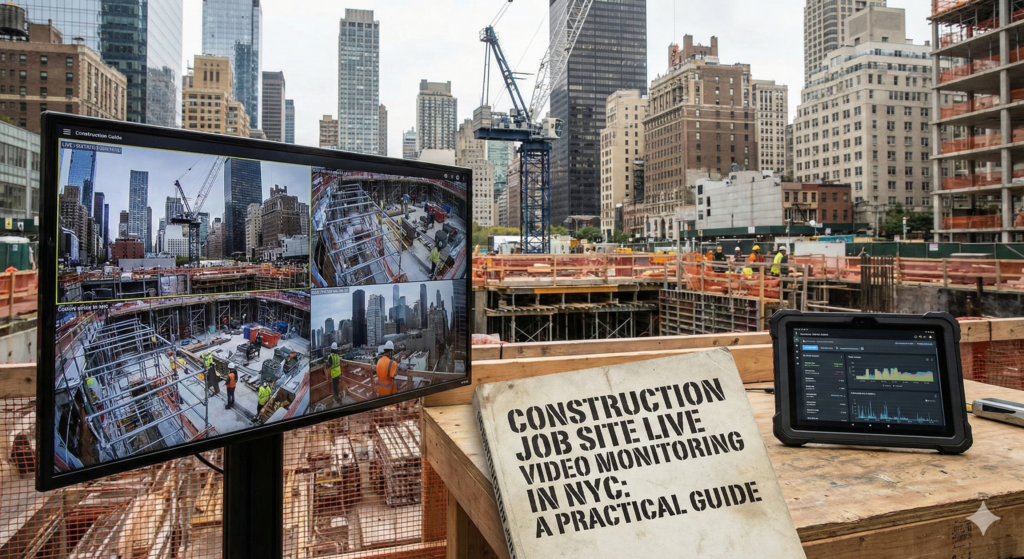
That’s where construction job site live video monitoring in NYC comes in. Done right, it doesn’t just “record what happened.“ It helps prevent incidents in real time, documents conditions for compliance and claims, and gives owners and GCs a clear window into what’s happening across active sites.
In this guide, we’ll break down how live monitoring actually works, what makes NYC sites unique, the core components you need, and how to choose a provider that can keep up with New York construction realities.
Why Construction Job Sites In NYC Need Live Video Monitoring
Unique Security And Safety Risks On New York City Job Sites
Construction in New York is different from almost anywhere else. We’re often working on:
- Tight urban infill sites with zero lot lines
- High‑rise projects with multiple trades stacked vertically
- Sidewalk sheds, street closures, and pedestrian detours
Those conditions create very specific risks:
- After-hours theft and vandalism. Open floors, scaffold access, and street‑level storage make it easy for intruders to get in and out with copper, tools, or materials.
- Public interface. Curious pedestrians, trespassing teens, or even unhoused individuals may enter a site, especially when gates or sidewalk sheds are left unsecured.
- Fall and struck‑by hazards. With multiple subcontractors working simultaneously, spotting unsafe behavior in real time can be the difference between a near miss and a serious injury.
Static CCTV will show us what happened. Live video monitoring gives us a chance to stop it while it’s happening.
Compliance, Liability, And Documentation Pressures
NYC job sites also carry heavy regulatory and legal burdens:
- NYC Department of Buildings (DOB) scrutiny on safety practices and site conditions
- OSHA requirements around fall protection, PPE, and hazard controls
- High exposure to injury claims, property damage claims, and neighbor complaints
Live monitoring helps us manage those pressures by:
- Creating time‑stamped visual documentation of site conditions, safeguards, and access control
- Supporting incident investigations with clear video from multiple angles
- Providing evidence for insurance carriers and attorneys when disputes or claims arise
When our video is securely stored and searchable, we’re not scrambling after the fact to prove what did, or didn’t, happen on a given day.
What Live Video Monitoring Actually Is (And How It Differs From Simple CCTV)
How Live Monitoring Works Step By Step
At a basic level, construction job site live video monitoring in NYC combines smart cameras with trained operators and automation. The workflow usually looks like this:
- Cameras capture activity. Cameras are strategically placed around perimeters, access points, storage areas, and high‑risk zones.
- Analytics detect motion or patterns. Video analytics flag unusual movement, line crossing, loitering, or activity during restricted hours.
- Alerts go to a monitoring center. Trained operators, either our team or a third‑party, review live feeds when an alert triggers.
- Operators intervene in real time. They can use two‑way audio, sirens, or lights to challenge intruders, while simultaneously notifying supervisors, security, or NYPD when needed.
- Events are logged and stored. Incidents are tagged, clipped, and stored in the cloud for later review, training, or evidence.
This combination of technology plus human response is what separates live monitoring from simple recording.
Live Vs. Recorded Video: When Each Makes Sense On Site
Recorded-only (traditional CCTV) still has its place:
- For documenting general activity and progress
- In lower‑risk interior spaces
- Where budgets are very tight and we only need “after the fact“ review
Live monitored video becomes critical when:
- We’re storing high‑value materials and equipment
- The site is exposed to the street or neighboring rooftops
- We’ve had repeat thefts, trespassing, or vandalism
- We’re under strict safety oversight and want proactive incident prevention
Most NYC projects benefit from a hybrid approach: some cameras are just recorded, while higher-risk zones and after‑hours periods receive active monitoring.
Core Components Of A Live Video Monitoring System For Construction Sites
Cameras, Lenses, And Coverage For Challenging NYC Environments
Urban construction sites are visually complex. To get usable coverage we typically combine:
- Fixed bullet or dome cameras for gates, hoists, and specific chokepoints
- PTZ (pan‑tilt‑zoom) cameras to follow activity across wide areas or up façades
- Wide dynamic range (WDR) sensors to handle shadows under sheds and bright street lighting
- Low‑light / IR capabilities for night coverage without flooding the site with visible light
Good design matters more than pure camera count. We map line‑of‑sight, typical traffic flows, and blind spots caused by cranes, containers, or neighboring buildings.
Networking, Power, And Mobile Surveillance Trailers
Many NYC jobsites don’t have reliable power or internet early in the project. We solve that with:
- Solar or generator‑powered surveillance trailers that bring cameras, lighting, and communications in a single mobile unit
- Cellular or 5G connectivity where hard‑wired internet isn’t yet installed
- Ruggedized switches and PoE injectors to keep everything powered in dust, vibration, and temperature swings
As the project phases progress, we can re‑position trailers or add fixed camera drops to follow the work up the structure.
Monitoring Centers, Guards, And Audio Intervention
Live monitoring doesn’t replace every security role, but it makes on‑site labor far more efficient.
A robust setup usually includes:
- A UL‑listed monitoring center staffed 24/7
- Operators trained specifically on construction risk profiles
- Pre‑recorded and live audio challenges (e.g., “You are trespassing on a monitored construction site. Leave immediately.”)
- Clear escalation paths: on‑call supers, security vendors, or law enforcement
In practice, an audio warning alone resolves the majority of after‑hours intrusions, we rarely need a physical response once intruders realize they’re being watched in real time.
AI Analytics, Alerts, And Cloud Storage
Modern systems use analytics to reduce noise and focus operator attention where it matters. Examples include:
- Human and vehicle detection to ignore motion from wind or small animals
- Line‑crossing rules on fences, hoist doors, and loading bays
- Object left behind / removed detection in storage zones
Events and footage are typically stored in secure cloud environments. Reputable providers follow industry best practices like encrypted transmission, access controls, and backups. For sensitive compliance issues, we can also maintain longer retention periods and per‑incident legal holds.
For deeper reading on best practices in surveillance and safety, we often reference resources from organizations like OSHA and the NYC Department of Buildings.
Key Use Cases: How Live Monitoring Protects NYC Construction Projects
Theft, Vandalism, And Unauthorized Access Prevention
The most obvious win for live video monitoring is nighttime and weekend protection.
We can:
- Detect people breaching fences or climbing scaffolds in real time
- Use loudspeaker warnings to drive them off before they grab anything
- Dispatch responders when intruders don’t comply
- Provide clear video evidence to law enforcement and insurers
Just as important, a visible camera and signage program dramatically reduces opportunistic theft. Word gets around quickly when intruders encounter audio warnings and police responses.
Worker Safety, Incident Response, And OSHA Support
Safety is harder to quantify but just as critical.
Live monitoring helps us:
- Spot unsafe behaviors: missing harnesses, unprotected edges, or improper ladder use
- Respond faster to falls, medical events, or equipment incidents when operators see something wrong and immediately call site leadership
- Document PPE compliance, guardrails, netting, and housekeeping during critical inspections or after a stop‑work order
While cameras aren’t a substitute for a competent safety program, they provide an extra set of eyes, especially helpful on high‑rise or multi‑tower projects.
Progress Tracking, Time-Lapse, And Stakeholder Visibility
Owners, lenders, and out‑of‑state executives increasingly expect visual access to their projects.
With a properly designed system we can:
- Provide secure remote viewing portals for approved stakeholders
- Generate time‑lapse videos that show structural milestones, façade progress, and site logistics over time
- Validate subcontractor presence and activity windows without micromanaging crews
This transparency builds trust and can help resolve schedule disputes long before they become claims.
Planning A Live Video Monitoring Strategy For Your NYC Job Site
Assessing Risks, Site Layout, And Phased Construction
Before we install a single camera, we map:
- Perimeter conditions: shared property lines, public interfaces, alleys, and roof access
- High‑value areas: tool cribs, fuel storage, MEP staging, and laydown yards
- Vertical progression: how cranes, hoists, and floors will rise over time
We then build a phased plan, what we install at excavation will be very different from what we need at topping out or close‑out.
Privacy, Signage, And Local Regulatory Considerations
In NYC we must be especially careful about:
- Capturing public areas: sidewalks and streets may be in frame, so we apply masking and limit audio where required
- Posting clear signage so workers and visitors know they’re being recorded and monitored
- Aligning with union agreements or site policies that address surveillance
We also follow general privacy and data security best practices, including user access logs and strict role‑based permissions.
For up‑to‑date guidance, we monitor resources from the NYCLU and other civil liberties organizations to ensure our deployments respect reasonable privacy expectations.
Integrating With Access Control, Alarms, And Existing Cameras
Most NYC contractors already have some security tech in place. We aim to augment, not replace, where it makes sense:
- Tie cameras into gate and turnstile access control so we can visually verify badge use
- Link door contacts, fence sensors, and motion detectors to video pop‑ups in the monitoring center
- Fold legacy cameras into the same video management system (VMS) when they’re compatible
This integration not only saves cost but also gives us a single pane of glass for security and operations.
Costs, Savings, And Calculating ROI Of Live Video Monitoring
Comparing Live Monitoring To On-Site Guards And Patrols
In New York City, 24/7 on‑site guards can be extremely expensive, especially on long‑duration projects.
Live video monitoring typically:
- Covers more area than a single guard post
- Operates 24/7 without breaks, sick days, or shift gaps
- Reduces our need for roaming patrols, especially overnight
Many of our clients end up with a hybrid model: a smaller guard presence at key entry points, backed by live monitoring that covers the rest of the perimeter and interior.
When we compare annual costs, live monitoring often delivers similar or better coverage for a fraction of a fully manned guard program.
Insurance, Claims, And Indirect Financial Benefits
The financial benefits aren’t just in reduced guard hours:
- Prevented theft: one avoided loss of copper, tools, or diesel can cover months of monitoring fees
- Fewer delays from vandalism, arson, or equipment damage
- Stronger position in insurance negotiations: some carriers offer better terms when we can demonstrate proactive security and documented safety practices
- Reduced legal exposure: when we have clear evidence, we can resolve many disputes more quickly and cheaply
To calculate ROI, we usually compare the annual cost of monitoring to:
- Historical theft or incident losses
- Guard and patrol costs
- Savings from any insurance incentives or avoided premium increases
In NYC’s high‑cost environment, the equation often favors a robust live monitoring strategy.
How To Choose A Live Video Monitoring Provider In New York City
Essential Technical Capabilities And Service Levels To Look For
When we evaluate providers, we look for more than just a low monthly rate. At minimum, they should offer:
- Proven experience with active construction sites in dense urban areas
- High‑resolution, low‑light cameras and WDR for sidewalk sheds and street lighting
- A 24/7 staffed monitoring center, not just automated alerts
- Written SLAs for uptime, response, and maintenance
It’s also worth checking whether they’re familiar with NYC‑specific challenges like sidewalk shed coverage, hoist monitoring, and constrained laydown.
Questions To Ask About Response Time, Escalation, And Support
We always ask:
- What’s your average time from alert to human review?
- How do you escalate incidents to our supers, PMs, or security teams?
- Can you coordinate with NYPD or building security when required?
- Who handles on‑site service calls, camera relocations, and repairs, and how quickly?
Clear answers here tell us whether a provider can perform under real‑world jobsite pressure.
Scalability Across Multiple Sites And Long-Term Projects
For GCs and owners running multiple projects, scalability matters.
We look for providers who can:
- Stand up new sites quickly, including temporary power and connectivity
- Provide a single dashboard across multiple boroughs and sites
- Support multi‑year projects as they shift from excavation to close‑out
The right partner feels like an extension of our operations team, not just a vendor shipping cameras.
Conclusion
Construction job site live video monitoring in NYC has moved well beyond “nice to have.“ With the city’s unique mix of security risks, safety scrutiny, and legal exposure, it’s becoming a core part of how we protect projects, people, and budgets.
By understanding how live monitoring works, designing systems around your actual site risks, and choosing a provider that understands New York construction, we can turn cameras from passive recorders into active protection. The result is fewer disruptions, stronger documentation, and a clearer view, literally, of the projects we’re responsible for delivering.
If we treat live monitoring as a strategic tool instead of a line‑item expense, it quickly pays for itself in avoided losses, smoother operations, and peace of mind across every job site we run.