
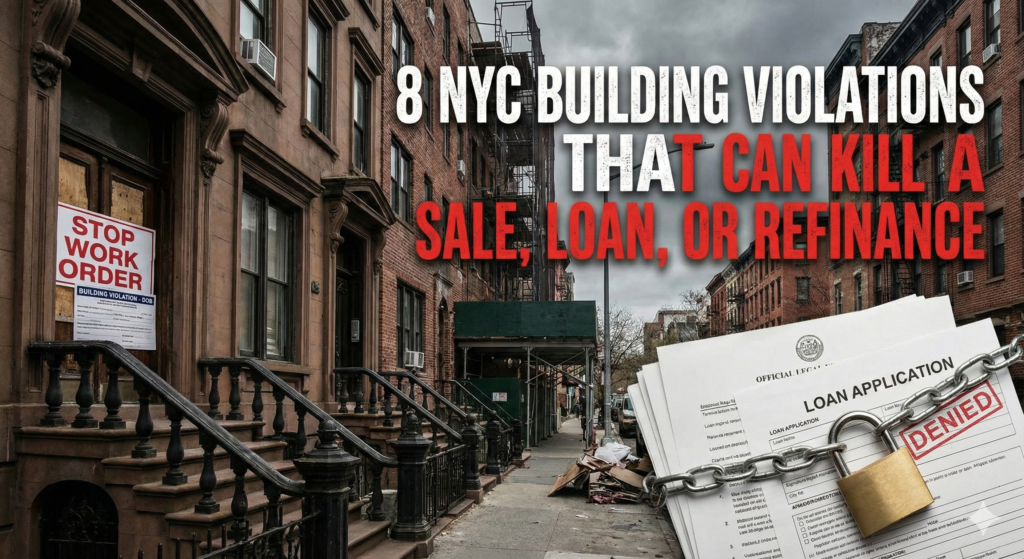
If you’re trying to sell, refinance, or secure a loan on a New York City building, one thing can quietly blow up your entire deal: open building violations.
We’ve seen owners lose serious buyers at the eleventh hour, banks pull term sheets, and appraisers slash valuations because of issues that could’ve been spotted and handled months earlier. The good news? Once you understand how NYC building violations affecting property sales actually work, you can turn a potential deal-killer into a manageable checklist.
In this guide, we’ll walk through the violations that most often delay or kill transactions, how they show up in due diligence, and practical steps to clear them. We’ll also look at how better operations – including smart use of technology and digital signage – can help you avoid repeat problems in the future.
Key Takeaways
- NYC building violations affecting property sales can derail closings, refinances, and financing approvals if serious issues remain open, especially life-safety and illegal-work violations.
- Buyers, lenders, insurers, and title companies routinely review DOB, HPD, and FDNY records, so checking these systems yourself early lets you identify and prioritize violations before going to market.
- Address life-safety, fire code, and major occupancy or unpermitted work violations first, then document all corrections with permits, inspection reports, photos, and updated agency records for due diligence.
- Unresolved violations reduce valuations through lower offers, longer negotiations, contingencies, and escrow holdbacks, particularly for commercial and mixed-use properties with complex systems.
- Stronger day-to-day operations, including regular internal inspections and clear tenant communication supported by digital signage, help prevent repeat violations and protect future property sales.
NYC Building Violations Affecting Property Sales: What Owners Need To Know
Most NYC owners know violations are “bad,” but fewer understand how directly they can stop a closing, refinance, or line of credit.
Violations are formal findings that your property is not in compliance with one or more city codes. They get issued by agencies like the Department of Buildings (DOB), Housing Preservation & Development (HPD), or the Fire Department (FDNY). Lenders, insurers, and buyers all check these records. If they see open violations, especially life-safety or illegal-work issues, they either walk away or demand a discount and strict cure timelines.
When we talk to real estate clients, we usually focus on three questions:
- Who issued the violation and under what code?
- Is it open, closed, or still pending resolution?
- How serious is it from a safety and finance point of view?
The answers decide whether you can close in 30 days… or in 6 months.
Key Agencies Involved In Violations
In NYC, most sale-killing violations come from three main agencies:
- Department of Buildings (DOB) – Handles structural, zoning, egress, and many fire-safety issues. You’ll see these on the DOB Building Information System (BIS) or DOB NOW. DOB violations often relate to unpermitted work, unsafe conditions, or occupancy and use problems.
- Housing Preservation & Development (HPD) – Oversees housing maintenance for residential and mixed-use buildings. HPD violations appear in HPD Online and often involve heat/hot water, pests, leaks, and general habitability.
- Fire Department of New York (FDNY) – Focuses on fire alarms, sprinklers, exits, and storage of hazardous materials. FDNY enforcement can include orders to vacate or correct, documented in their own systems and often reflected in DOB records as well. FDNY publishes general guidance through NYC.gov/fire.
Each agency has its own enforcement tools, from minor notices to emergency vacate orders, and buyers, banks, and insurers tend to treat them differently based on severity.
Types Of Violations Owners Commonly Face
Among NYC building violations affecting property sales, a few patterns show up again and again:
- Life-safety and egress issues
Blocked exits, missing exit signs, non-functioning emergency lights, locked egress routes, or stairway obstructions. These are red flags for FDNY, DOB, and lenders.
- Unpermitted work / illegal alterations
Examples: a cellar turned into offices without permits, an added bathroom without ALT2 plumbing approvals, or combining apartments without filings. Buyers assume, often correctly, that legalizing this work will be expensive and slow.
- Occupancy and use violations
Using a space in a way that doesn’t match the Certificate of Occupancy (e.g., a commercial kitchen or fitness center where it’s not allowed) can derail financing.
- Housing quality violations (HPD)
Heat/hot water issues, lead paint, mold, pests, or broken windows/doors. A few minor HPD items may be tolerable: a long list of Class C (immediately hazardous) violations is a major concern.
- Signage and awning violations
Oversized signs, unpermitted awnings, or illuminated signage without proper permits. These are surprisingly common in retail corridors and can become a negotiation lever for buyers.
Differences Between Open, Closed, And Pending Violations
From a transaction perspective, the status of the violation is everything:
- Open violations – The condition hasn’t been corrected or hasn’t been accepted as corrected by the city. Open violations almost always appear in due diligence and can:
- Delay closings by 3–6 months while work is done and inspections are scheduled.
- Force price cuts or escrow holdbacks.
- Block loans or refinances, especially for commercial assets.
- Closed violations – The owner did the work, filed proof, and the agency marked the violation as resolved. Closed violations still show up historically, but they don’t usually stop financing.
- Pending / in-progress – Work may be underway, or the owner may have filed a Certificate of Correction that hasn’t been processed yet. Buyers often demand clear documentation and may structure closings around final sign-offs.
A clean or nearly clean record is a quiet asset when you’re talking to lenders and high-quality buyers.
How Building Violations Disrupt Property Sales
Violations don’t just create extra paperwork: they change the math and timeline for your entire transaction.
Impacts On Valuation, Negotiation, And Time To Close
On the valuation side, buyers look at open violations as future cash and time out of their pocket. That shows up as:
- Lower offers – Investors routinely model cure costs and then add a “hassle premium.” A set of unresolved DOB violations can easily trigger a $25K–$50K discount or more, depending on scope.
- Longer due diligence – Attorneys and consultants spend extra time pulling DOB, HPD, and FDNY records, checking permits, and interviewing supers or managing agents.
- Contingencies and escrow holdbacks – Buyers may insist that certain violations be cleared before closing or that money be held in escrow until final sign-off.
What might have been a 45-day closing can stretch to 90–180 days once inspectors, contractors, and re-inspections enter the picture.
Financing, Insurance, And Title Issues For Buyers
Most banks, especially for commercial or mixed-use properties, won’t ignore serious violations. During underwriting, they’ll review DOB and HPD records along with appraisals and engineering reports.
Common lender responses include:
- Refusing to issue a commitment until specific violations are cured.
- Reducing loan proceeds if the appraiser or engineer estimates major repair costs.
- Requiring corrective work as a condition of funding, sometimes with inspections from their own consultants.
Insurers may also adjust premiums or refuse coverage if fire or life-safety violations are outstanding. And title reports will often flag open DOB or HPD items, especially if they’re connected to Environmental Control Board (ECB / OATH) penalties, which can become liens.
The result: even if your buyer is enthusiastic, the deal can’t move forward until the violation picture improves.
Risks Specific To Commercial And Mixed-Use Properties
Commercial and mixed-use assets face more intense scrutiny because they typically involve higher occupant loads and more complex building systems. Among the most problematic issues:
- Unpermitted build-outs in retail, restaurant, or office spaces (e.g., kitchens, gyms, or medical uses installed without proper filings).
- Fire alarm and sprinkler defects that affect an entire building, not just one tenant space.
- Signage, awning, and digital display violations that conflict with zoning or landmark rules.
Tenants, especially national brands and institutions, will walk away from a lease if they smell regulatory instability. Owners who plan to use digital signage and commercial displays, for example, to brand a retail or hospitality space, need to plan those installations carefully so they align with DOB and, where relevant, landmark regulations.
For clients exploring building-wide display networks, we often recommend planning content and hardware together with compliance in mind, leveraging tools like our digital signage solutions from day one.
Common NYC Violations In Commercial And Mixed-Use Buildings
Certain violation categories show up repeatedly in NYC commercial and mixed-use deals. Understanding them helps you triage what’s most urgent before you list.
Life Safety, Egress, And Fire Code Violations
These are the issues that most quickly scare off banks and institutional buyers:
- Blocked or locked exit doors
- Missing or non-illuminated exit signs
- Non-functioning emergency lighting
- Inoperable fire alarms or sprinkler systems
- Storage in stairwells or corridor egress paths
FDNY and DOB treat these as high priority because they directly affect occupant safety. You can find fire code references and updates through the NYC Fire Code page.
From an operations standpoint, we’ve seen owners reduce repeat violations by standardizing visual cues: consistently marked exits, clear emergency instructions, and simple maps in lobbies and corridors. Modern digital signage for buildings, like the displays we deploy through our commercial display installations, can help by rotating safety messaging and emergency exit information along with regular content.
Unpermitted Work, Alterations, And Use Changes
Unpermitted work is one of the most common, and most expensive, violation categories in NYC:
- Interior fit-outs done without permits
- Plumbing or electrical changes not covered by an ALT filing
- Converting storage or cellar space to offices, gyms, or classrooms
- Changing use (for example, office to medical or retail to restaurant) without proper filings
DOB can issue violations and penalties, and in some cases require you to file retroactive permits, hire design professionals, and open walls or ceilings so inspectors can verify conditions.
This is where buyers start to worry about scope creep: what looks like a simple legalization can turn into structural repairs or full code upgrades. If your property has creative build-outs, think workout studios, commercial kitchens, or specialty healthcare uses, it’s essential to confirm permits and sign-offs well before you go to market.
Signage, Awnings, And Digital Display Violations
Signage violations often feel “minor,” but they’re a frequent sticking point in retail-heavy neighborhoods:
- Oversized or unpermitted awnings
- Illuminated signs installed without permits
- Window or façade signage that exceeds zoning limits
- Digital displays visible from the street without proper approvals
NYC has detailed rules for signs in different zoning districts, and even stricter standards in landmarked areas, outlined on resources like the NYC Planning Zoning Handbook.
When we help clients roll out digital signage networks across locations, we always stress two parallel tracks:
- Content and experience strategy – What you’ll actually show on the screens to attract and inform visitors.
- Permits and compliance – Making sure mounting locations, brightness, and visibility from the street are consistent with DOB and zoning rules.
Working with experienced installers, like our own digital signage installation services, reduces the risk of getting hit with signage violations just as you’re trying to sell or refinance.
How To Check Your Property For Open Violations
Before you list, refinance, or request new financing, you should assume any sophisticated buyer or lender is going to run a deep violation search. It’s better if you do it first.
Using NYC DOB, HPD, And FDNY Online Systems
You can quickly check most NYC building violations affecting property sales using these public tools:
- DOB BIS and DOB NOW – Search by address or block/lot using the DOB Building Information System. You’ll see complaints, violations, permits, and jobs filed.
- HPD Online – For residential and mixed-use properties, HPD Online lists open and closed housing code violations, as well as registration status.
- FDNY resources – While there isn’t a single unified public lookup like DOB’s, FDNY enforcement actions often appear in DOB records, and broader fire-code information is maintained on NYC.gov/fire. For specific enforcement questions, owners often contact FDNY’s Bureau of Fire Prevention directly.
You can also call 311 or use NYC 311 Online to get directed to the right portal or agency if you’re unsure where a violation lives.
Reading Violation Records And Classifications
When you pull records, don’t just skim the list. Pay attention to:
- Class / severity – For example, HPD Class C violations (immediately hazardous) vs. lower-priority issues.
- Status – Open, closed, “in litigation,” or “certification pending.”
- Respondent – Owner, managing agent, or tenant.
- Associated penalties or liens – Some violations carry fines that can become liens if unpaid.
Create a simple spreadsheet: agency, violation number, description, class, status, and notes. This becomes your action plan and a key document you can share with your broker, attorney, or prospective buyers.
When To Involve Attorneys, Architects, Or Expediters
Some minor violations, like a single HPD Class A item, can be handled by your building staff or super. But you should bring in professionals when:
- Violations are structural, fire-safety, or life-safety related.
- You have unpermitted work or use changes that require filings.
- There are multiple agencies involved, or you’re already in ECB/OATH proceedings.
Real estate attorneys, architects, and permit expediters can coordinate filings, negotiate timelines, and make sure corrective work is scoped correctly. For more complex assets, we’ve seen clients assemble a small team: counsel, design professional, and an operations lead who manages communication and on-site logistics.
If part of your cure plan involves new wayfinding or safety communication, a technology partner like us can help coordinate digital signage and display work in parallel, so you’re not reopening walls twice.
Clearing Violations Before You List The Property
Once you see the full violation picture, the question becomes: what do we fix now, and what can we reasonably leave for the buyer?
Prioritizing Which Violations To Resolve First
Generally, you’ll want to address, in this order:
- Life-safety and fire-related issues – Anything affecting exits, alarms, sprinklers, or structural stability should go to the top of the list.
- Violations that block certificates or sign-offs – Items that prevent you from obtaining a Certificate of Occupancy, Letter of No Objection, or final sign-off on major work.
- High-visibility or high-volume HPD violations – Especially if you’re selling to institutional or mission-driven buyers.
- Cosmetic or lower-priority items – These can often be wrapped into buyer negotiations.
Your broker can give you real feedback on what your target buyers will or won’t tolerate in your asset class and submarket.
Budgeting, Timelines, And Coordinating Repairs
Violations tend to cost more and take longer than owners expect, especially when inspections and re-inspections are required. Build in:
- Hard costs – Contractors, engineers, electricians, plumbers, signage installers.
- Soft costs – Architect/engineer plans, permit filings, expediters, legal fees.
- Time buffers – Agency backlogs, scheduling constraints, and weather-related delays.
We’ve seen owners avoid months of delay by sequencing work intelligently. For example, if you’re upgrading fire alarm systems and also planning new digital directories or emergency-message displays, coordinating those trades means fewer disruptions and a smoother inspection process.
Documenting Corrections For Buyers And Lenders
Clearing violations is only half the battle. You also need to prove you’ve cleared them.
Make sure you maintain:
- Copies of permits, plans, and inspection reports.
- Screenshots or PDFs from DOB/HPD showing updated closed status.
- Photos documenting before-and-after conditions.
- A clean, organized summary you can share during due diligence.
This is also a good time to revisit your overall building communications strategy. When violations stem from tenant behavior (blocked exits, misused storage rooms, etc.), we often recommend adding on-site messaging using tools like our digital signage software so new owners inherit better habits, not just a cleared record.
Preventing Future Violations With Smarter Building Operations
Avoiding repeat violations isn’t just about avoiding fines: it’s about protecting future sales, refinances, and tenant relationships.
Compliance Habits For Owners, Landlords, And Managers
A few simple habits dramatically reduce your risk:
- Regular internal inspections focused on egress, fire systems, and common areas.
- Clear roles so staff know who’s responsible for checking exits, signage, and equipment.
- Annual or semi-annual reviews of DOB/HPD records to catch issues early.
- Tenant education so occupants understand how their actions (like propping doors or blocking halls) create real risk and liability.
In practice, the best-performing properties treat compliance as an ongoing operational process, not a scramble when it’s time to sell.
Using Technology And Digital Signage To Support Compliance
Technology doesn’t replace good management, but it makes it far easier to maintain high standards across multiple locations.
We’ve seen owners and operators use digital signage and commercial displays to:
- Rotate safety reminders (e.g., “Do not block this corridor – fire egress route”).
- Display emergency procedures and evacuation maps in lobbies and elevator banks.
- Push real-time alerts during drills or actual events.
- Standardize branding and safety communication across portfolios.
Because our cloud-based signage platform lets teams update content remotely, compliance messaging can evolve as codes change or as inspectors flag new concerns. For portfolio owners, that’s a practical way to keep dozens of buildings aligned with policy.
Improving Tenant And Visitor Communication Around Safety
Many violations happen not because owners don’t care, but because tenants and visitors simply don’t know the rules.
Consider:
- Short, clear visual messages in lobbies and common areas about exits, loading zones, and restricted spaces.
- Multilingual content where needed so everyone understands safety expectations.
- Seasonal reminders – for example, not storing holiday decorations in stairwells, or keeping rooftop access clear.
By integrating this messaging into a broader digital signage strategy – menus in cafés, directories in lobbies, wayfinding in corridors – safety content becomes part of the everyday environment, not just a dusty sign on the wall. That helps tenants stay compliant and makes your building more attractive to risk-conscious buyers down the road.
For examples of how organizations in real estate, retail, hospitality, and healthcare are doing this, you can explore use cases in our digital signage blog.
Conclusion
NYC’s code and enforcement landscape can feel intimidating, but the core idea is simple: open violations equal uncertainty, and uncertainty kills deals.
If you identify and prioritize your NYC building violations affecting property sales early, bring in the right professionals, and document your corrections clearly, you’ll protect your valuation and shorten your time to close. And if you combine that with smarter, tech-enabled building operations, including thoughtful use of digital signage for safety and compliance communication, you’ll not only fix today’s problems, you’ll make your next transaction a lot smoother.
If you’re planning capital improvements, signage upgrades, or a building rebrand as part of your pre-sale strategy, we’re always happy to discuss how a well-planned digital display network can support both tenant experience and long-term compliance.