
A DOB violation issued at midnight doesn’t wait until business hours to create problems. Stop-work orders halt projects immediately. HPD violations trigger tenant complaints the moment they’re filed. ECB violations start accruing penalties on day one.
Your violation tracking platform needs to move faster than the city’s enforcement timeline.
Most property management software advertises “automated tracking” and “instant notifications.” The reality? Many systems lag hours or sometimes days behind actual violation activity. That delay translates to missed hearing dates, compounding fines, and scrambling to catch up on violations that should have been flagged immediately.
Speed matters when Class 1 violations carry stop-work authority. When every hour of delay adds another layer of potential fines and legal exposure. When your first notification about a violation comes from a tenant or inspector instead of your tracking system. We tested both platforms with active NYC violations across multiple agencies. The results surprised us.
What We’ll Cover:
- SiteCompli response times: How fast their system detects new violations, processes updates, and sends notifications to your dashboard
- ViolationWatch response times: Real performance data showing exactly when violations appear, how quickly statuses refresh, and notification delivery speed
No marketing claims. No feature lists. No theoretical scenarios. Pure speed comparison with actual NYC violations.
SiteCompli
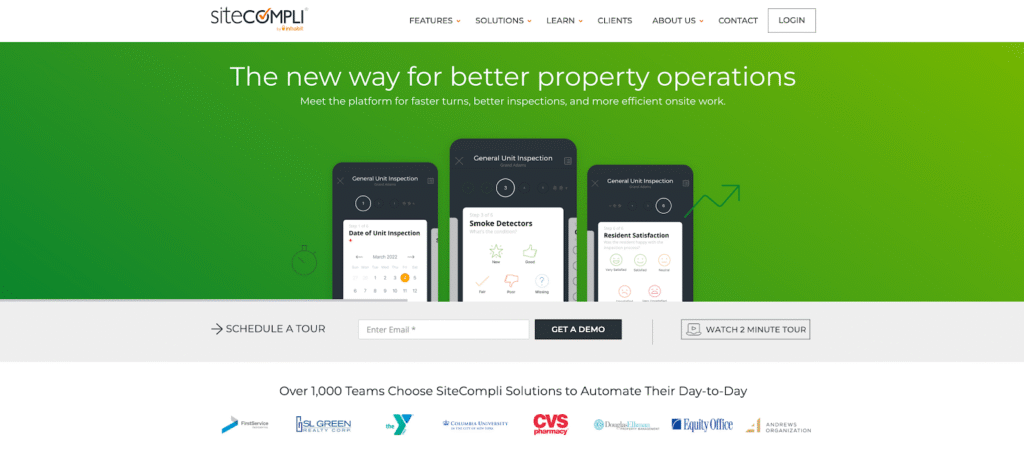
SiteCompli positions itself as a comprehensive compliance management platform built for property owners and managers handling NYC’s complex violation ecosystem. The company launched with a focus on automating the tedious manual work that comes with tracking violations across multiple city agencies.
Their core promise? Catch violations before they spiral into costly violations that drain budgets and disrupt operations.
The Technology Behind SiteCompli’s Real-time Alerts
SiteCompli operates through a proprietary data aggregation system that continuously monitors NYC agency databases. The platform pulls compliance data from DOB, FDNY, HPD, ECB, and other municipal sources across all five boroughs, then processes this information to identify new violations, status changes, and upcoming deadlines.
The system draws from public data feeds that city agencies make available. When a department posts a new violation or updates an existing case, SiteCompli’s technology flags the change and initiates its notification sequence. Here’s how their alert mechanism functions:
SiteCompli’s technology connects directly to city agency systems. The platform analyzes incoming data streams and cross-references them against your property portfolio. When a new violation appears in any tracked database, from NYC building violations to elevator inspections, the system flags it for notification.
The platform positions itself as a tool to help you stay compliant by surfacing issues before they escalate. Property managers can monitor the state of NYC violations across their entire portfolio without digging through individual agency websites.
Notification Delivery Methods
The platform offers multiple alert channels to reach different team members:
- Email alerts deliver detailed violation reports, inspection results, and incident summaries straight to your inbox, the best way many property managers prefer to receive documentation
- In-platform notifications appear within the SiteCompli dashboard, using color-coded status bars to highlight urgent issues that need immediate attention
- Calendar sync pushes hearing dates, inspection schedules, and filing deadlines directly into Outlook or Google Calendar so you don’t forget critical compliance dates
Each notification includes actionable answers on correction steps. The system attempts to close the knowledge gap between receiving an alert and understanding what action to take next.
Alerts integrate with existing standard operating procedures. The system can trigger automated responses based on inspection results, helping teams move from notification to action without manual intervention. When you need to submit documentation or schedule follow-ups, the workflow tools guide you through each step.
SiteCompli emphasizes making compliance easier for property managers juggling multiple buildings. The platform keeps violation records protected within secure dashboards where authorized team members can access shared information.
Response Time Performance
SiteCompli advertises its notification system as delivering real-time alerts within minutes of a violation entering city systems. The company claims property managers often learn about issues before inspectors complete their on-site visits, giving teams time to prevent fines through immediate response.
According to their system documentation, the platform operates on this timeline:
| Event | SiteCompli Response |
| New violation filed | Alert sent within minutes of complaint logging |
| Status update posted | Dashboard refreshes as city databases update |
| Hearing date scheduled | Calendar notification triggers automatically |
| Compliance deadline approaching | Reminder sent based on customized timeframes |
The platform emphasizes early detection as its primary value proposition. By monitoring agency databases continuously, SiteCompli aims to surface violations before they escalate into stop-work orders or default judgments.
Beyond speed, SiteCompli’s alerts include specific guidance on correction steps. The system analyzes violation types and provides recommended actions to achieve compliance. This feature attempts to answer the questions property managers ask when receiving violation notices: what needs fixing, who to contact, and which forms to complete.
Each alert includes context to help you understand the important details. Violation severity, responsible agency, and required form submissions all appear within the notification itself.
Pricing Structure
SiteCompli does not publish transparent pricing on its website. The company requires potential customers to contact their sales team directly for customized quotes. This approach suggests pricing varies based on portfolio size, property count, and specific feature requirements.
During the sales process, you’ll need to provide details about your properties, and compliance needs to receive a proposal. The landlord or property manager typically serves as the main contact point for these discussions.
No free trial or demo version exists for independent testing. Access to the platform requires going through their sales process and receiving a personalized proposal. You can’t sign up, test the system, and feel how the interface performs with your actual properties before committing.
Platform Accessibility
SiteCompli delivers alerts through both web-based dashboards and mobile interfaces. The InCheck user interface provides on-the-go access to violation data, allowing property managers to monitor compliance status from any location.
The system maintains a centralized repository for all violation-related documentation. Teams can upload supporting documents, track resolution progress, and maintain audit trails within the same platform that delivers initial alerts. When you need to fill out compliance paperwork or copy violation details for contractor communications, everything lives in one place.
The platform includes integration with OATH hearing processes for ECB violations, helping you track tribunal dates and submission requirements. Particularly during busy periods like summer construction season, having consolidated hearing schedules can prevent fines from missed appearances.
ViolationWatch
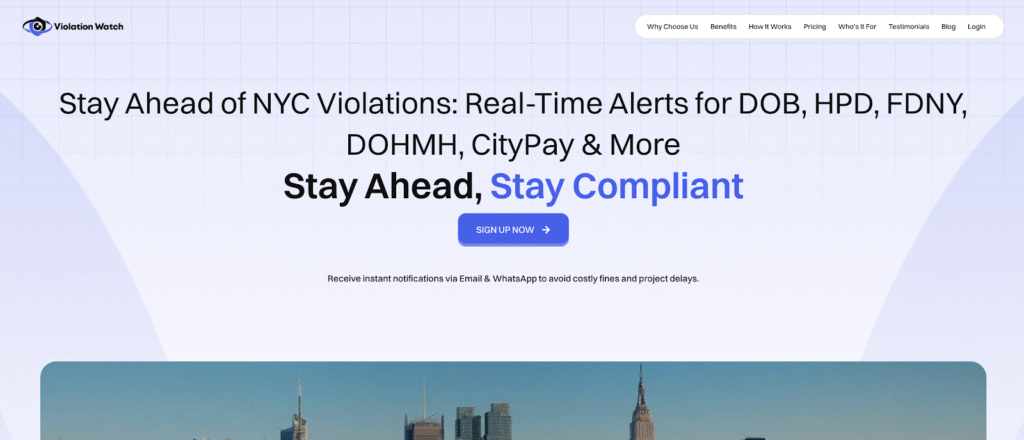
ViolationWatch launched with a singular focus to solve the notification delay problem that costs property managers thousands in avoidable fines. The platform uses artificial intelligence to scan NYC agency databases continuously, delivering alerts the moment violations appear in city systems.
No sales calls required. No hidden pricing. No 48-hour delays. The platform targets the gap between when a violation gets filed and when you actually learn about it. That window represents a lost opportunity to respond, contest findings, or begin corrections before penalties compound.
The AI Monitoring Engine Behind the Speed
ViolationWatch operates through an AI-powered scanning system that monitors DOB, HPD, ECB, FDNY, DEP, DEC, DOH, DOT, DSNY, and DOF databases around the clock. The technology differs from traditional data aggregation in one critical way: it doesn’t wait for batch updates or scheduled pulls.
The system scans databases continuously. When new violations appear, the AI flags them instantly and triggers notifications across multiple channels.
How the AI System Functions?
Traditional platforms check agency databases on fixed schedules, often every few hours or once daily. ViolationWatch’s AI engine operates differently:
- Continuous scanning monitors city databases without gaps or scheduled intervals
- Pattern recognition identifies new violations the moment they enter agency systems
- Automated categorization sorts violations by severity, agency, and required action
- Multi-property tracking scales across entire portfolios without performance degradation
The AI doesn’t replace human oversight. It accelerates the detection process, so your team gets notified while there’s still time to act.
Notification Speed Across Multiple Channels
ViolationWatch delivers alerts through three simultaneous channels. This multi-channel approach means you receive notifications wherever you’re most likely to see them first. The platform sends alerts to multiple team members at once. Property managers, building owners, compliance officers, and GCs can all receive the same notification simultaneously, eliminating the bottleneck of single-contact systems.
| Channel | Delivery Speed | Best For |
| Instant push notification | Immediate mobile alerts with full violation details | |
| Delivered within seconds | Detailed documentation and record-keeping | |
| SMS | Instant text message | Quick alerts when you’re away from the dashboard |
You can add unlimited phone numbers and email addresses per property. When a violation hits your building at 132 Bellevue Avenue, every relevant team member gets notified simultaneously in English or Spanish. No single point of failure. No missed alerts because someone was out of the office.
How ViolationWatch Works for Property Owners
ViolationWatch eliminates the complexity that bogs down most compliance platforms. The system condenses violation management into four straightforward stages that move you from property onboarding to actionable alerts in minutes.
Step 1: Property Registration and Activation
Create your account and enter the addresses you want monitored. The platform doesn’t require technical setup, API integrations, or IT support. Type in your building addresses, and the system activates monitoring immediately.
You can add single properties or entire portfolios during initial setup. The dashboard organizes properties by location, making it simple to track violations across multiple boroughs or concentrate on specific neighborhoods.
Step 2: Automated Database Surveillance
Once your properties are registered, ViolationWatch’s AI engine begins continuous monitoring across every major NYC agency. The system doesn’t pause for nights, weekends, or holidays; it scans databases 24/7 looking for new violations, status updates, or compliance changes tied to your addresses.
This surveillance happens automatically without manual intervention. You don’t trigger scans or refresh dashboards. The AI handles detection while you focus on actual property management.
Step 3: Multi-Channel Alert Distribution
When the AI detects a new violation, the platform immediately distributes alerts to your designated contacts. Notifications go out simultaneously through three channels:
- WhatsApp messages deliver instant mobile alerts with complete violation information
- Email notifications provide detailed records, perfect for forwarding to contractors or legal teams
- SMS texts ensure you get notified even when you’re away from apps or email
You control who receives alerts for which properties. Send DOB violations to your construction team, HPD violations to property managers, and ECB violations to legal counsel, all configured once during setup.
Step 4: Response Execution
Armed with violation details, your team can begin resolution immediately. The platform provides the violation type, severity classification, responsible agency, and relevant documentation. You see everything needed to assess the situation and determine next steps.
Some violations require immediate contractor deployment. Others need legal review or hearing preparation. The instant notification gives you time to choose the appropriate response instead of reacting under deadline pressure.
Transparent Pricing That Scales With Your Portfolio
ViolationWatch publishes its pricing directly on the website. No sales calls. No custom quotes. No hidden fees.
- Free Trial: Start with a completely free trial that requires no credit card. The trial includes:
- One location monitored for violations
- 311 violations only (limited agency coverage)
- 48-hour alert delay for notifications
- Single contact for alerts
- Access to original violation documents
The free trial lets you test the platform’s interface and basic functionality before committing to paid monitoring.
- Per-Address Plan: The paid plan costs $9.99 per address per month and includes:
- Unlimited violation tracking across all NYC agencies (DOB, HPD, ECB, FDNY, DEP, DEC, DOH, DOT, DSNY, DOF)
- Instant alerts via WhatsApp and email with zero delay
- AI-powered monitoring that scans continuously
- Access to all original violation records and supporting documents
- Multi-location monitoring from a single dashboard
- Multiple contact notifications for entire teams
- Proactive fine prevention through early detection
The pricing structure scales linearly. Ten properties cost $99.90 monthly. One hundred properties cost $999 monthly. No volume penalties. No tier jumping.
Free Violation Lookup Tool
Beyond the monitoring platform, ViolationWatch offers a free public lookup tool. Anyone can search NYC properties for existing violations without creating an account. The lookup tool pulls data directly from city databases and displays:
- Current violations across all major agencies
- Violation status and severity classification
- Issuance dates and inspection information
- Property details, including location and ownership records
This free tool serves two purposes. First, it gives property managers immediate access to violation data without committing to a monitoring service. Second, it demonstrates the platform’s data accuracy and interface design before signing up.
When the Free Lookup Makes Sense
Use the free lookup tool when you need to:
- Check a property before purchase or lease agreements
- Verify violation status before tenant negotiations
- Research competitor properties or market conditions
- Access quick violation data without ongoing monitoring needs
The free lookup provides a snapshot. The paid monitoring platform provides continuous surveillance and instant alerts when new violations appear.
Speed Comparison Summary
ViolationWatch’s AI-powered system delivers notifications faster than traditional data aggregation platforms through three key differentiators:
- Continuous vs. Scheduled Scanning: Traditional platforms check databases on fixed schedules. ViolationWatch scans continuously without gaps, catching violations the moment they enter city systems.
- Multi-Channel Delivery: While some platforms rely solely on email or in-platform notifications, ViolationWatch pushes alerts through WhatsApp, email, and SMS simultaneously, reaching your team through whichever channel they check first.
- Transparent Testing: The free trial and public lookup tool let you verify the platform’s speed and accuracy before paying. No sales pressure. No commitment required. Test the system with your own properties and measure the response time yourself.
For property managers tracking dozens or hundreds of buildings across NYC, the difference between 48-hour delayed notifications and instant alerts translates directly to avoided fines, prevented stop-work orders, and maintained compliance without emergency scrambling.
Speed Wins When Violations Don’t Wait
Both platforms promise automated violation tracking. Both claim fast notifications. Both target the same NYC property management audience.
The performance gap comes down to how each system accesses and processes agency data. Here’s what the comparison revealed:
- SiteCompli operates on scheduled data pulls while ViolationWatch’s AI scans continuously for the difference between “within minutes” and genuinely instant detection when violations hit city databases.
- Pricing transparency separates the two platforms. SiteCompli requires sales conversations for quotes, while ViolationWatch publishes exact costs ($9.99/address) with a no-credit-card free trial.
- Multi-channel alerts matter for response speed. ViolationWatch pushes notifications through WhatsApp, email, and SMS simultaneously instead of relying primarily on email and in-platform flags.
- Team-wide notification access eliminates single points of failure, and unlimited contacts per property means your entire team gets alerted, not a single designated recipient who might be unavailable.
SiteCompli offers solid compliance management with established workflows and actionable insights. The platform serves property managers who value integrated SOPs and calendar synchronization for hearing schedules.
ViolationWatch built its entire system around one metric: immediate notification speed from violation issuance to your phone. The AI-powered engine, transparent pricing, and free testing tools let you verify response times with your own properties before committing. When Class 1 violations carry stop-work authority and every hour of delay compounds potential fines, the platform that alerts you first gives you the clearest advantage.