
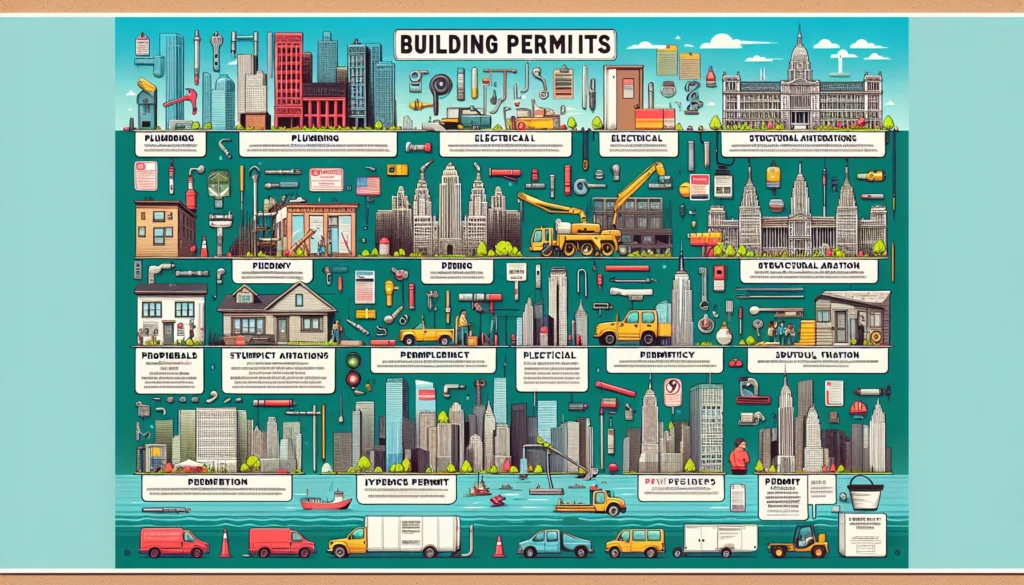
If we own or work on property in New York City, permits aren’t optional paperwork – they’re the backbone of staying legal, safe, and able to close a sale or refinance later. Yet most of us only really learn the permit system after something goes wrong: a stop‑work order, a failed inspection, or a blown closing because of open permits.
In this guide, we’ll walk through the main NYC permit types in plain English – what they mean, when they’re required, and how they fit into the DOB NOW system. We’ll also talk about how to check for open permits and violations before they become a problem, using tools like the City’s DOB NOW Public Portal and independent resources such as Violation Watch’s NYC violation lookup.
By the end, we’ll have a practical framework for figuring out which NYC permit type we actually need, who can file it, and how to avoid the most expensive mistakes.
How NYC Permits Work And When You Actually Need One
NYC building permits are issued primarily by the Department of Buildings (DOB) under the NYC Building Code and related rules. The core idea is simple: if work could affect safety, structure, occupancy, or public space, we almost always need a permit.
When a permit is typically required
We’ll almost certainly need a DOB permit when we:
- Change layouts (move or remove walls)
- Modify structure (beams, foundations, decks, roofs)
- Add, move, or replace gas piping or fixtures
- Install or relocate plumbing lines or fixtures
- Upgrade or add electrical wiring beyond like‑for‑like fixture swaps
- Install or alter HVAC systems, boilers, or sprinklers
- Change the building’s use or occupancy (e.g., office to residential, adding a dwelling unit)
- Put up major signage, scaffolds, sidewalk sheds, or street‑side construction equipment
The NYC DOB’s own guidance on When Do You Need A Permit? is worth bookmarking.
Work that may be permit‑exempt
Some genuinely minor work can be done without a permit, for example:
- Painting and basic cosmetic finishes
- Replacing cabinets without moving plumbing or gas
- Swapping light fixtures or outlets without changing wiring
- Installing certain small, non‑structural shelves, wardrobes, or built‑ins
But the line between “minor” and “alteration” is easy to cross. If we’re not sure, it’s safer to ask a licensed design professional or check with DOB than risk a violation.
Anytime we’re planning work, it’s smart to see what’s already on record for the property. Using a dedicated NYC violation search tool like Violation Watch’s lookup page helps us see whether past work left behind open violations or unresolved permits that might block our new application.
Core DOB Building Application Types
Most building‑level work in NYC is filed under a small set of Application Types. Understanding these helps us read DOB records and talk clearly with architects and expediters.
New Building (NB) Permits
NB permits cover constructing an entirely new building on a lot. The filing will address:
- Zoning compliance and bulk (height, FAR, yards)
- Structural design
- Egress (stairs, exits) and fire protection
- Accessibility requirements
- Energy code compliance
NB jobs are complex and always involve a registered design professional (RDP). They also trigger a final Certificate of Occupancy (CO) before the building can legally be occupied.
When evaluating a property next to a construction site, we can look up the NB job on DOB NOW and also check for safety or site‑related violations via a third‑party search like NYC violation lookup by address to see if there are patterns of non‑compliance.
Alteration Permits: Alt‑1, Alt‑2, And Alt‑3
Alteration permits are used when we’re changing an existing building.
- Alt‑1 – Major alterations that change use, egress, or occupancy. Example: converting a one‑family to a two‑family, creating new apartments, or reconfiguring exits.
- Alt‑2 – Significant alterations that do not change use, egress, or occupancy. Example: moving non‑load‑bearing walls inside an existing apartment, new kitchens and baths, or large layout changes within the same unit count.
- Alt‑3 – Single, limited scope of work, like replacing windows, a single door type, or a small structural element. Often shorter review and narrower drawings.
Alt‑1 jobs typically require a new or amended CO. Alt‑2 and Alt‑3 jobs usually don’t, but they must still be signed off properly. Open Alt jobs that were never closed are one of the most common surprises during sales.
That’s why, before we list or refinance, it’s smart to run a full NYC open permit and violation search. Tools like Violation Watch’s permit and violation lookup consolidate DOB and related data into one place so we can see what might block a clean closing.
Demolition (DM) Permits
DM permits cover full or partial demolition. They’re tightly regulated due to safety and environmental risks. Requirements typically include:
- Structural review of the demolition sequence
- Protection of neighboring properties
- Dust and debris control per NYC DEP
- Asbestos investigation and abatement (see more below)
Partial demo often appears as part of an Alt filing: full demo is its own DM application. Insurance carriers and lenders pay close attention to how demolition is permitted and inspected.
Place Of Assembly (PA) And Certificate Of Occupancy Changes
Any space where people gather – restaurants, bars, event spaces, certain churches, schools – may need a Place of Assembly (PA) permit and related approvals from DOB and the Fire Department (FDNY).
If our work changes how many people can occupy a space or how it’s used (say, office to restaurant), then the Certificate of Occupancy must be updated, usually under an Alt‑1. The CO is the legal document describing how the building can be used.
Whenever we see a mismatch – for example, a building marketed as 3 units but the CO shows 2 – we should treat it as a red flag. Before we go further, we can:
- Review the CO through DOB’s Building Information Search
- Run a detailed NYC violation search by address on Violation Watch to see if DOB, HPD, or FDNY have already flagged the situation
Trade‑Specific And Limited‑Scope Permits
Beyond the big building‑level application types, NYC uses separate permits for specific trades and systems.
Limited Alteration Applications (LAA) For Plumbing, Gas, And Fire Suppression
Limited Alteration Applications (LAA) are DOB’s streamlined route for certain plumbing, gas, and fire‑suppression work. Only licensed plumbers or fire suppression contractors can file them.
Typical LAA work includes:
- Installing or relocating gas appliances (boilers, ranges, dryers)
- Certain small sprinkler modifications
- Limited plumbing relocations or replacements
Even though LAAs are “limited,“ gas work is strictly regulated. We’ll usually see pressure tests and inspections by both DOB and the utility (Con Edison or National Grid), reflecting state and city safety rules.
Electrical Permits
All but the simplest, like‑for‑like electrical work in NYC must be done under an electrical permit, filed by a licensed NYC master electrician. No exceptions for “handy” supers or owners.
Examples that require permits:
- New circuits or panels
- Rewiring rooms or apartments
- Installing recessed lighting across a ceiling
- Electric vehicle charging stations
Electrical work is reviewed under the NYC Electrical Code, which is based on the National Electrical Code (NEC). The City explains the basics at its Electrical Work and Permits page.
Mechanical, Boiler, Elevator, And Related System Permits
Many building systems – HVAC, boilers, elevators, escalators – have their own permit and inspection tracks.
We’ll typically see:
- Boiler permits and annual inspections (for many multi‑family and commercial buildings)
- Mechanical permits for ductwork, rooftop units, ventilation, and AC systems
- Elevator permits, including modernization and periodic inspections under strict state rules
Lenders and insurers often ask for proof that these systems are permitted and inspected. A fast way to see if anything is off is to run a consolidated NYC violation check: Violation Watch’s building violation lookup tool pulls boiler, elevator, and related issues into a single report so we’re not hopping between separate city systems.
Signs, Sheds, Fences, And Other “Temporary” Construction Permits
NYC also requires permits for what look like “temporary” or accessory items, such as:
- Sidewalk sheds and scaffolding
- Construction fences
- Large advertising or illuminated signs
- Certain canopies and marquees
These may involve DOB, but also NYC DOT for anything affecting sidewalks and streets. DOT’s Street Works Permit Portal outlines when we need DOT approval.
These permits can linger. We’ve all seen sidewalk sheds that feel permanent. From a compliance standpoint, that can mean open permits that were never closed. It’s one more reason we like to keep a running watch on our properties using services where we can register for Violation Watch alerts and get notified when new permits or violations pop up.
Specialized NYC Permit Categories To Know
Beyond the everyday work, some NYC projects trigger specialized approvals that are easy to overlook.
After‑Hours Variance And Noise‑Related Permissions
Construction in NYC is generally limited to 7:00 a.m. – 6:00 p.m. on weekdays. To legally work outside those hours, we need an After‑Hours Variance (AHV) from DOB and, in some cases, coordination with the NYC Department of Environmental Protection (DEP) under the City’s Noise Code.
Examples:
- Concrete pours that must be done early
- Weekend crane operations
- Night work in commercial districts
We can read more on the City’s After Hours Variance overview. Failing to get an AHV before off‑hours work is a fast way to earn violations and angry neighbors.
Sidewalk, Street, Scaffold, And Construction Activity Permits
Anytime we use or obstruct the public way – sidewalk, curb, or street – we almost certainly need NYC DOT permits, sometimes plus to DOB.
Common examples:
- Street closings or lane closures
- Curbside material storage
- Large delivery cranes or lifts
- Long‑term sidewalk sheds and scaffolds
DOT permits tie closely into site safety plans and DOB filings. If enforcement teams show up and don’t see the right DOT paperwork posted, they can issue summonses on the spot.
Asbestos, Environmental, And Special Inspections
Before most demolitions, major alterations, or certain boiler and mechanical jobs, we need to deal with asbestos and environmental requirements.
Key points:
- Asbestos investigations are usually done by independent, certified inspectors under state rules.
- If asbestos is found, licensed abatement contractors must follow strict procedures outlined by NY State Department of Labor and NYC DEP.
- Special inspections (formerly “controlled inspections”) are required for items like structural steel, energy code compliance, firestopping, and more, under Chapter 17 of the Building Code.
These don’t always show up as traditional “permits,“ but they’re tightly connected to our DOB jobs. If special inspections or asbestos sign‑offs are missing, the job won’t close – and those lingering issues will show up when someone runs a NYC violation and permit search through a tool like Violation Watch’s lookup.
How To Figure Out Which NYC Permit Type You Need
With all these categories, how do we actually decide which permit type fits our project?
Key Questions About Your Project Scope And Building
When we sit down with our architect, engineer, or contractor, we can walk through a few diagnostic questions:
- Are we changing use, egress, or occupancy?
- Yes → We’re probably in Alt‑1 territory, and we may need a new or amended CO or PA.
- Are we adding or removing units?
- That almost always triggers an Alt‑1 plus CO work.
- Are we touching structure (beams, floors, foundations, exterior walls)?
- Likely an Alt‑2 or part of an NB or DM job.
- Is the work confined to a single, simple scope? (e.g., windows only, limited façade repairs)
- May qualify as Alt‑3.
- Is the work trade‑specific and modest in scope?
- Could be an LAA, electrical permit, or mechanical‑only filing.
- Are we occupying or blocking public space?
- Expect DOT permits plus DOB.
Before we finalize our plan, we should always review the property’s history:
- Look up CO, past jobs, and complaints in DOB’s systems
- Run a consolidated NYC violation and open permit check through a service like Violation Watch’s violation search tool
This helps us avoid designing a project that conflicts with unresolved issues already on record.
Who Can File: Owner, Contractor, Design Professional, Or Expediter
In NYC, who can file depends on the permit type:
- NB, Alt‑1, most Alt‑2 and Alt‑3: must be filed by a Registered Design Professional (RA or PE). Owners authorize: design pros file.
- LAA plumbing/gas and fire suppression: filed by the licensed trade contractor.
- Electrical permits: filed by a licensed master electrician.
- Minor work and certain trade jobs: may allow limited owner filings in small 1–2 family homes, but this is narrower than many people assume.
Expediters can help manage paperwork and shepherd jobs through DOB, but they’re not a substitute for a licensed design professional or contractor.
For owners responsible for multiple properties, it’s worth centralizing oversight. Services that let us create a Violation Watch account and register for ongoing NYC property monitoring mean we’re not relying on individual contractors to warn us when new permits, violations, or complaints pop up.
Basics Of Filing And Closing A Permit In DOB NOW
Most modern DOB applications run through DOB NOW, the City’s online portal for filing, reviewing, and tracking jobs.
From Application To Sign‑Off: The Life Cycle Of A Permit
In broad strokes, the lifecycle looks like this:
- Pre‑design and due diligence
- We review zoning, CO, prior violations, and open permits. A thorough NYC violation history search via Violation Watch’s lookup or DOB systems can save us from designing something that DOB will immediately flag.
- Application and plan filing
- The architect/engineer or licensed contractor submits plans and forms in DOB NOW.
- Fees are paid: job is assigned for plan review (or self‑certification, when allowed).
- Plan review and approval
- DOB reviews for code compliance, zoning, fire protection, and other issues.
- Objections are issued and resolved until plans are approved.
- Permit issuance
- Once approvals and prerequisites (insurance, contractor registration, special inspections, etc.) are in place, DOB issues permits.
- Construction and inspections
- Work proceeds under supervision of the design professional and contractors.
- Required interim inspections (structural, plumbing, electrical, energy, etc.) are performed and documented.
- Sign‑offs and final approvals
- All inspections and special inspections are closed.
- For jobs affecting occupancy, DOB issues a new or amended CO.
- Permit closure
- The job status is updated to “signed off” or equivalent in DOB NOW and BIS. Open permits should no longer appear when someone does a NYC permit or violation search online.
Open Permits, Expired Permits, And Why They Matter In Sales And Refinancing
Open or expired permits are more than an administrative nuisance. They can:
- Delay or kill a closing when buyer’s counsel or title finds them
- Trigger additional inspections, fines, or mandated corrective work
- Signal to DOB that past work may not match what’s on the approved plans
Banks and sophisticated buyers routinely run NYC open permit and violation reports before committing. Instead of waiting for a buyer to find problems, we’re better off:
- Running our own NYC permit and violation lookup via Violation Watch
- Sharing the results with our design team to plan clean‑up filings or retroactive sign‑offs
- Using ongoing monitoring (once we register for Violation Watch monitoring) so new issues don’t sit unnoticed for years
Common Missteps With NYC Permit Types And How To Avoid Them
Even experienced owners and contractors fall into the same traps around NYC permits. A few patterns stand out:
- Assuming small work doesn’t need a permit
Moving a sink “a few feet“ or adding a gas stove can easily cross into full permit territory. If plumbing, gas, structure, or egress is involved, we should assume a permit is needed until a qualified professional says otherwise.
- Using the wrong application type
Trying to squeeze an Alt‑1 job into an Alt‑2 or Alt‑3 to “keep it simple“ almost always backfires. DOB may issue objections, or worse, violations if they believe the job was mis‑classified.
- Ignoring existing violations and open permits
Filing new work on top of unresolved issues can stall the job. We’re much better off cleaning up legacy problems first. A full NYC violation and permit scan using a tool like Violation Watch’s search interface shows us what’s already in the system.
- Not coordinating with DOT or other agencies
We might secure a DOB permit but forget about DOT, DEP, or FDNY approvals. Sidewalk or lane closures, noise, asbestos, and fire alarms all pull different agencies into the picture.
- Letting jobs sit without final sign‑off
The work gets done, everyone moves on, and nobody pushes for the final inspections and sign‑offs. Years later, a buyer discovers an open Alt‑2 from two owners ago.
- Relying on memory instead of monitoring
For multi‑building or portfolio owners, it’s unrealistic to keep every CO, permit, and violation in our heads. Setting up structured monitoring – for example, when we create a Violation Watch login and add all our properties – means new issues surface quickly, not at the worst possible moment.
Avoiding these missteps mostly comes down to discipline: choosing the right professionals, double‑checking the permit type, and treating closure and sign‑off as part of the job, not an optional extra.
Conclusion
NYC’s permit landscape looks intimidating from the outside, but it follows a clear internal logic. Once we know the main categories – NB, Alt‑1/2/3, DM, PA, trade permits, and specialized approvals – we’re in a much better position to scope projects correctly, hire the right professionals, and set realistic timelines.
The real risk isn’t in filling out one extra form: it’s in guessing wrong – doing work without a permit, choosing the wrong application type, or ignoring old violations and open jobs that quietly block our future plans.
If we treat due diligence and monitoring as part of ownership, we take most of the drama out of NYC construction. That means:
- Checking official DOB and related agency sources before we plan work
- Running a comprehensive NYC violation and permit lookup using tools like Violation Watch’s search portal
- Setting up proactive alerts by registering for Violation Watch monitoring so new violations, complaints, and permits don’t sneak up on us
When we understand NYC permit types and keep an eye on our compliance history, we stop reacting to surprises and start running our projects – and our properties – on our own terms.
NYC Permit Types 101 – Frequently Asked Questions
What are the main NYC permit types I should know about?
The core NYC permit types include New Building (NB), Alterations (Alt‑1, Alt‑2, Alt‑3), Demolition (DM), Place of Assembly (PA), and trade‑specific permits such as Limited Alteration Applications (LAA), electrical, mechanical, boiler, and elevator permits, plus DOT permits for work affecting sidewalks and streets.
How do I figure out which NYC permit type my project needs?
Start by asking if you’re changing use, egress, or occupancy (usually Alt‑1), touching structure (often Alt‑2), doing a single limited scope (Alt‑3), or only trade‑specific work (LAA, electrical, mechanical). Then check CO, past jobs, and run an NYC open permit and violation search before finalizing plans.
Do small renovations always need NYC building permits?
Not always. Painting, cosmetic finishes, cabinet swaps without moving plumbing or gas, and like‑for‑like fixture replacement are often permit‑exempt. But moving walls, plumbing, gas, or electrical wiring usually requires permits. When in doubt, ask a licensed design professional or confirm with NYC DOB before starting work.
How can I check for open permits and violations on a NYC property?
You can review DOB records through DOB NOW and the Building Information Search to see permits, complaints, and Certificates of Occupancy. Many owners also use third‑party tools like Violation Watch’s NYC violation lookup to consolidate open permits, boiler and elevator issues, and multi‑agency violations into a single, easier‑to‑read report.
What happens if I do work in NYC without the proper permits?
Unpermitted work can trigger violations, fines, stop‑work orders, and required tear‑outs or corrective construction. It can also derail sales or refinancing when attorneys or lenders run an NYC permit search and discover open or illegal work. Fixes often require retroactive filings, inspections, and additional professional and construction costs.