
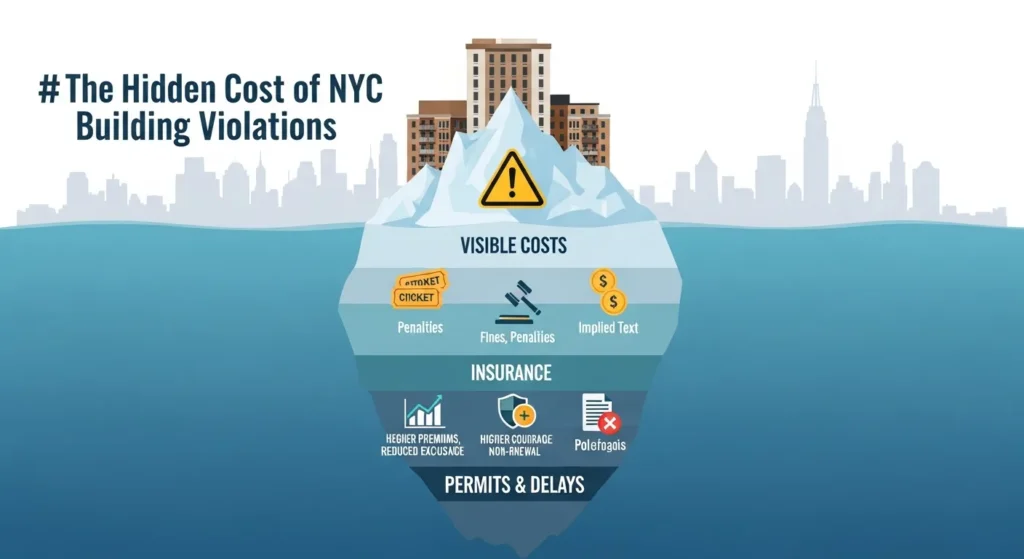
Ask any long-time New York City owner or manager and they’ll tell us the same thing: NYC building violations aren’t just annoying paperwork. They’re silent line items that creep into our insurance, stall our permits, and quietly erode our returns.
On paper, a DOB violation or HPD complaint might look like a few hundred or a few thousand dollars. In practice, one unresolved issue can snowball into six‑figure delays, blocked refinances, and deals that die two days before closing.
In this guide, we’ll break down how NYC building violations really work, what they actually cost once we factor in insurance, permits, and time, and, most importantly, how we can get ahead of them before they derail our projects or portfolios.
How NYC Building Violations Really Work
NYC building violations sit at the intersection of safety, politics, and bureaucracy. They’re technically about code compliance, but the real story is risk management, for the city, insurers, lenders, and us as owners.
At a high level, violations get triggered when a city inspector, investigator, or even a tenant complaint identifies a condition that’s out of compliance with code, zoning, or housing standards. That could be anything from unpermitted interior work to a missing handrail or chronic heat issues.
Once an agency issues a violation, it doesn’t just disappear when we fix the problem. We have to correct the condition and then prove we corrected it by filing the right paperwork, paying the right fee, and sometimes appearing at a hearing. Until the agency marks it as “resolved,” that violation keeps working against us, in insurance underwriting, permit approvals, and transactions.
The Main Agencies That Issue Violations
A single building in NYC can face enforcement from half a dozen agencies. Knowing who does what makes it easier to triage problems quickly.
- Department of Buildings (DOB). Handles structural safety, construction, and use. Think unpermitted work, unsafe façades, illegal cellar apartments, elevator issues, and failure to maintain building systems. DOB violations are central to NYC property compliance.
- Housing Preservation & Development (HPD). Focuses on habitability, heat and hot water, pests, leaks, mold, and lead paint in residential buildings. HPD complaints from tenants are a huge driver of enforcement, especially in winter.
- Department of Environmental Protection (DEP). Fuel storage, asbestos, noise, water connections, and some air quality issues.
- Department of Health (DOHMH). Sanitation, rodents, food service in mixed‑use buildings, and health hazards like certain mold or lead conditions.
- Department of Transportation (DOT). Sidewalks, curb cuts, vaults under sidewalks, street openings for utility work.
- Department of Sanitation (DSNY). Trash storage, improper bulk disposal, dirty sidewalks.
- Department of Finance (DOF). Not a “code” agency, but they convert unpaid penalties into liens and can impact tax bills.
In practice, a single condition often touches more than one agency. A leaking boiler, for example, can trigger HPD violations (no heat), DOB issues (equipment not maintained), and potentially DEP problems (fuel system concerns).
Common Types Of Violations Owners Run Into
Some violations show up over and over in NYC, regardless of neighborhood or asset class.
- Work Without Permit (DOB). One of the most expensive categories. We see base penalties starting around $2,400 and climbing to $15,000+ for multifamily work, especially if structural elements are involved. For one‑ and two‑family homes, the fine can be six times the missing permit fee.
- Façade / Local Law 11 (DOB). For buildings over six stories, façade inspections are required every five years. Miss a filing deadline and we’re looking at initial penalties of about $1,000 plus monthly accruals (often $250/month) until we file. Unsafe conditions quickly jump into five figures once we add emergency protection and repairs.
- Lead Paint Violations (HPD / DOHMH). These range from minor peeling paint (Class A) to immediately hazardous conditions (Class C) where children are present. Penalties scale from a few hundred dollars to several thousand, and repeat violations can double the fines.
- Heat and Hot Water Violations (HPD). These spike in the winter months. According to city data, a big share of HPD complaints and violations hit between January and March, and they can trigger emergency repairs where HPD does the work and bills us back with surcharges.
- Environmental Violations (DEP / DOB). Fuel tank issues, asbestos handling, and other environmental problems can carry civil penalties that quickly reach tens of thousands of dollars, especially if the city considers the issue willful or repeated.
The common pattern: what starts as a “small” compliance issue frequently spirals once deadlines are missed or more conditions are discovered in the field.
From Notice To Enforcement: What Happens After You Get Cited
The lifecycle of a violation is where the hidden costs really kick in.
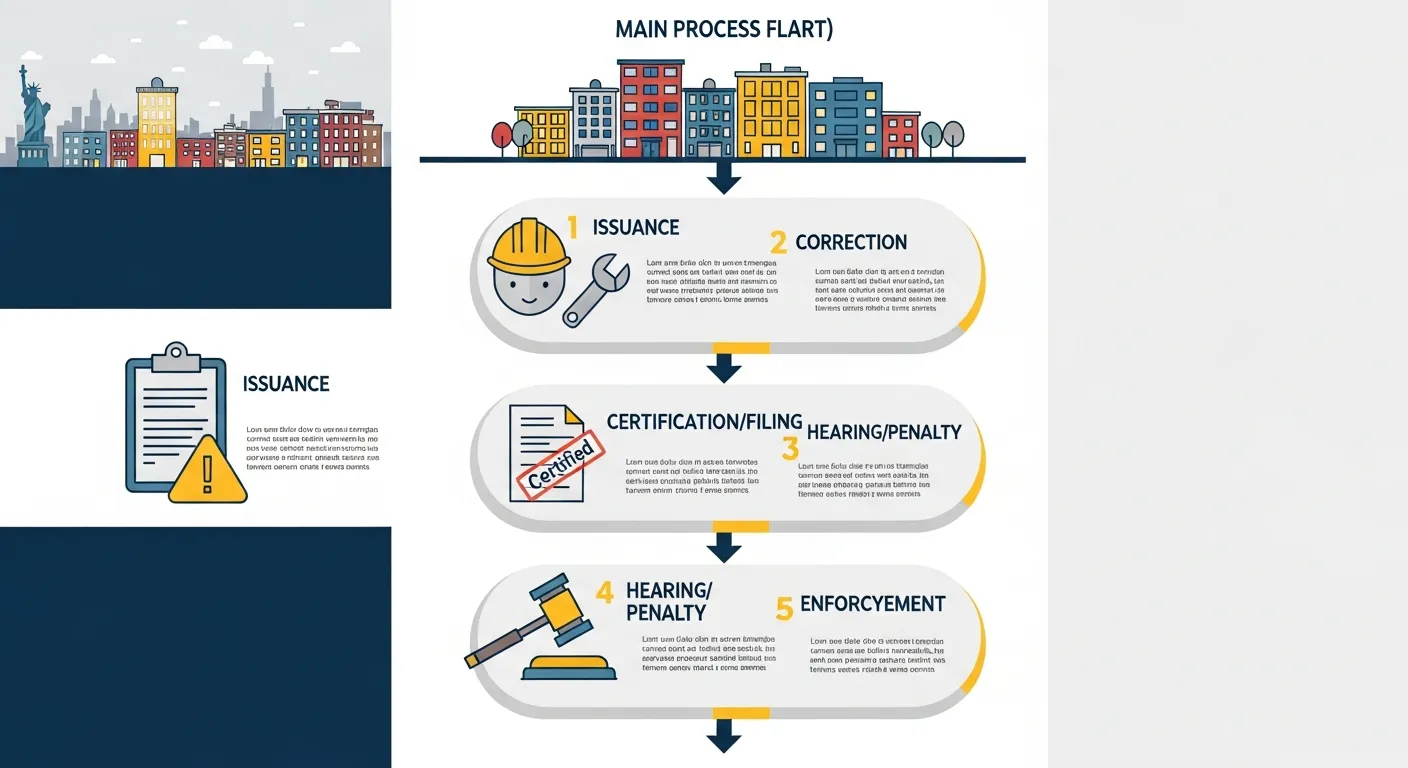
- Issuance. An inspector visits, documents the condition, and issues a violation. For serious issues (Class 1 / immediately hazardous), this often comes with a Stop Work Order or an order to correct within 24 hours.
- Correction. We fix the condition, hire the contractor, architect, or engineer, do the work, and collect evidence (photos, affidavits, test results).
- Certification / Filing. We submit a Certificate of Correction (for DOB) or a certification of correction (for HPD or other agencies), often with supporting documents.
- Hearing / Penalty. For many violations, an administrative hearing through OATH determines the final penalty if we contest it or fail to respond on time.
- Enforcement. If we ignore the violation, the city can issue default judgments, tack on daily penalties (sometimes up to $1,000 per day for Class 1 issues), place liens, or even refer cases for enforcement actions.
Miss a deadline at any step and fees compound. Meanwhile, the open violation sits on our building’s record, holding up permits, complicating insurance renewals, and spooking lenders and buyers.
To see what’s already on record for a property, we can run a quick search using a free NYC violation lookup tool: https://lookup.violationwatch.nyc/lookup.
Direct Financial Hit: Fines, Penalties, And Professional Fees
When we talk to owners about violations, everyone focuses on the fine amount. That’s only the first layer. The full bill includes daily penalties, hearings, professional services, and opportunity cost.
Base Fines, Daily Penalties, And Default Judgments
A rough snapshot of typical base fines in NYC:
- Work Without Permit (DOB).
- Multifamily buildings: often 21x the permit fee, with a minimum around $6,000 and common caps at $15,000+ depending on scope.
- One‑ and two‑family: often 6x the permit fee, starting around $600 and climbing into the thousands.
- Façade / Local Law 11. Initial penalties in the $1,000 range for late filings, plus monthly fines for every month we’re late. Unsafe conditions can lead to annual penalties in the five‑figure range.
- HPD Violations. Many HPD violations are a few hundred dollars each, but the serious ones (Class C, emergency issues) get expensive once HPD steps in to do work and charges us back.
On top of base fines, we face:
- Daily penalties for immediately hazardous conditions where we don’t certify correction in time.
- Default judgments if we skip hearings or miss mail. These can be higher than what we’d have paid if we simply resolved the issue early.
- Interest and liens when unpaid penalties roll into DOF collections.
New York City collectively takes in over $1 billion per year in violation‑related penalties and fees. A meaningful slice of that comes from late responses and defaults, not just initial fines.
Inspection, Filing, And Legal Costs To Clear A Violation
Clearing the violation often costs more than the penalty itself.
Real‑world example ranges we see in NYC:
- Licensed façade inspection (FISP report). Around $3,500 and up, depending on building size and complexity. If previous work was unpermitted or poorly documented, the cost jumps.
- Boiler or burner repairs by a licensed contractor. $1,200 for straightforward work is common: it can easily double for emergency or after‑hours jobs.
- Lead paint assessment and remediation. A basic job in a small apartment can start around $4,000: more complex jobs with containment, cleaning, and clearance testing escalate quickly.
- Expediters, architects, and engineers. We frequently spend thousands just on drawings, filings, and sign‑offs for after‑the‑fact permits or corrective work.
- Attorneys and hearing representation. For significant cases, legal fees to negotiate or contest penalties can rival the fines themselves.
By the time we correct the condition, file properly, and pay the final penalty, a “$2,400 violation” may actually be a $15,000 line item.
Hidden Carrying Costs While A Violation Is Open
Even after we’ve done the work, every day a violation remains “open” adds friction.
Hidden costs include:
- Administrative drag. Staff time tracking deadlines, pulling documents, responding to HPD complaints, and fielding tenant or neighbor questions.
- Insurance impacts. Many carriers now check public records and internal databases for open NYC building violations. An unresolved DOB violation or a pattern of HPD complaints can translate into surcharges or tougher terms.
- Delayed projects. Open violations often block permits for new work, meaning we’re carrying financing and overhead while we wait.
- Financing friction. Lenders treat open violations as red flags, leading to higher reserves, delayed closings, or conditions that we clear everything before funding.
In older NYC housing stock, buildings from roughly 1920–1960, these impacts are amplified. Those properties historically account for the majority of violations in many neighborhoods, and they’re exactly the buildings that need the most ongoing work.
For this reason, many owners now track violations as a recurring operating expense, not a one‑off anomaly. They’re budgeting not just for eventual fines, but also for the carrying cost of time, staff, and lost flexibility.
Insurance Shock: How Violations Drive Up Premiums And Reduce Coverage
Insurance used to be a quiet line on the P&L. Over the last few years, in NYC especially, it’s become volatile, and open violations are a big part of why.
Carriers today underwrite not just the building, but our behavior as owners. A history of unresolved violations tells insurers we’re slow to fix hazardous conditions. That translates directly into higher risk, and they price it accordingly.
Why Carriers Care About Open Violations
From the insurer’s perspective, open violations are essentially admitted risk. An HPD violation for no heat signals boiler problems. A DOB violation for faulty wiring foreshadows fire claims. A façade violation indicates a risk of falling masonry.
Carriers tap multiple sources:
- Public databases (DOB, HPD, etc.), often accessed through automated tools.
- Industry loss history and claims data.
- Application disclosures, where we’re expected to reveal open issues.
If their system flags multiple unresolved violations, they see a pattern of neglect. That raises the probability of large or repeated claims, and we end up paying for that in premiums or restrictions.
Premium Increases, Exclusions, And Non‑Renewals
Violations affect our policy on three fronts:
- Rate increases. Renewal quotes often come with 10–30% premium hikes when a building shows:
- A cluster of open HPD complaints tied to habitability.
- Multiple recent DOB violations for life‑safety issues.
- A history of emergency repairs initiated by the city.
- Coverage exclusions. Insurers carve out specific perils or systems. For example:
- Excluding water damage related to known plumbing conditions that were cited but not corrected.
- Excluding façade‑related liability if Local Law 11 filings are delinquent.
- Non‑renewals. In more extreme cases, carriers decline to renew unless we prove all major violations are closed. That can force us into surplus‑lines markets with steeper rates and less favorable terms.
Once a building ends up in a high‑risk bucket, getting back to competitive pricing can take several clean years, meaning multiple policy cycles of overpaying.
Claims Denials And Coverage Gaps Tied To Violations
The sharpest pain point shows up when we actually file a claim.
If a loss arises from a condition that was already cited in a violation and not corrected, the carrier has ammunition to:
- Argue that we failed to maintain the property “as warranted.”
- Reduce the payout or deny the claim entirely.
- Point to exclusions added after they discovered the violation.
Example: A building has an existing DOB violation for deteriorated exterior masonry. Months later, a piece of façade falls and injures a passerby. During the claim review, the carrier pulls the violation record and sees we hadn’t certified correction. They may still pay, liability is complex, but we’ve given them a strong basis to challenge coverage.
We’ve seen similar dynamics with fires traced back to outdated electrical systems and water damage tied to known roof leaks.
This is why proactive NYC property compliance isn’t just about avoiding fines: it’s a way to defend our insurance coverage before we ever need it.
Permits, Stop Work Orders, And Project Delays
For developers and owners who are actively renovating, the most painful cost of violations isn’t the fine, it’s time. Every week of delay on a construction project carries direct and indirect costs: interest, general conditions, and lost rent or sale proceeds.
How Violations Block Or Complicate Permit Approvals
DOB reviews permit applications in the context of a building’s entire record. Significant open violations can:
- Trigger additional scrutiny from plan examiners.
- Block permits for unrelated work until we clear or at least address the outstanding issues.
- Require extra documentation and letters from engineers or architects to demonstrate safety.
For example, if a building has an unresolved façade violation, DOB may be reluctant to issue permits for new rooftop work until they’re satisfied the exterior is safe. Similarly, a history of illegal interior alterations can make after‑the‑fact legalization filings slower and more complex.
Even when permits are eventually approved, we’re losing weeks to back‑and‑forth reviews, while construction loans and carrying costs continue to accrue.
Stop Work Orders And Construction Downtime
A Stop Work Order (SWO) is one of the most disruptive tools DOB has. Inspectors can issue partial or full SWOs when they find:
- Work without permits.
- Non‑conforming or unsafe construction.
- Ignored previous violations or unsafe site conditions.
Once in place:
- All covered work must cease immediately.
- We often need an updated set of drawings and filings.
- Inspectors must return to verify that we’ve corrected the issues before lifting the order.
On a midsize project, a 30‑day SWO can burn through tens of thousands of dollars in idle labor, general conditions, and interest. For highly leveraged projects, it can be the difference between a profitable exit and a forced sale.
Change Orders, Re‑Designs, And Re‑Inspections
Violations frequently force us to redesign work mid‑stream.
Common scenarios:
- Structural surprises. An inspector flags a load‑bearing wall we assumed was non‑structural, triggering an engineering review and new drawings.
- Zoning conflicts. DOB discovers that an ongoing project violates zoning (height, FAR, use), forcing design changes and new filings.
- Code updates. Long‑running projects encounter new code provisions, and a violation pushes DOB to apply the latest rules.
Each of these outcomes adds:
- Change orders from contractors.
- Additional professional fees for architects and engineers.
- Re‑inspections and re‑filings with DOB.
The direct fine may be a few thousand dollars: the redesign and time loss can easily hit six figures.
Impact On Property Value, Financing, And Transactions
Violations don’t just hit our operating budget: they shape what our building is worth on paper and how easy it is to move capital in and out of it.
Lower Appraisals And Reduced Buyer Interest
Appraisers working on NYC assets now routinely review DOB and HPD records alongside income and expense statements. A building with:
- A stack of unresolved NYC building violations,
- A pattern of HPD complaints around heat or mold,
- Or major façade and structural issues,
is likely to see a downward adjustment in value. Appraisers may assume higher capital expenditure needs and higher operating risk, which translates into a lower net operating income (NOI) and, by extension, a lower value at a given cap rate.
On the buy‑side, sophisticated investors and their lenders perform their own digital sweeps long before we get to contract. If they see open Class 1 violations or costly façade issues, they’ll either:
- Discount their offer to cover worst‑case remediation, or
- Walk away altogether in favor of a cleaner deal.
Major real estate publications like The Real Deal have highlighted how due diligence around violations has tightened in recent years, especially as lenders and institutional buyers pull back from risky assets.
Loan Underwriting, Refinancing, And Reserve Requirements
On the financing side, open violations can:
- Delay or derail loan approvals.
- Trigger higher interest rates or stricter covenants.
- Lead lenders to demand repair reserves held back at closing.
Underwriters worry about two things:
- Safety and liability. Immediately hazardous conditions suggest potential lawsuits and casualty events.
- Cash flow predictability. Repeated HPD complaints or DOB enforcement actions imply higher unexpected expenses and more downtime.
As a result, a building with unresolved violations may still secure a loan, but at worse terms: higher spreads, larger escrows, or shorter amortization. For refinances, especially with agency or CMBS lenders, clearing violations ahead of time is almost mandatory.
Due Diligence Surprises During Sales And Transfers
Title reports and third‑party diligence firms now pull violation histories as a standard part of NYC deals. Surprises often appear late in the process:
- Old violations that were “forgotten” but never properly certified as corrected.
- Hidden Stop Work Orders that a prior owner didn’t fully resolve.
- HPD emergency repair charges that rolled into DOF but were never reconciled.
When these pop up just before closing, we face hard choices:
- Delay the closing to fix the issues.
- Offer a price reduction or credit.
- Escrow funds until violations are cleared.
In competitive markets, that’s how we lose buyers. In softer markets, it’s how we end up giving away significant value to keep the deal alive.
Using a tool like ViolationWatch (https://violationwatch.nyc/) or the city’s own databases early in the process helps us surface these issues before they become last‑minute emergencies.
Operational And Business Consequences For Owners And Tenants
Beyond dollars and cents, violations shape how our buildings actually run day to day, and how tenants, neighbors, and regulators perceive us.
Lost Rental Income And Lease Complications
Violations can knock units offline or limit how we can use them.
- A serious DOB or HPD condition might render an apartment or even a whole line uninhabitable until repair work is complete.
- If DOB questions the legality of units (cellars, mezzanines, SRO conversions), we may be forced to stop renting them until everything is legalized.
That creates:
- Vacancy loss that often dwarfs the fine.
- Pressure in lease negotiations, as tenants push for credits or early release if they feel the building is unsafe or non‑compliant.
Longer term, frequent code issues make it harder to justify premium rents, even after repairs. Tenants talk, reviews stack up online, and the building gets a reputation.
Tenant Safety, Reputation, And Complaint Cycles
A steady stream of HPD complaints is both a symptom and a cause of operational stress.
When tenants feel management is slow to respond, they’re more likely to:
- Call 311 before calling us.
- Document and escalate small issues.
- Resist access for repairs, citing prior bad experiences.
That dynamic creates a complaint‑violation‑complaint loop:
- Condition emerges (no heat, leak, pests).
- Tenant calls 311: inspector issues a violation.
- We scramble to fix under time pressure.
- Follow‑up or related issues aren’t fully addressed.
- The tenant complains again, now with more distrust.
In the worst cases, we end up on watch lists or targeted enforcement programs for repeat offenders. NYC HPD’s “Selected Indicators of Housing Quality” data shows how concentrated these patterns can become in certain buildings and neighborhoods.
Risks For Small Owners Versus Large Portfolios
Violations hurt different owners in different ways.
- Small owners (1–3 buildings). Often don’t have in‑house compliance staff. A single missed DOB deadline can mean a surprise five‑figure bill. Many operate on tight margins, so an unexpected façade or boiler issue can disrupt their entire year.
- Large portfolios. Have teams and systems, but face complexity. Multiple agencies, dozens of management companies, and thousands of units make it easy for things to fall through the cracks. Portfolio owners are more exposed to systemic risks, like a spike in insurance or a lender tightening standards across all assets.
Either way, the pattern is clear: treating violations as one‑off headaches instead of a manageable business process is what drives the worst outcomes.
Preventing Violations: Practical Compliance Strategies
We can’t eliminate risk in NYC real estate, but we can control how often violations hit us, and how much damage they do when they do arrive.
Proactive Inspections And Maintenance Planning
The most cost‑effective strategy is still the least glamorous: regular, structured inspections.
- Quarterly internal walkthroughs. Have superintendents or managers follow a simple checklist: egress, handrails, smoke/CO detectors, leaks, pests, boiler logs, hallway and stairwell lighting.
- Annual professional reviews. Bring in an architect, engineer, or code consultant once a year (or before major projects) to look for issues that could become DOB violations.
- Lifecycle planning. For older buildings, map out major system replacements, roof, boiler, electrical, façade, over a 5–10 year horizon.
These steps dramatically cut down on surprise visits turning into enforcement actions. They also give us documentation if we ever need to show insurers or regulators that we’re operating responsibly.
Using Specialists: Expediters, Architects, And Code Consultants
NYC’s regulatory maze isn’t something most of us can navigate alone, especially if we’re juggling multiple properties.
Key specialist roles:
- Expediters. They live inside DOB and HPD systems, know what triggers delays, and can push filings through more efficiently.
- Architects and engineers. Beyond design, they help us legalize existing conditions, prepare after‑the‑fact filings, and respond credibly to violations.
- Code consultants and attorneys. Particularly important for complex use changes, zoning questions, or buildings with long violation histories.
Engaging professionals early, before work starts or before a refinance, often costs less than cleaning up after a major enforcement action.
Systems To Monitor, Track, And Resolve Violations Fast
Finally, we need systems. Even simple ones.
Consider putting in place:
- Centralized tracking. One spreadsheet or dashboard that lists all open DOB violations, HPD complaints, and DEP/DOHMH issues by building, with dates and deadlines.
- Responsibility assignment. Every violation should have a clear owner: property manager, super, or project manager.
- Deadline alerts. Calendar reminders or software triggers for certification deadlines and hearing dates.
For free lookups, use our NYC violation lookup tool (https://lookup.violationwatch.nyc/lookup) to see what’s on record and catch issues early. And if we want to take it further, we can get instant alerts whenever our building receives a new violation, sign up for real-time monitoring with building violation alerts (https://violationwatch.nyc/register/).
Tools like ViolationWatch (https://violationwatch.nyc/) automate a lot of this monitoring, pulling public data, flagging new violations, and helping us stay ahead of deadlines, so we’re not relying on letters that get lost in the mailroom.
Conclusion
NYC building violations are rarely “just” a $500 or $2,400 ticket. They’re signals that ripple through the entire ecosystem around our property, insurers, lenders, buyers, tenants, and regulators.
An open DOB violation today can mean:
- Higher insurance premiums next renewal.
- A blocked permit right when a project is ready to move.
- A cautious appraiser shaving value off our building.
- A lender demanding reserves or delaying a refinance.
If we treat violations as inevitable but manageable, we shift from firefighting to risk management. That means:
- Regular inspections and planned maintenance instead of waiting for 311 calls.
- Using professionals to design and file correctly from the start.
- Centralizing how we monitor and resolve violations across our portfolio.
The city isn’t getting any simpler, and enforcement isn’t getting looser. But by investing in good processes, and leveraging tools like a NYC violation lookup tool and automated building violation alerts, we can turn one of NYC real estate’s biggest hidden costs into something predictable, budgeted, and under our control.
Key Takeaways
- NYC building violations create hidden costs that go far beyond base fines, including professional fees, daily penalties, and long project delays.
- Open NYC building violations drive up insurance premiums, trigger exclusions or non-renewals, and can even weaken claims if cited hazards weren’t corrected.
- Violations routinely stall permits, trigger Stop Work Orders, and force redesigns, turning small compliance issues into six-figure construction delays.
- Unresolved violations lower appraisals, scare off buyers and lenders, and often result in worse loan terms, repair reserves, or last-minute deal escrows.
- Owners who treat NYC building violations as an ongoing operating risk—using proactive inspections, specialists, and tracking tools like violation lookup and alert systems—dramatically reduce surprise costs and disruption.
Frequently Asked Questions
What are NYC building violations and why do they matter for owners?
NYC building violations are official notices from agencies like DOB or HPD that a property is out of compliance with code, zoning, or housing standards. Beyond fines, unresolved NYC building violations can increase insurance premiums, block permits, trigger Stop Work Orders, reduce property value, and derail financing or sales.
How do NYC building violations affect insurance costs and coverage?
Insurers now review public records for open NYC building violations when underwriting. A pattern of unresolved DOB or HPD issues signals higher risk, leading to 10–30% premium hikes, added exclusions, or even non‑renewals. If a loss stems from a cited but uncorrected condition, carriers may reduce or deny claim payments.
Can NYC building violations delay permits and construction projects?
Yes. Significant open violations often trigger extra DOB scrutiny, delay permit approvals, or block new permits entirely until issues are addressed. Inspectors can also issue Stop Work Orders for unsafe or unpermitted work, halting construction until corrections, new filings, and re‑inspections are complete, causing costly downtime and change orders.
How do building violations impact property value and refinancing in NYC?
Appraisers and lenders routinely check DOB and HPD records. A stack of unresolved violations suggests higher capital needs and operating risk, so values are adjusted downward. For loans and refinances, underwriters may delay approval, raise interest rates, or require large repair reserves until major violations are cleared or fully documented.
What is the best way to check for NYC building violations on my property?
You can search free public databases for DOB, HPD, and other agency records, or use consolidated tools like ViolationWatch’s NYC violation lookup. These platforms show open and past violations, complaints, and some liens, helping you spot issues early and plan corrections before they impact insurance, permits, or deals.
How can I proactively prevent NYC building violations and costly delays?
Combine regular internal inspections with annual reviews by architects or engineers, and maintain a simple tracking system for all open violations and deadlines. Use expediters and code consultants before starting projects, and consider automated monitoring tools that send alerts for new violations so you can respond quickly and avoid compounding costs.