
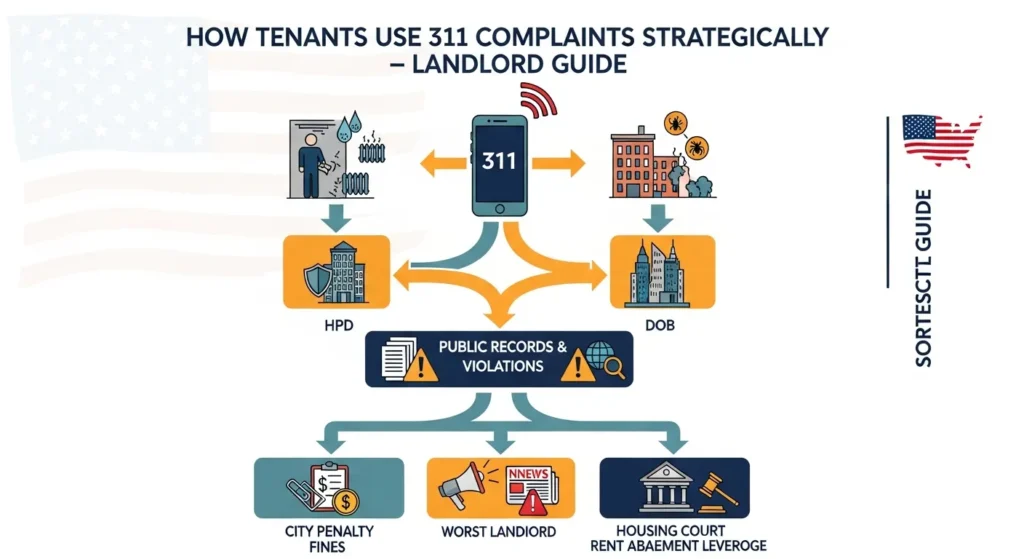
In New York City, 311 is more than a help line. It’s also a paper‑trail machine.
Every time a tenant dials 311 or submits an online complaint, the city creates a permanent record. That record can lead to HPD complaints, DOB violations, public listings, fines, and even become an exhibit in housing court.
From our side of the table as owners and managers, we can’t afford to treat 311 calls as random noise. Tenants and organizers increasingly use NYC building violations and 311 complaints as a deliberate strategy: to pressure us on repairs, influence rent negotiations, or strengthen their position in court.
In this guide, we walk through how 311 actually works in NYC, the difference between legitimate and tactical complaints, and what we should be doing, legally and practically, when HPD or DOB shows up at the door. We’ll also look at proactive systems that cut complaints dramatically and protect us when disputes escalate.
Understanding What 311 Is And How It Works
Understanding What 311 Is And How It Works
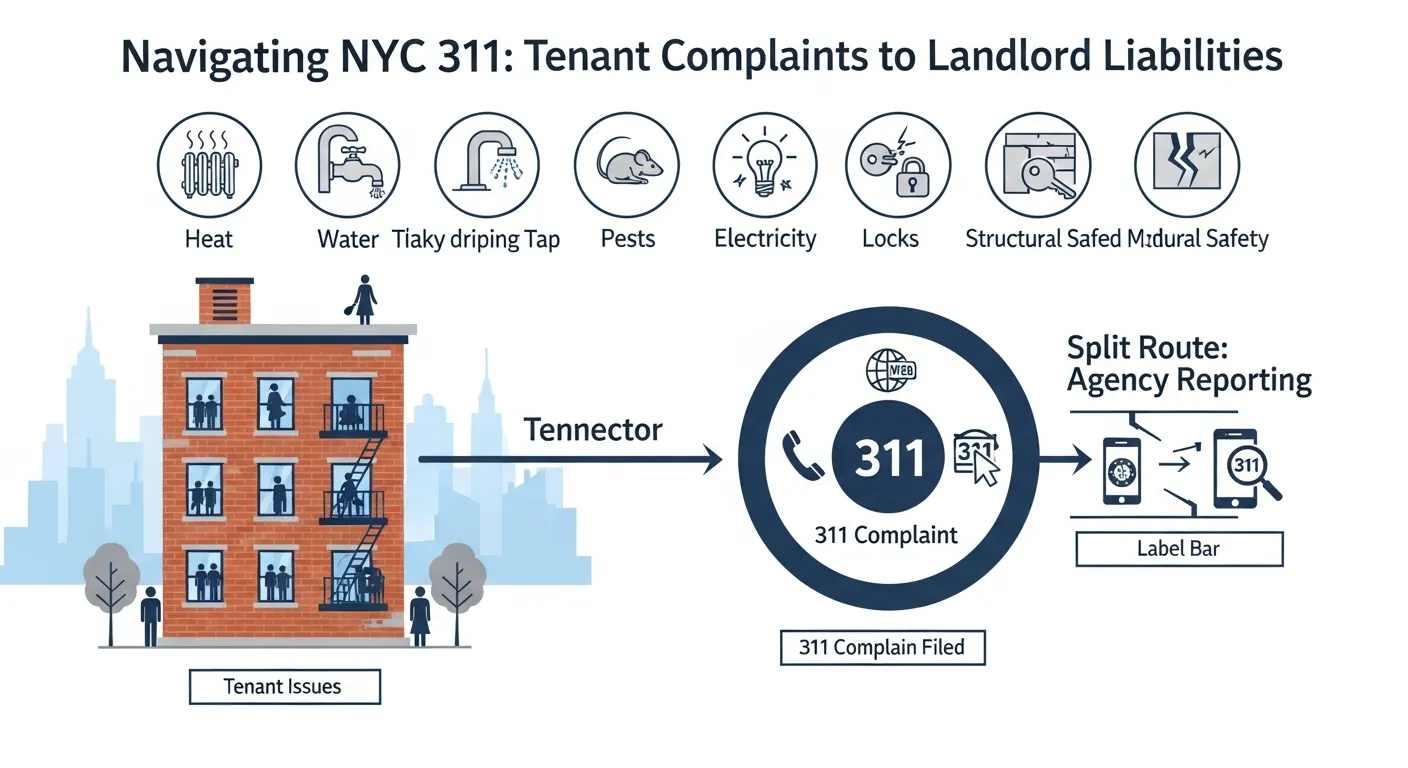
New York City’s 311 system is a non‑emergency information and service line. Tenants use it by phone, online, or via the app to report housing issues and other city problems. For landlords, the crucial part isn’t the phone call itself, it’s the data trail it creates.
When a tenant calls 311 about a housing problem, the system:
- Logs the complaint and assigns a service request number.
- Routes it to the relevant agency, most often HPD or DOB.
- Creates an official record that can later be tied to inspections, NYC building violations, and court cases.
According to NYC’s own descriptions of the program, 311 doesn’t investigate anything directly: it’s a routing and record‑keeping hub that feeds agencies like HPD, DOB, and the Department of Health.^1
What Types Of Housing Issues 311 Handles
From a housing perspective, 311 is essentially the front door for habitability and safety complaints. In NYC, typical issues include:
- Heat and hot water problems (especially during the official heating season).
- Leaks, plumbing failures, or sewage backups.
- Mold, pests, and vermin.
- Broken windows, doors, or locks affecting security.
- No electricity or gas, or unsafe electrical conditions.
- Unsafe stairs, hallways, or common areas.
- Some structural and construction issues, especially those that may be unsafe.
Most apartment maintenance issues go to the Department of Housing Preservation and Development (HPD). Structural, façade, or more technical systems issues are often routed to the Department of Buildings (DOB). HPD complaints can lead to housing code violations, while DOB violations focus on building, construction, and safety codes.^2
How 311 Routes Complaints To Housing Agencies
Once the tenant files a complaint, 311 forwards it, usually the same day, to the appropriate agency:
- HPD for lack of services (heat, hot water, water, mold, pests, broken conditions in apartments and common areas).
- DOB for structural problems, illegal work, unsafe conditions, and some system issues.
The tenant receives a service request number, which they can track. We should be tracking these numbers too.
For example, HPD explains that a heat complaint filed via 311 can trigger either an initial outreach to the owner or a direct inspection.^3 If HPD finds a violation, it’s logged in HPD’s database and becomes part of our compliance history.
Public Records, Inspections, And Enforcement Actions
311 complaints themselves aren’t always obvious to the public, but violations and enforcement actions are. In NYC:
- HPD violations are visible through HPD Online and other city tools.
- DOB violations and complaints are public via the DOB NOW and BIS systems.^4
- Many third‑party platforms, including tools like ViolationWatch, aggregate this data for easier monitoring.
Once a complaint is routed, the agency may:
- Try to reach us or our agent to correct the problem.
- Send an inspector to verify the allegation.
- Issue violations if the condition exists and violates code.
Those violations can lead to:
- Fines and penalties.
- Emergency repairs billed back to us.
- Inclusion on “worst landlord” lists or media coverage.
- Evidence for tenants’ rent abatement claims or HP actions in Housing Court.
This is why we need to treat every 311 call as both a customer‑service issue and a legal/compliance event.
Why Tenants Turn To 311: Legitimate Needs Versus Strategy
Why Tenants Turn To 311: Legitimate Needs Versus Strategy
From the tenant side, city guides and legal aid materials are clear: call 311 when the landlord doesn’t fix serious problems. But they also describe 311 as a way to “document and escalate.” Both are true.
Common Legitimate Reasons Tenants Call 311
Most 311 calls start where they should: with real habitability problems. Common legitimate triggers include:
- No heat or hot water during required hours.
- Chronic leaks damaging ceilings, walls, or floors.
- Persistent mold growth after water damage.
- Rodent or roach infestations not addressed after complaints.
- Broken entry doors or unsafe stairs and hallways.
Tenant guides often tell renters to contact us first, in writing if possible, and give us a reasonable time to respond. When we don’t respond, or are perceived as unresponsive, 311 is the next step.
In those cases, our best move isn’t to obsess over “strategy.” It’s to fix the problem fast, document the work, and shore up our maintenance systems so tenants don’t feel ignored.
When 311 Becomes A Negotiation Or Pressure Tool
But tenants, organizers, and attorneys also use 311 deliberately as leverage. We see this most clearly in disputes over:
- Nonpayment of rent or rent reductions.
- Repairs that have dragged on for months.
- Major rent increases or lease non‑renewals.
- Enforcement of rules (unauthorized occupants, pets, or short‑term rentals).
Because HPD complaints and DOB violations are public and can support legal claims, calling 311 can become part of a broader negotiation strategy. The message is often implicit: “If you don’t move on rent or repairs, we’ll escalate through the city and court.”
That doesn’t mean complaints are false. It does mean we need to understand the broader context when we see a sudden burst of 311 activity.
Red Flags That Complaints May Be Strategic Or Retaliatory
We should assume that many complaints are in good faith. Still, some patterns suggest a more tactical use of 311:
- A flurry of complaints immediately after we serve a rent demand or start a nonpayment case.
- New habitability complaints right after we enforce long‑ignored rules, like banning short‑term rentals or cracking down on extra occupants.
- Claims that directly contradict recent inspection records or repeated access refusals.
- Multiple tenants filing identical, vague complaints just after tenant‑organizing meetings.
- Complaints time‑stamped right before key court dates or settlement conferences.
These signs don’t give us license to retaliate: in fact, anti‑retaliation laws are a major risk here. They do tell us we need tight documentation, legal guidance, and a calm, professional response that will hold up under scrutiny.
Typical Ways Tenants Use 311 Complaints Strategically
Typical Ways Tenants Use 311 Complaints Strategically
We see the same patterns across many NYC properties. Tenants and advocates have learned how to fold 311, HPD complaints, and DOB violations into broader strategies around rent and possession.
311 As Leverage In Rent Disputes Or Nonpayment
In nonpayment situations, tenants’ attorneys often argue for rent abatements based on conditions in the apartment. A string of 311 complaints followed by HPD violations makes that argument stronger.
Common pattern:
- Tenant falls behind on rent.
- We serve a rent demand or start a nonpayment case.
- Within days, the tenant calls 311 about heat, leaks, or pests.
- HPD inspects and issues violations.
- Tenant uses those violations in court to argue they owe less rent or to negotiate a settlement.
If we haven’t documented prior repairs, access attempts, and prompt responses, we’re at a disadvantage, even if we’ve actually been trying to maintain the unit.
Using Complaints To Delay Eviction Or Court Proceedings
Another strategic use: delay.
When a tenant is facing eviction, nonpayment or holdover, new 311 complaints can:
- Generate fresh inspections close to trial dates.
- Open new issues judges want to hear about.
- Provide grounds for requests to adjourn cases while violations are addressed.
We’ve seen tenants file complaints right before trial, leading to:
- Inspectors finding issues that are real but minor.
- Tenants arguing they can’t be evicted while code issues are pending.
- Judges slowing the case down to ensure compliance.
Again, we’re not talking about fraud in most cases. We’re talking about savvy timing.
Complaints Triggered By Lease Enforcement Or Rule Changes
When we start enforcing rules we previously let slide, 311 calls often follow. Typical triggers:
- Cracking down on unauthorized sublets or Airbnbs.
- Requiring removal of illegal washing machines or other appliances.
- Enforcing pet policies or occupancy limits.
From the tenant’s point of view, calling 311 can reframe the conflict away from their own lease violations and towards our alleged non‑compliance. If inspectors find anything wrong, no matter how small, it can muddy the narrative in court.
Coordinated Or Repeated Complaints From Multiple Tenants
In some buildings, especially rent‑stabilized or distressed properties, tenants organize. Legal aid groups and tenant unions may advise:
- “Everyone call 311 about mice this week.”
- “File a complaint every time the elevator is out, even for an hour.”
The result can be a cluster of nearly identical complaints, sometimes with overlapping but not identical facts. That may lead HPD or DOB to:
- Flag the building for special programs or enforcement initiatives.
- Conduct building‑wide inspections.
- Levy fines that are much larger than any single issue would justify.
We can’t stop tenants from organizing, but we can respond with building‑wide maintenance upgrades, strong documentation, and transparent communication so that when the city arrives, our compliance story is clear and credible.
Legal Framework Landlords Must Understand
Legal Framework Landlords Must Understand
To manage 311 strategically, we need to understand the legal backdrop: habitability standards, anti‑retaliation rules, and due process around NYC property compliance.
Habitability Standards And Code Enforcement Basics
Across the U.S., and especially in NYC, landlords must provide safe, habitable homes. That includes:
- Adequate heat and hot water.
- Functioning plumbing and electricity.
- Protection from leaks, mold, and infestations.
- Reasonably safe common areas.
In New York City, these duties are enforced through the Housing Maintenance Code, HPD rules, and the Building Code and related DOB regulations. HPD inspections triggered by 311 often result in Class A, B, or C violations with specific deadlines to correct.
Failing to correct can mean:
- Daily penalties.
- Emergency repairs by HPD, billed to us.
- Targeted enforcement programs.
Anti‑Retaliation Laws And Protected Tenant Activities
Here’s where many owners get into trouble. In most jurisdictions, and under NYC laws, tenants are protected from retaliation when they:
- Make good‑faith complaints to government agencies (including 311/HPD/DOB).
- Join or organize tenant associations.
- Assert legal rights in court.
Retaliation can include:
- Starting an eviction case because they called 311.
- Raising rent or cutting services in response to complaints.
- Harassment, threats, or sudden non‑renewal without solid, independent reasons.
Courts often presume retaliation if we take adverse action shortly after a tenant files agency complaints. That doesn’t bar us from enforcing leases or pursuing nonpayment, but it means we need clean, documented, independent grounds and often legal counsel.
Recordkeeping, Notice Requirements, And Due Process
Most enforcement actions involve some level of due process:
- Notice of violations with cure deadlines.
- Opportunities to certify correction or request reinspection.
- Hearings for larger penalties.
Our protection is meticulous recordkeeping:
- Logs of tenant repair requests and our response times.
- Copies of entry notices, including dates, times, and any refusals.
- Photos before and after repairs.
- Invoices, permits, and final sign‑offs.
When HPD or DOB posts a violation, we should quickly:
- Understand the deadline and correction method.
- Fix the condition.
- Certify correction with supporting evidence.
Monitoring our own record is essential. Tools like the city’s HPD and DOB portals, as well as third‑party services such as ViolationWatch, make it easier to see the full picture for each building.
Proactive Strategies To Reduce 311 Complaints
Proactive Strategies To Reduce 311 Complaints
The strongest way to manage 311 is to make it less necessary. When we respond quickly, communicate clearly, and document thoroughly, many tenants never feel the need to pick up the phone.
Building A Maintenance System That Stays Ahead Of Issues
Reactive repairs are expensive, legally and financially. We’re better off with a structured maintenance program that covers:
- Preventive inspections of roofs, basements, boiler rooms, and common areas.
- Seasonal checks for heat and hot water performance before the cold season.
- Regular pest control and follow‑up.
Establish written service level targets (e.g., respond to non‑emergency work orders within 48 hours: emergencies within 2–4 hours) and track whether we’re hitting them.
Clear Communication Channels For Tenant Concerns
Tenants often call 311 because they don’t know how else to get our attention, or they’ve lost faith that internal channels work.
We should provide:
- A dedicated phone number or voicemail for repairs.
- An email address or online portal.
- Simple instructions in the lease and on building notices: how to report, what’s an emergency, and typical response times.
We can even say, explicitly and in writing: “If we don’t respond to an emergency in X hours or a non‑emergency in Y days, you have the right to contact 311.” That level of transparency builds trust and encourages tenants to come to us first.
Documenting Inspections, Repairs, And Tenant Interactions
When HPD or DOB gets involved, our paperwork is as important as the repair itself. We should:
- Log every tenant request (date, time, method, issue).
- Note each offer of access and any refusals.
- Take photos before and after repairs.
- Keep receipts and contractor invoices.
This documentation doesn’t just help in enforcement situations. It also protects us in court when tenants argue conditions were ignored or ongoing. The more detailed our logs, the easier it is to show that a 311 complaint was either resolved quickly or contradicted by the actual history.
Training Staff And Vendors On Compliance And Conduct
Our supers, porters, and contractors are often the people inspectors and tenants see the most. They need to understand:
- Basic code obligations (e.g., minimum heat, self‑closing doors, egress rules).
- How to behave professionally with tenants who are upset or threatening to call 311.
- The importance of taking photos, writing notes, and reporting back after each visit.
A brief annual training, plus written procedures, can dramatically reduce misunderstandings that turn into HPD complaints or DOB violations.
How To Respond Effectively When A 311 Complaint Is Filed
How To Respond Effectively When A 311 Complaint Is Filed
Even with great systems, we’ll still see 311 complaints. The question is how we react in the first 24–72 hours.
Immediate Steps When You Learn About A Complaint
When we hear about a 311 complaint (from a tenant, notice, or inspector):
- Get the service request or complaint number.
- Log in to HPD Online or DOB’s property search to see exactly what was reported.
- Inspect the condition ourselves as quickly as access allows.
- Begin stabilization or full repair immediately, don’t wait for the inspector.
If we manage multiple buildings, using a centralized system, or a monitoring service, to track NYC building violations and HPD complaints across the portfolio is critical. For free lookups, use our NYC violation lookup tool to see existing issues tied to a property.
Preparing For Inspections And Interacting With Inspectors
Once an inspection is scheduled (or likely):
- Provide proper notice to enter the unit, following all local rules.
- Have a knowledgeable staff member or contractor on site.
- Bring prior records: work orders, emails, photos, and invoices.
Inspectors aren’t our adversaries: they’re there to verify conditions. The best approach is:
- Be polite and factual.
- Answer questions directly: don’t argue legal points in the hallway.
- Show documentation of recent repairs or attempts to gain access.
If a condition has already been corrected, ask the inspector how to ensure that’s reflected in their report and whether any further steps are needed.
Following Up: Corrective Actions, Proof, And Deadlines
After the inspection:
- Check online for posted violations within the next several days.
- Note the class of violation and the cure deadline.
- Complete all required work before the deadline.
- Submit any required certification of correction, with photos and invoices if possible.
To avoid problems slipping through the cracks, many NYC owners now use automated building violation alerts. Get instant alerts whenever your building receives a new violation, sign up for real-time monitoring through our building violation alerts service.
Communicating With The Tenant Without Crossing Legal Lines
Communication with the complaining tenant needs to be careful and professional:
- Acknowledge the issue and outline what we’re doing to fix it.
- Confirm in writing when the repair is complete.
- Avoid any statements that could sound like punishment for calling 311.
We should not:
- Threaten eviction or rent hikes because of the complaint.
- Suggest that calling the city will “only make things worse” for them.
If there’s active litigation, it’s often wise to route communications through counsel so we don’t inadvertently strengthen a retaliation claim.
Managing Patterns Of Strategic Or Abusive Complaints
Managing Patterns Of Strategic Or Abusive Complaints
Most tenants who call 311 are trying to solve real problems. But we also see cases where complaints are repeated, exaggerated, or clearly tied to another agenda. We need tools to manage those situations without crossing legal lines.
Identifying Patterns Using Logs, Photos, And Prior Notices
The only way to distinguish between recurring issues and abusive complaints is data. Our records should let us:
- See if the same condition is being reported repeatedly after documented repairs.
- Cross‑check complaint dates against access refusals or no‑shows.
- Compare tenant claims with time‑stamped photos and contractor notes.
If we can show that a condition was corrected promptly and that subsequent allegations don’t match the documented facts, that evidence will matter to inspectors, hearing officers, and judges.
Coordinating With Counsel On Eviction Or Lease Enforcement
When strategic 311 use overlaps with chronic nonpayment, illegal uses, or serious lease violations, we should bring in a landlord‑tenant attorney early. Counsel can help us:
- Evaluate how recent HPD complaints or DOB violations affect our case.
- Time filings to reduce the appearance of retaliation.
- Frame our claims around independent grounds (e.g., long‑term arrears) supported by records.
We may still proceed with eviction or non‑renewal, but every step should align with anti‑retaliation laws and local rules.
Responding To Online Reviews And Public Records Sensibly
In the age of Google, tenants often pair 311 calls with online reviews or social media campaigns. Our response should be calm and factual:
- Don’t argue about individual tenants online or reveal personal details.
- Briefly state what was done (“Repairs completed on X date: HPD reinspected on Y date and closed the violation.”).
- If a platform allows documentation, use it to correct clear factual errors.
Monitoring our public record is part of this. Services like ViolationWatch make it easier to see how HPD complaints, DOB violations, and other issues appear to the outside world and to track trends over time.
Adjusting House Rules, Policies, Or Lease Language
Finally, we can reduce friction by clarifying expectations in writing. Over time, we may want to adjust:
- House rules for repairs and access (how to schedule, what happens after a missed appointment).
- Lease clauses that spell out internal complaint procedures and emergency contacts.
- Language about tenant obligations to report problems promptly and allow access, while preserving their right to contact government agencies.
Any changes need to follow local law, especially for rent‑stabilized or regulated apartments, but clear rules help everyone understand the process and keep 311 as a last resort, not a first move.
Working With Lawyers And Local Professionals
Working With Lawyers And Local Professionals
We don’t have to navigate 311, HPD complaints, DOB violations, and NYC property compliance alone. A good support network pays for itself.
When To Bring In A Landlord‑Tenant Attorney
We should strongly consider involving counsel when:
- There are repeated 311‑triggered violations at the same unit or building.
- We’re contemplating eviction or non‑renewal soon after tenants have made agency complaints.
- We face significant fines, emergency repair orders, or inclusion in special enforcement programs.
An experienced landlord‑tenant attorney can:
- Review our documentation and identify gaps.
- Advise on timing and framing of court cases.
- Represent us in HPD or DOB hearings and Housing Court.
Using Local Landlord Associations, Managers, And Consultants
Beyond lawyers, local professionals can help us stay ahead of problems:
- Property managers who understand NYC codes and enforcement culture.
- Landlord associations that provide sample forms, checklists, and education.
- Compliance consultants who audit buildings for issues that are likely to trigger HPD complaints or DOB violations.
We can also lean on these networks to benchmark our response times and maintenance standards against peers.
Staying Current On Local Codes And Policy Changes
NYC housing and building rules change regularly, sometimes in direct response to headline incidents or new safety concerns. To keep up, we should:
- Follow HPD and DOB email updates and bulletins.
- Review city guidance on heat, hot water, and other key obligations before each season.
- Read major real‑estate publications that analyze new laws and enforcement trends (e.g., coverage in The Real Deal or similar outlets).
Staying current means we’re less likely to be surprised by a new type of violation or enforcement push that tenants and advocates are already using to their advantage.
Conclusion
Conclusion
311 isn’t going away. If anything, tenants, organizers, and attorneys are getting more sophisticated in how they use HPD complaints, DOB violations, and public records as leverage in disputes with landlords.
Our job isn’t to fight the existence of 311. It’s to run buildings so well that most tenants never feel they need it, and to respond intelligently, legally, and quickly when they do.
That means:
- Investing in preventive maintenance and clear communication.
- Building airtight documentation of every repair, inspection, and access attempt.
- Understanding anti‑retaliation and habitability standards so we don’t create avoidable legal exposure.
- Using tools and professionals, attorneys, managers, and monitoring services, to track and manage NYC building violations across our portfolio.
If we want a real‑time view of our risk profile, we should be watching the same data tenants and advocates are watching. For free status checks, our NYC violation lookup tool makes it easy to see HPD and DOB records on a property. And if we’d rather not wait for the next surprise, we can enroll in building violation alerts so we’re notified as soon as new issues appear.
Handled the right way, 311 complaints become less of a crisis and more of an early‑warning system, one that helps us keep our buildings safer, our tenants more satisfied, and our legal risk under control.
Key Takeaways
- Treat 311 complaints as both a customer service and legal event, because each call creates a public paper trail that can lead to HPD and DOB violations, fines, and evidence in court.
- Tenants use 311 complaints legitimately for unresolved habitability issues and strategically to gain leverage in rent disputes, delay evictions, or respond to stricter lease enforcement.
- Protect yourself by building proactive maintenance systems, clear communication channels, and strong documentation of all inspections, repairs, access attempts, and tenant interactions.
- Always respond quickly and professionally when a 311 complaint is filed: verify the issue, start repairs immediately, cooperate with inspectors, and certify corrections before deadlines.
- Understand habitability and anti‑retaliation laws, and work with landlord‑tenant attorneys and compliance tools (like NYC violation lookups and alerts) so you can enforce leases without creating retaliation exposure.
Frequently Asked Questions
How do 311 complaints work in NYC for housing issues?
In NYC, when a tenant files a 311 complaint, it’s logged, assigned a service request number, and routed to agencies like HPD or DOB. Inspectors may be sent, and if violations are found, they become public records that can lead to fines, emergency repairs, and evidence in court.
How do tenants use 311 complaints strategically against landlords?
Tenants and their attorneys often time 311 complaints to coincide with rent demands, nonpayment cases, lease non‑renewals, or rule enforcement. Resulting HPD or DOB violations can strengthen rent‑abatement arguments, delay evictions, and shift courtroom narratives toward landlord non‑compliance, even when issues are minor but documented close to key court dates.
What red flags suggest 311 complaints may be tactical or retaliatory?
Warning signs include a sudden spike in 311 complaints right after rent demands, eviction filings, or rule crackdowns; vague, identical complaints from multiple tenants; allegations that contradict recent inspections or documented access refusals; and complaints filed immediately before important court dates or settlement conferences.
What is the best way for landlords to respond when a 311 complaint is filed?
Landlords should quickly obtain the service request number, review HPD/DOB records, inspect the condition, and start repairs immediately. Prepare for inspections with documentation of prior work, be professional with inspectors, track any violations posted, correct issues before deadlines, and certify correction with photos, invoices, and written confirmations to the tenant.
How can landlords reduce 311 complaints and NYC building violations over time?
Focus on preventive maintenance, clear repair channels, and strong documentation. Implement regular inspections, seasonal system checks, and routine pest control. Provide tenants with easy ways to report issues, set response-time targets, train staff on code basics, and monitor HPD/DOB records or use alert services to catch problems early.
Can a landlord evict a tenant after they file 311 complaints in NYC?
Landlords can still pursue legitimate nonpayment or holdover cases, but New York’s anti‑retaliation laws presume retaliation if adverse actions follow good‑faith complaints. To avoid legal trouble, owners need independent grounds for eviction, detailed records of arrears or violations, and often counsel to ensure timing and documentation withstand court scrutiny.